
Textile
Printing & Dyeing Wastewater
Color removal and oxidation of selected dye-related compounds before downstream treatment.
Application conditions determine the final process, ozone dose and equipment configuration. Start with the treatment objective and actual project data.
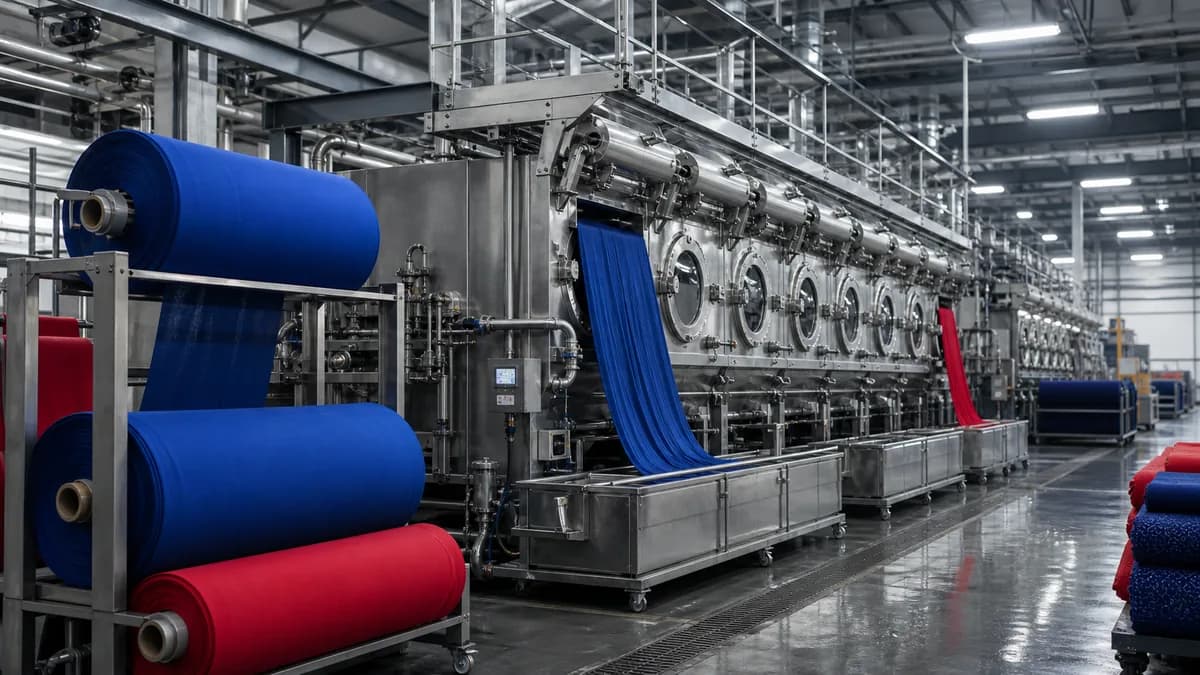
Application environment
Is this solution right for your project?
Color removal and oxidation of selected dye-related compounds before downstream treatment.
Final ozone dosage and process configuration depend on actual process conditions. Difficult or variable streams may require laboratory or pilot testing before final design.
Application Overview
Ozone preferentially reacts with many color-forming unsaturated structures. The practical treatment objective may be decolorization, toxicity reduction or improved biodegradability, and must be verified against the actual dye mix and upstream treatment.
What Ozone Solves
- Rapid reaction with many color-forming structures
- Potential reduction of selected refractory compounds
- Can be paired with biological or catalytic treatment
- Treatment objective verified against the actual dye mix
Combined process options to evaluate
Typical Complete System Scope
A project is sized as a coordinated treatment system, not as an isolated ozone generator. The final boundary varies by application and site.
- Feed-gas preparation or oxygen supply
- Ozone generation
- Cooling and process instrumentation
- Application-specific dosing or distribution
- Contact or reaction stage
- Residual ozone and off-gas management
- Safety monitoring and control
Data Needed for Preliminary Sizing
- Treatment flow rate and operating hours
- Influent water, gas or process characteristics
- Target pollutant and required outlet standard
- Existing process flow and available contact space
- Available feed gas, cooling water and electrical supply
- Site temperature, pressure and installation conditions
- Project country, schedule and applicable local requirements
Frequently Asked Questions
How is the required ozone capacity determined?
Capacity for printing & dyeing wastewater cannot be selected from flow rate alone. Preliminary sizing considers treatment flow, ozone demand, target result, contact conditions, transfer efficiency and operating hours. Variable or difficult streams may require laboratory or pilot testing before final design.
Should air, PSA oxygen or liquid oxygen be used as the feed gas?
The choice depends on required ozone output and concentration, operating profile, utilities, site space and local oxygen cost. Oxygen-fed systems generally support higher ozone concentration; the most economical option must be compared at complete-system level.
Can ozone be added to an existing treatment line?
Often yes, but a retrofit review is required. The engineer must check the injection point, hydraulic or gas conditions, contact time, materials compatibility, off-gas handling, controls, interlocks and the effect on downstream processes.
Is an off-gas destructor or residual-ozone control required?
It is commonly required where unreacted ozone may leave a contact vessel or enter an occupied area. The final arrangement depends on the process and local safety rules, but ozone generation, transfer and destruction should be treated as one engineered safety boundary.
What maintenance does an ozone system require?
Routine work normally includes checking feed-gas quality, cooling, filters and dryers, ozone monitors, valves, seals, electrical protection and the dosing or off-gas system. The exact schedule depends on equipment configuration, duty cycle and site conditions.
What information is needed for a preliminary proposal?
Send the treatment flow, operating hours, influent data, treatment target or outlet standard, existing process, available utilities, installation country and project schedule. We will first define the treatment boundary and then recommend a preliminary system configuration.