
Food & Beverage
Ozonated Water Systems for Food & Beverage Processing
On-site preparation of ozonated water for validated process-water or sanitation duties.
Application conditions determine the final process, ozone dose and equipment configuration. Start with the treatment objective and actual project data.
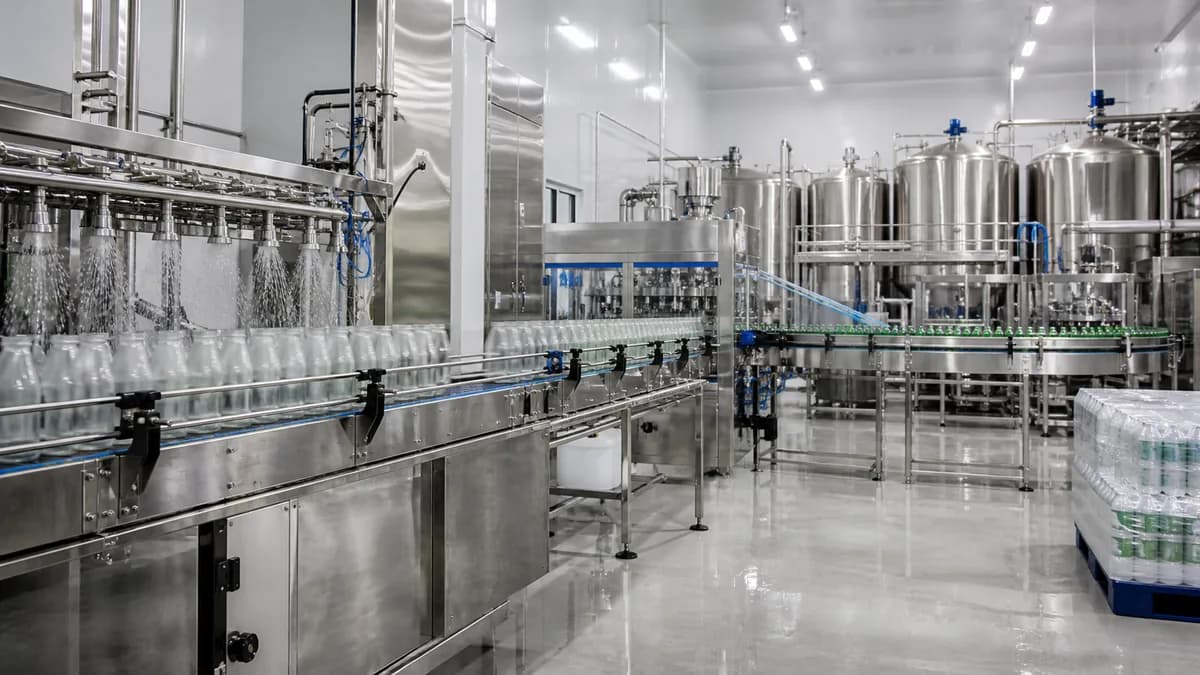
Application environment
Direct answer
Ozonated water should be engineered for a defined process-water, rinse or sanitation duty—not as a generic plant-wide claim. Point-of-use concentration, contact conditions, water quality, materials compatibility, worker exposure, off-gas and applicable local requirements must be reviewed and validated for the specific process; the system does not automatically replace an existing CIP, rinse or product-release procedure.
Good fit when
- A clearly defined product, surface, vessel or process-water duty
- A measurable point-of-use concentration, contact condition and acceptance plan
- Facilities able to validate materials, worker safety and local requirements
Do not assume
- A generic plant-wide disinfection claim without defined process points
- Automatic replacement of CIP chemistry, rinsing or release procedures
- Universal microbial, food-safety or shelf-life promises
Application Overview
Ozonated water can support selected process-water and sanitation duties when concentration, contact time, water quality, materials compatibility and worker safety are validated for the specific plant and local regulations.
Design basis and practical limits
A defensible ozone process starts with representative project data. These inputs should be confirmed before equipment output or dosage is finalized.
Design inputs to provide
- Exact product, surface, vessel or process-water duty
- Normal and peak water flow, temperature and operating profile
- Water chemistry and ozone demand at the proposed point of use
- Target concentration, sampling point, measurement method and contact condition
- Wetted materials, distribution length, drainage and downstream rinse sequence
- Ventilation, off-gas, worker-safety controls and applicable local requirements
Keep the duty narrow and measurable
Define the process point and acceptance criterion before selecting equipment. A broad sanitation statement cannot determine flow, concentration, contact or monitoring.
Measure at the point of use
Generator output does not prove the condition delivered through piping, mixing and contact. The sampling point and measurement method are part of the design basis.
Validate the complete plant procedure
Materials, worker exposure, off-gas, drainage and the downstream rinse or release sequence remain within the facility's validation boundary.
Illustrative process position
- 1
Define the exact duty
Identify the treated item or surface, process point, operating sequence, acceptance criterion and applicable local requirement.
- 2
Characterize water and materials
Review flow, temperature, chemistry, ozone demand, wetted materials, drainage, ventilation and worker exposure.
- 3
Generate, mix and deliver
Engineer ozone generation, mass transfer, contact and distribution so the required condition can be measured at the actual point of use.
- 4
Validate the site procedure
Verify concentration, contact, materials, safety controls and the plant's downstream rinse or release sequence under representative operation.
This sequence is a decision framework, not a universal process prescription. Final process position and acceptance criteria are project-specific.
Treatment roles to evaluate
- On-site ozonated water for a specifically defined process duty
- Point-of-use concentration and contact-condition verification
- Engineered generation, mixing, contact, distribution and monitoring
- Site validation against materials, safety and local process requirements
Possible project scope
A project is sized as a coordinated treatment system, not as an isolated ozone generator. The final boundary varies by application and site.
- Feed-gas preparation or oxygen supply
- Ozone generation
- Cooling and process instrumentation
- Application-specific dosing or distribution
- Contact or reaction stage
- Residual ozone and off-gas management
- Safety monitoring and control
Data Needed for Preliminary Sizing
- Treatment flow rate and operating hours
- Influent water, gas or process characteristics
- Target pollutant and required outlet standard
- Existing process flow and available contact space
- Available feed gas, cooling water and electrical supply
- Site temperature, pressure and installation conditions
- Project country, schedule and applicable local requirements
Frequently Asked Questions
Which food or beverage process points can be evaluated?
Examples can include a defined process-water, rinse, vessel or surface duty, but each point needs its own water, material, contact, drainage, exposure and acceptance review.
Does ozonated water automatically replace a CIP program?
No. Any change to CIP chemistry, sequence, rinsing or release must be validated by the facility for the actual equipment, soil load, materials, product and applicable requirements.
Can the system remove every downstream rinse or chemical step?
No general conclusion is valid. The process owner must define and validate the complete sanitation and release procedure rather than infer it from the ozone generator alone.
Where should concentration and contact be checked?
They should be defined at the actual point of use and through the relevant contact period, using a specified sampling location and measurement method rather than only the generator outlet.
What material and safety checks are needed?
Review all wetted materials, seals, hoses and instrumentation, plus ventilation, off-gas, ambient ozone monitoring, interlocks, drainage and worker procedures for the proposed operating condition.
When is a packaged ozonated-water machine enough?
A packaged unit may suit a bounded point-of-use duty with known flow and concentration requirements. Multiple points, longer distribution, variable demand or broader utility integration can require a project-engineered generation, dosing, monitoring and safety system.
Evidence boundary
GUOLIN's supplied catalogue documents food and drinking-water applications for ozonated-water equipment. The supplied evidence does not establish a universal microbial result, process authorization or replacement of an existing plant sanitation procedure; those boundaries remain application- and market-specific.