
Municipal Water Supply
Ozone Treatment Systems for Municipal Drinking Water
Oxidation, taste and odor control, disinfection and support for downstream biological filtration.
Application conditions determine the final process, ozone dose and equipment configuration. Start with the treatment objective and actual project data.
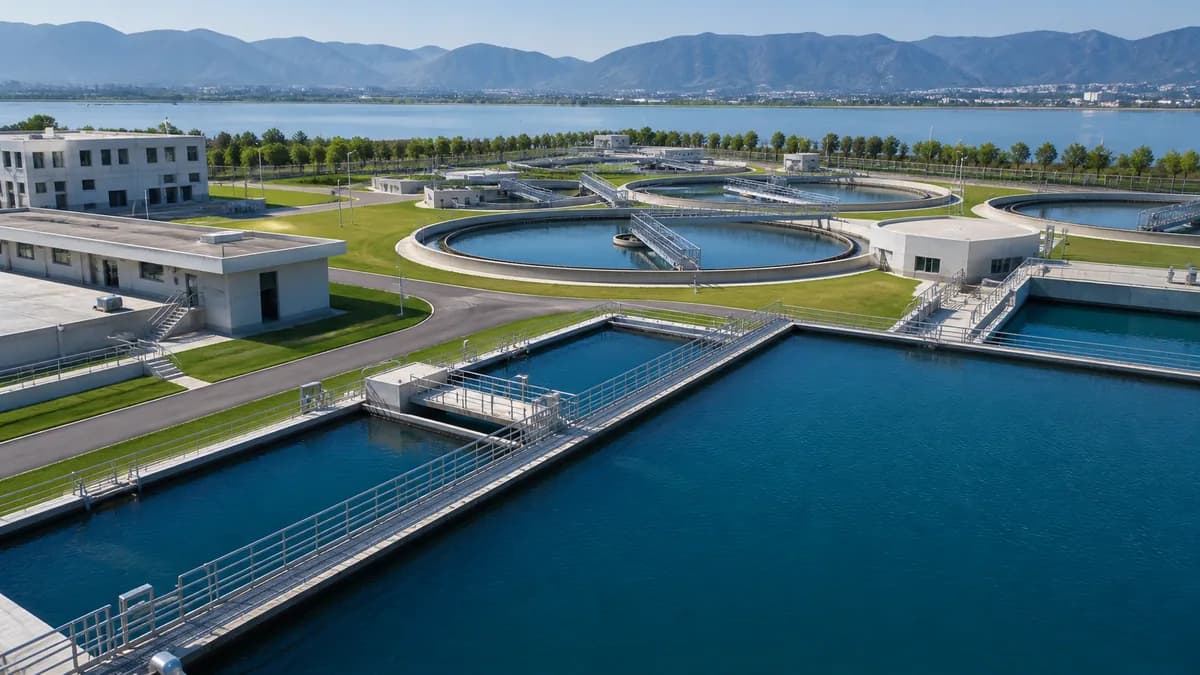
Application environment
Direct answer
Municipal drinking-water ozonation is an engineered oxidation or disinfection stage placed before, within or after clarification and filtration according to the water-quality objective. Source-water chemistry—especially bromide, organic matter, pH and contact conditions—must be reviewed before dose, injection point or equipment capacity is fixed.
Good fit when
- A defined oxidation, taste, odor, color or disinfection objective
- Projects evaluating pre-ozone, post-ozone or Ozone-BAC process positions
- Plants able to provide representative source-water and treatment-train data
Do not assume
- Selecting equipment from plant flow alone
- Assuming ozone automatically satisfies a drinking-water standard
- Replacing the residual disinfectant required in distribution without a validated local strategy
Application Overview
Ozone can be applied at different points in a drinking-water treatment train for oxidation and disinfection. The correct injection point and dose depend on source-water quality, bromide, organic matter, downstream filtration and the required local drinking-water standard.
Design basis and practical limits
A defensible ozone process starts with representative project data. These inputs should be confirmed before equipment output or dosage is finalized.
Design inputs to provide
- Plant flow and hourly operating profile
- Source-water TOC, UV254, bromide, pH and temperature
- Taste, odor, color, algae or disinfection objectives
- Target ozone dose, contact conditions and downstream BAC design
- Required drinking-water standard and residual disinfectant strategy
Place ozone at the correct treatment stage
Pre-ozonation and post-ozonation serve different objectives. Injection points must be selected with coagulation, filtration, BAC and the required disinfection contact stage in mind.
Control bromate risk
Where bromide is present, bromate formation must be evaluated through water chemistry, dose, pH, contact time and the applicable drinking-water limit. A generic ozone dose is not sufficient.
Treat Ozone-BAC as one process
Ozone changes organic matter before biological activated carbon. Ozone dose, biodegradability, BAC loading and backwash strategy should therefore be reviewed together.
Illustrative process position
- 1
Define the treatment objective
Separate oxidation, taste-and-odor, disinfection and downstream biological-filtration tasks.
- 2
Evaluate source-water chemistry
Review bromide, TOC or DOC, UV254, pH, alkalinity, temperature and seasonal variation.
- 3
Choose the process position
Compare pre-ozone, post-ozone and Ozone-BAC positions against coagulation, filtration and contact requirements.
- 4
Engineer and validate the contact stage
Confirm dose range, transfer, contact, off-gas, monitoring and the applicable drinking-water acceptance plan.
This sequence is a decision framework, not a universal process prescription. Final process position and acceptance criteria are project-specific.
Treatment roles to evaluate
- Oxidation of selected taste, odor and color compounds
- Disinfection within a validated contact stage
- Potential support for downstream biological filtration
- On-site generation with no bulk ozone storage
Possible project scope
A project is sized as a coordinated treatment system, not as an isolated ozone generator. The final boundary varies by application and site.
- Feed-gas preparation or oxygen supply
- Ozone generation
- Cooling and process instrumentation
- Application-specific dosing or distribution
- Contact or reaction stage
- Residual ozone and off-gas management
- Safety monitoring and control
Data Needed for Preliminary Sizing
- Treatment flow rate and operating hours
- Influent water, gas or process characteristics
- Target pollutant and required outlet standard
- Existing process flow and available contact space
- Available feed gas, cooling water and electrical supply
- Site temperature, pressure and installation conditions
- Project country, schedule and applicable local requirements
Frequently Asked Questions
Where is ozone placed in a municipal drinking-water plant?
It can be evaluated before coagulation, after filtration or before biological activated carbon, depending on the objective. The correct point must be selected with source-water chemistry, the full treatment train and the required contact stage.
How is bromate risk evaluated?
Review bromide, ozone dose, pH, alkalinity, dissolved organic carbon, temperature and contact conditions against the applicable drinking-water limit and monitoring plan.
Does ozone replace the residual disinfectant in distribution?
Not automatically. Ozone does not provide a persistent distribution residual, so the residual-disinfectant strategy must follow the applicable local standard and validated plant design.
When is Ozone-BAC considered?
It may be evaluated when ozonation is intended to change organic matter before biological activated carbon. Ozone dose, biodegradability, BAC loading and backwash strategy should be designed together.
What data is needed for preliminary sizing?
Provide plant flow and operating profile, source-water TOC or DOC, UV254, bromide, pH, alkalinity, temperature, treatment objective, existing process, contact conditions and applicable standard.
Can the system guarantee a drinking-water standard?
No universal guarantee can be made from a product page. Compliance depends on water quality, process design, operation, monitoring and project-specific validation under the applicable standard.
Related project references
GUOLIN's supplied catalogue documents ozone-system references at water plants in Kunshan, Wujiang, Jinan and Shanghai. The displayed capacities are documented project totals, not universal treatment outcomes or single-model performance claims.
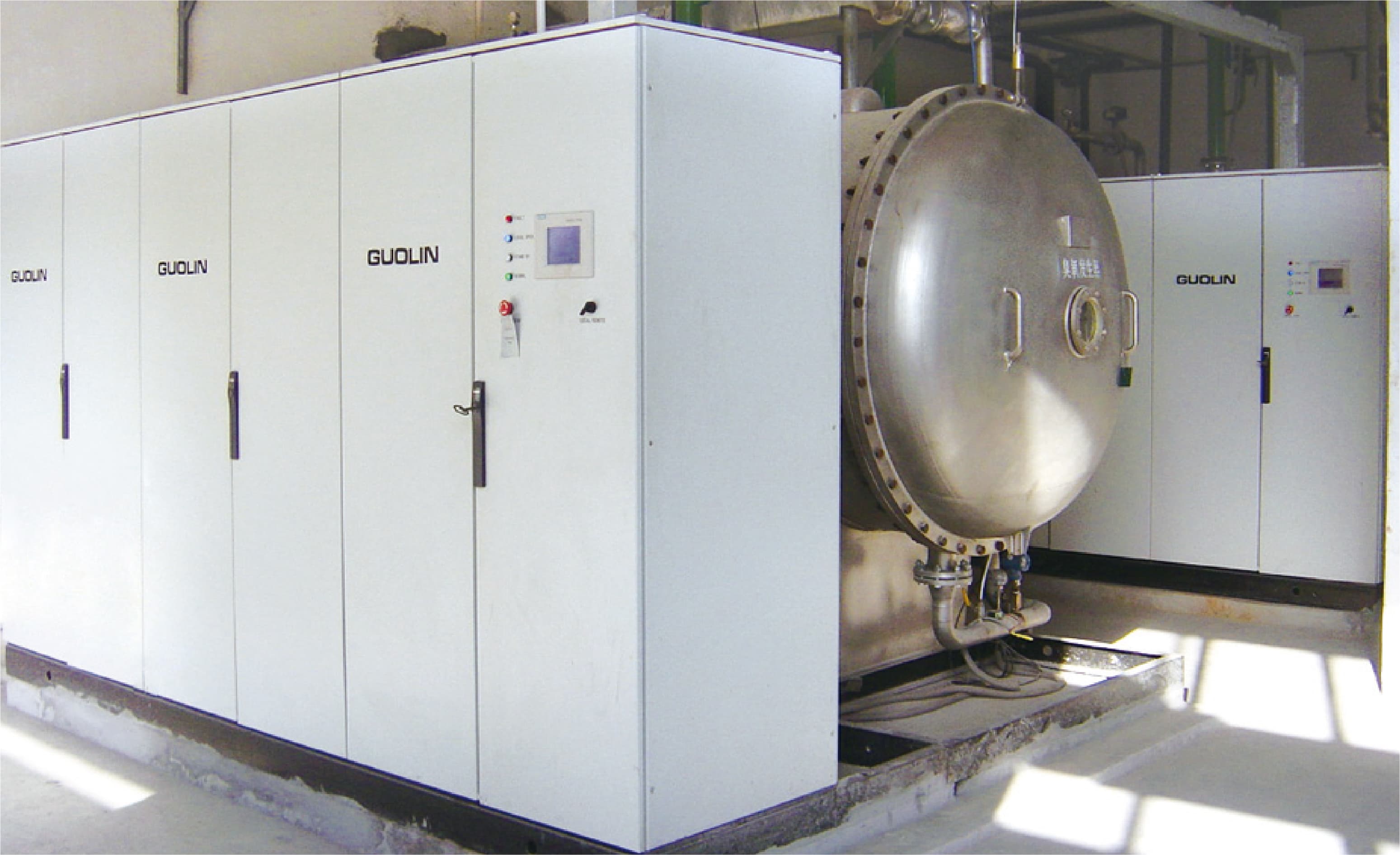
Shanghai Water Plant
Drinking water advanced treatment
20 kg/h
View project details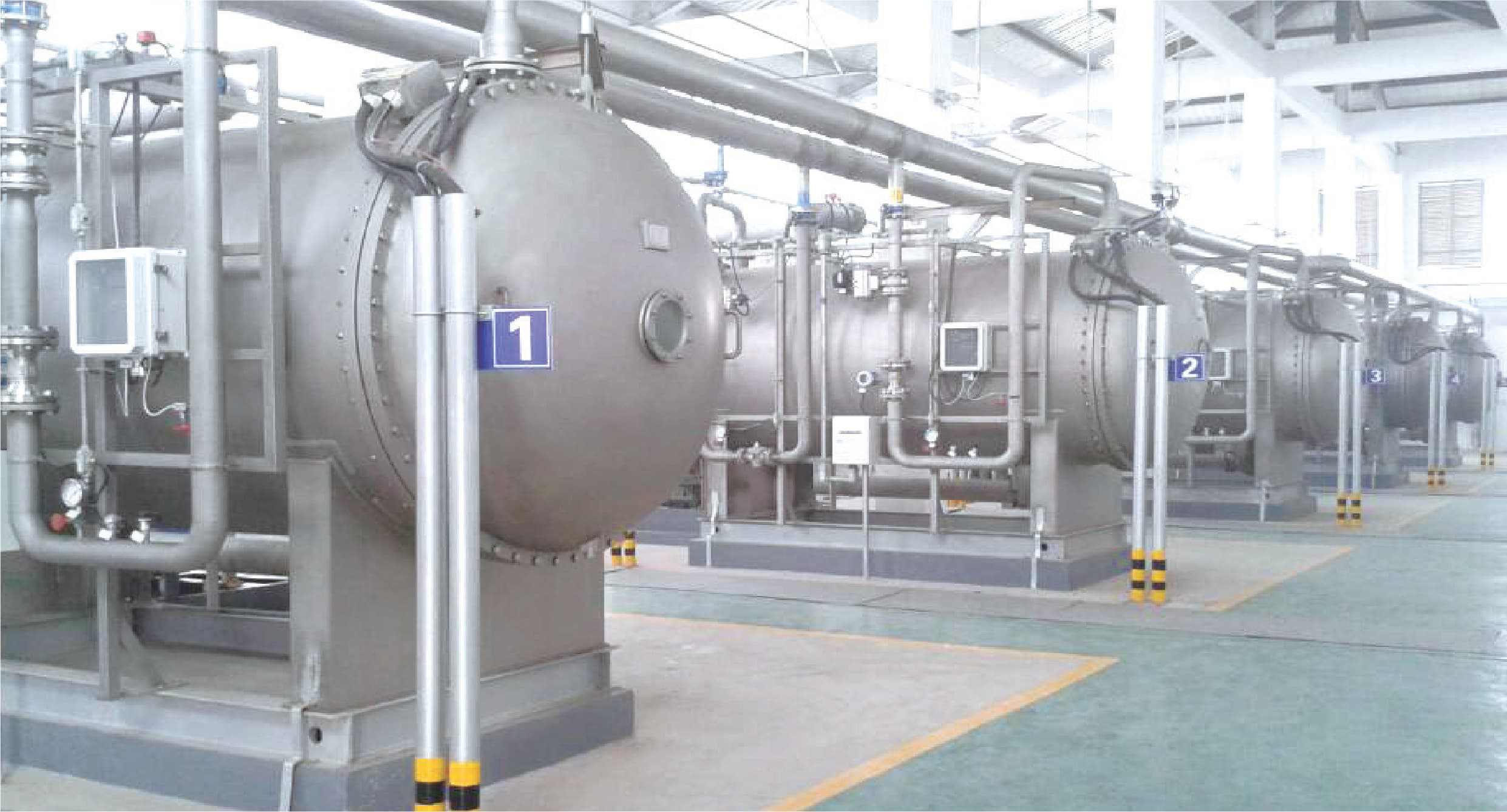
Jinan Water Plant
Drinking water advanced treatment
20 kg/h
View project detailsWujiang Water Plant
Drinking water advanced treatment (O₃-BAC)
40 kg/h
View project details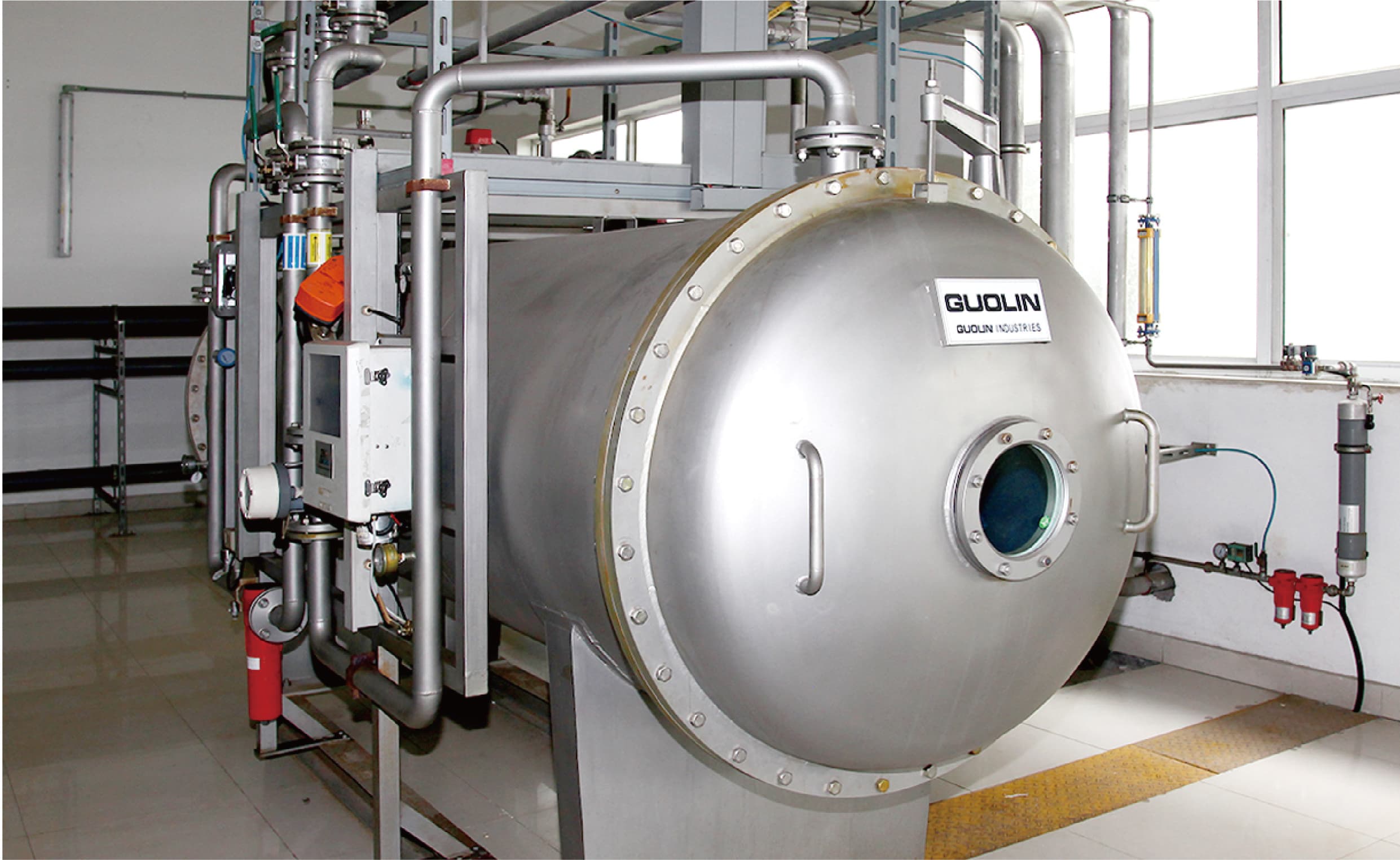
Kunshan Water Plant
Drinking water advanced treatment
40 kg/h
View project details