
Bromate Formation in Drinking-Water Ozonation: Risk Factors, Control and Monitoring
Understand how bromate forms during drinking-water ozonation, which source-water and process variables change risk, how control options trade off, and what to monitor before design and acceptance.
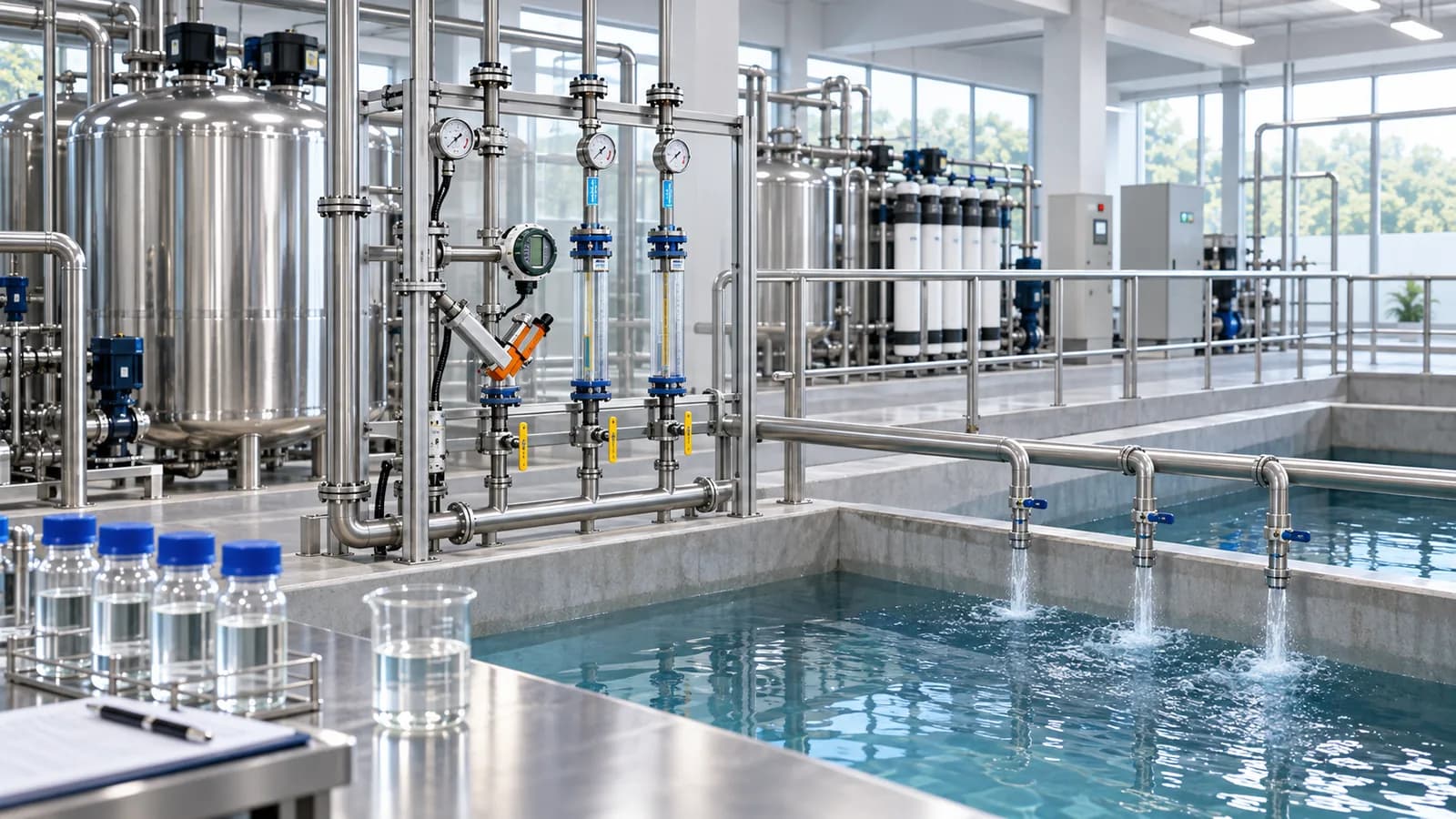
Short answer: bromate can form when ozone treats drinking water that contains bromide, but bromide concentration or ozone dose alone cannot predict the result. Formation depends on a coupled system that includes pH, temperature, alkalinity, natural organic matter, ammonia, ozone exposure, contact hydraulics and the selected treatment objective. Effective bromate control starts with seasonal source-water data and a clearly defined ozone duty, compares control options by testing the actual water, and verifies both bromate and treatment performance with an authority-accepted analytical plan.
This guide is for drinking-water utilities, consultants, EPC teams, process engineers, laboratories, operators and procurement teams. It is not a universal dosing table. Its purpose is to turn “control bromate” into an engineering scope that bidders can price, designers can validate and operators can monitor without silently weakening the oxidation or disinfection job assigned to ozone.
The central rule is simple: control formation while preserving the treatment duty. Lower bromate is not a complete success if the change also loses required microbial inactivation, fails the taste-and-odour objective, leaves a target compound untreated or creates another unacceptable by-product. The decision must close all of those boundaries together.
What is bromate, and why can ozonation form it?
Bromide is a naturally occurring ion in some surface waters and groundwaters. Its concentration can also change with seawater intrusion, brine influence, drought, blending, industrial inputs or shifts between sources. Bromide itself is not bromate. During ozonation, however, part of the bromide can pass through a sequence of oxidation reactions and form bromate, an inorganic disinfection by-product.
The chemistry is not one straight reaction. Molecular ozone can oxidize bromide through reactive bromine intermediates, while hydroxyl-radical chemistry created as ozone decomposes can accelerate other steps. The relative importance of those routes changes with the water matrix. That is why two plants applying the same nominal ozone dose can report different bromate results—and why one bench test at one pH cannot define a year-round full-scale control strategy.
The WHO bromate fact sheet identifies bromide, ozone dose, pH, alkalinity and dissolved organic carbon among the factors associated with occurrence after ozonation. It also emphasizes a crucial design reality: bromate is difficult to remove once formed. Prevention at the ozone stage is therefore normally the first control boundary to engineer.
Formation is a coupled system
Bromide does not become bromate through one fixed recipe
The water matrix changes the balance between molecular-ozone reactions, radical reactions and competing sinks.
Bromide in source water
Characterize each source, blend, season and credible event. One historic sample does not define the design envelope.
Molecular O₃ route
Direct oxidation and reactive bromine intermediates.
Radical route
Ozone decomposition and hydroxyl-radical exposure.
Competing reactions matter: organic matter, ammonia and other constituents can change both pathways.
Measure bromate
Use a fit-for-purpose laboratory method. Ozone residual, ORP and UV254 can help explain the process but do not directly prove bromate.
BromidePrecursor and seasonal source/blend variable
Water matrixpH, alkalinity, NOM, ammonia and scavengers
TemperatureChanges solubility, decomposition and reaction rates
Ozone exposureApplied mass, transfer, residual, time and staging
Molecular ozone and radical exposure both matter
Ozone reacts directly with selected compounds and also decomposes to produce highly reactive species, including hydroxyl radicals. Direct and indirect pathways can both participate in bromate formation. Conditions that accelerate ozone decomposition may increase radical exposure, but the final result still depends on bromine speciation, scavengers, dissolved organic matter and the time-resolved ozone profile.
This distinction matters when a project considers an advanced oxidation process. Adding hydrogen peroxide can accelerate ozone decomposition and increase hydroxyl-radical production. That may improve the transformation of some target compounds, yet it does not automatically lower bromate. Published results differ by water matrix and operating ratio. “Peroxide controls bromate” and “peroxide always increases bromate” are both unsafe universal claims.
A generated ozone setpoint is not the exposure experienced by the water
The generator output, applied gas-phase ozone mass, transferred ozone, dissolved residual and integrated exposure are related but different quantities. Gas flow and concentration define generated or applied mass on declared conditions. Injection efficiency, pressure, temperature, water depth, mixing, demand and contactor hydraulics determine what reaches and remains in the water. The ozone mass-transfer, contact-time and off-gas guide explains this boundary in detail.
For bromate control, a proposal that states only “ozone dose: X mg/L” is incomplete. It should define where the dose is calculated, where residual is measured, how exposure or contact performance is evaluated, which flow and water-quality cases apply, and what the control system does when demand or transfer changes.
Which variables change bromate formation risk?
A robust design basis uses a seasonal envelope rather than one average water analysis. The following variables do not act independently; changing one can alter ozone demand, radical chemistry, bromine intermediates or the treatment objective at the same time.
Source-water bromide
Bromide is the precursor, so its minimum, typical, high and seasonal behavior must be measured. Source blending, drought, tidal or saline influence and upstream discharges can change it. A single historical result below a reporting limit is not the same as a characterized design range. Sampling should cover the sources and conditions that actually feed the plant.
Some guidance documents and studies use screening concentrations, but those values reflect a particular regulatory or experimental context. There is no responsible worldwide bromide trigger that replaces project sampling and treatability work.
pH
pH changes bromine speciation, ozone decomposition and several reaction rates. Lowering pH can suppress important bromate-formation steps in many waters, but the resulting benefit must be measured. The adjustment also affects chemical use, alkalinity, corrosion control, downstream stabilization, coagulation and other by-product pathways. A pH-control option is therefore a whole-train decision, not a standalone ozone skid setting.
Temperature
Temperature affects ozone solubility, decomposition and reaction kinetics. It also changes biological and downstream treatment performance. Warm-season water can therefore represent a different bromate and transfer case from cold-season water even at the same flow and nominal generator setting. Pilot or commissioning plans should include the relevant seasonal extremes or explicitly assign later seasonal verification.
Alkalinity and carbonate chemistry
Carbonate and bicarbonate participate in radical chemistry and influence buffering. Their effect cannot be reduced to “more alkalinity means one fixed bromate change,” because the surrounding pH, organic matter and ozone conditions matter. Alkalinity is nevertheless a required design input when comparing pH adjustment, ozone exposure and advanced oxidation options.
Natural organic matter, DOC and ozone demand
Natural organic matter can consume ozone, scavenge radicals and react with bromine intermediates. Its concentration and character matter, not only a bulk TOC or DOC number. UV254, specific UV absorbance and fractionation can add useful context, but none directly measures bromate. Upstream coagulation, clarification and filtration may change the organic matrix and therefore the bromate response at the ozone stage.
Ammonia, nitrite and other reduced species
Ammonia can react with active bromine species and is sometimes deliberately added as part of a bromate-control strategy. Naturally present ammonia, however, is not automatically an optimized control dose. Nitrite, iron, manganese and other reduced constituents can consume oxidant and change the residual profile. Their effects on the assigned ozone objective and downstream nitrogen/disinfection chemistry must be included.
Applied ozone, residual profile and contact hydraulics
Bromate often increases with greater ozone exposure, but simply reducing the setpoint can compromise the treatment objective. The relevant evidence includes applied and transferred mass, water demand, residual at named locations, chamber residence-time behavior, bypassing, short-circuiting, gas distribution and stagewise application. A multi-chamber profile can behave differently from a single mixed contact volume even when the total applied mass is similar.
Define the ozone duty before selecting a control method
Ozone may be assigned one or several jobs: primary disinfection, taste-and-odour control, colour reduction, oxidation of iron or manganese, algae-related treatment, transformation of a named micropollutant, or preparation for downstream biological filtration. Each job uses different proof.
If disinfection credit is required, the accepted residual, contact-time and hydraulic-validation basis must remain intact. If a chemical oxidation target owns the dose, target-specific analysis must remain within specification. If ozonation is used ahead of BAC, changes in biodegradable organic matter and the downstream filter duty also matter. The Ozone-BAC guide separates those stage responsibilities.
Write the objective before the control option:
- Name the treatment job: organism, compound, aesthetic parameter or downstream process objective.
- Name the evidence: analytical method, residual/contact method, log-inactivation basis or another accepted acceptance metric.
- Name the operating envelope: minimum, normal, peak and seasonal water cases.
- Name the bromate boundary: applicable limit, internal action level, analytical method and sample location.
- Name the trade-off owner: the party authorized to approve a process change when objectives conflict.
The wider municipal drinking-water solution page owns the treatment-train and jurisdictional context. This guide owns only the bromate-control decision inside that train.
How can bromate formation be controlled?
No single method is best for every water. A defensible evaluation starts with low-complexity process optimization, then compares chemistry or treatment-train changes using the actual source-water envelope. The selected route must be operable, measurable and compatible with the plant's disinfection, residual, corrosion and downstream treatment strategy.
Conditional control route
Start with the treatment job—not a favorite chemical
A successful option lowers formation while retaining the assigned ozone outcome and downstream compatibility.
Protect the duty
What oxidation or disinfection result must ozone deliver?
Output: Named target, method and operating cases
Map the water
Which source, season or blend controls bromate risk?
Output: Bromide plus full water-matrix envelope
Test controls
Which option preserves the duty with acceptable trade-offs?
Output: Staging, pH, ammonia, peroxide, pretreatment or another barrier
Prove both
Does the selected route meet treatment and by-product boundaries?
Output: Synchronized process and laboratory evidence
1. Reduce precursor loading before ozone
Source management or blending may lower bromide in some systems, while upstream treatment may remove part of the organic ozone demand. Conventional coagulation does not generally remove bromide as though it were a particle, but it can change the organic matrix and the ozone needed for a target. Specialized membranes, ion exchange or other precursor-control methods may be considered in some projects, yet cost, concentrate or waste handling, fouling and whole-train performance must be evaluated.
The practical question is not “Can pretreatment reduce something?” It is “Does the resulting water meet the ozone objective with a demonstrably safer bromate envelope, and what new operating burden is introduced?”
2. Optimize ozone dose, staging and exposure
Reducing unnecessary excess ozone and distributing the application across stages can limit the dissolved residual that drives parts of bromate formation while still delivering the required total treatment effect. This requires a trustworthy mass balance, contactor hydraulic evidence and sample points that distinguish stages. It is not equivalent to lowering generator power until one finished-water result improves.
Control logic may use water flow, gas flow, product-gas concentration, residual at named locations, source-water demand indicators and treatment-target feedback. Operational signals can support the response, but bromate still requires laboratory verification.
3. Evaluate pH adjustment
Lower pH can reduce bromate formation in many waters by changing speciation and reaction pathways. The test plan should evaluate the pH window against bromate, treatment outcome, chemical demand, alkalinity consumption, downstream pH recovery, corrosion/stabilization requirements and other relevant DBPs. The selected setpoint and dosing system need control, interlocks and a response to analyzer or chemical-feed failure.
4. Evaluate ammonia-based control
Ammonia can convert active bromine species to bromamines and suppress parts of the route to bromate. Effectiveness depends on dose point, ammonia level, pH, contact sequence and water chemistry. Downstream chloramination, nitrification risk, nitrogen limits, residual management and other by-products must be considered. The operator also needs a verified ammonia method and safeguards against overfeed or loss of feed.
A chlorine-ammonia process has been studied as a more intensive route for difficult waters, but it introduces additional chemistry and by-product questions. It should never be copied from a paper into a plant specification without treatability work and authority review.
5. Evaluate hydrogen peroxide or peroxone
Hydrogen peroxide accelerates ozone decomposition and changes the balance between molecular ozone and hydroxyl radicals. It may help an advanced-oxidation objective and can alter bromate formation, but the direction and magnitude depend on the water and operating ratio. It can also lower the dissolved ozone residual used for direct-ozone disinfection evidence.
Therefore, H2O2/O3 is not a default bromate-control ratio. Test at the representative pH, temperature, bromide, DOC and target-compound conditions. Measure bromate, the assigned target, residual/exposure evidence and relevant transformation products together.
6. Reconsider the treatment sequence or barrier
If no practical ozone operating window meets both the bromate boundary and treatment objective, the correct answer may be a different dose point, stronger upstream removal, another oxidation route, UV or another microbial barrier, or a revised multi-barrier train. The ozone, chlorine and UV comparison helps separate primary oxidation/disinfection from persistent residual protection. Choosing another barrier is an engineering result, not a failure of the screening process.
Do not make downstream BAC the primary rescue plan
Some carbon and biological systems can reduce bromate under specific redox, contact, carbon-age and water conditions. Other studies show low, unstable or declining removal. Unless the project has suitable evidence and an accepted monitoring/acceptance basis, a downstream BAC or GAC filter must not be credited as a guaranteed correction for uncontrolled ozone-stage formation.
What should a bromate monitoring plan include?
Monitoring has four different purposes: design characterization, process control, laboratory confirmation and regulatory compliance. Combining them into one monthly finished-water sample leaves important questions unanswered. The plan should name each sample point, method, frequency, owner, turnaround, action level and response.
Four evidence boundaries
One monthly result cannot explain the whole process
Align source, process, laboratory and downstream evidence so a rising result has a diagnosable cause and an approved response.
Source water
Evidence: Bromide, pH, alkalinity, temperature, DOC/UV254, ammonia and source/blend state
Timing: Seasonal, event-based and before design-case changes
Decision: Which water case controls the risk envelope?
Ozone process
Evidence: Water flow, gas concentration/flow, applied mass, transfer, residual profile, contact state and chemical feed
Timing: Continuous or operating-batch record
Decision: Did exposure or control delivery move?
Laboratory bromate
Evidence: Named method, preservation, interferences, reporting limit, QA and synchronized sample point
Timing: Design test, commissioning, operational confirmation and compliance schedule
Decision: Is the result reliable and fit for the action level?
Whole-plant outcome
Evidence: Treatment target, microbial barrier, other DBPs, downstream residual and applicable compliance result
Timing: Aligned with the operating case and authority program
Decision: Were bromate and the assigned treatment duty both met?
Source-water and design monitoring
- bromide at each relevant source and blend across seasonal and event conditions;
- pH, alkalinity, temperature, DOC/TOC, UV254, ammonia, nitrite and reduced metals;
- flow and source-selection cases, including drought, saline intrusion or known upstream events;
- ozone demand/decay and target-specific treatability results; and
- baseline bromate or other relevant DBPs before the proposed ozone stage.
Online and operational monitoring
- water flow, temperature, pH and relevant demand surrogates;
- feed-gas quality, product-gas flow, ozone concentration and calculated output on declared bases;
- applied/transfer conditions, contactor pressure or level and hydraulic operating state;
- dissolved ozone residual at named points where it is a validated control variable;
- off-gas/destructor status, ambient safety signals and interlock state; and
- chemical-feed flow and analyzer health for pH, ammonia or peroxide control where used.
These signals help explain and control the process. None should be described as an online bromate result unless the project has a validated instrument and the competent authority accepts its use. ORP, UV254 and dissolved ozone are not interchangeable with laboratory bromate analysis.
Laboratory bromate analysis
The request for quotation should specify the authority-accepted method or require the bidder/laboratory to propose one for approval. The US EPA Method 317.0 is one example of a method using ion chromatography with a post-column reagent for trace bromate analysis. Other official methods use suppressed conductivity, two-dimensional ion chromatography or IC-ICP-MS.
Method number alone is not enough. Define matrix applicability, sample container and preservation, hold time, interferences, detection and reporting limits, laboratory accreditation or competence, quality-control samples, result uncertainty, turnaround and the handling of non-detects. The reporting limit must be fit for both the compliance threshold and the earlier internal action level.
Compliance and downstream monitoring
The location, frequency, averaging basis and reporting rules for regulatory compliance come from the authority having jurisdiction. Do not import a US, EU, Canadian, Australian or WHO value into another market without checking how local law adopts or modifies it. The project may also need downstream THMs, HAAs, aldehydes, AOC/BDOC, final-disinfectant residual, nitrate/nitrite or other indicators depending on the selected control route and treatment train.
How should treatability testing be designed?
A useful test matrix spans the water-quality and operating variables expected to control the decision. It should not optimize bromate in distilled water or at one convenient laboratory temperature while ignoring the treatment objective.
- Select representative waters: typical, high-bromide, warm-season, high-demand and other credible worst cases.
- Reproduce the upstream state: use water after the actual or proposed pretreatment stage, not an unrelated raw sample.
- Define the ozone duty: target compound, taste/odour metric, microbial evidence or downstream process requirement.
- Map a baseline: applied ozone, transfer/contact condition, residual profile, target result and bromate without extra control chemistry.
- Test control families: dose/staging, pH, ammonia, peroxide or upstream changes across justified ranges.
- Measure trade-offs: bromate, treatment outcome, other relevant DBPs or transformation products and downstream compatibility.
- Translate to full scale: account for real hydraulics, mass transfer, analyzer response, chemical mixing, control lag and operator workload.
Bench tests can screen chemistry. Pilot work can add continuous transfer, staged contact, hydraulics and controls. Neither automatically proves final full-scale performance. The test protocol should define how results will be scaled and which full-scale commissioning cases remain to be demonstrated.
Commissioning and acceptance: prove the system, not one sample
Factory acceptance testing verifies manufactured equipment, instruments, control logic and safety functions. It cannot reproduce the site's water chemistry or prove a finished-water bromate result. Site commissioning must join equipment evidence to process evidence.
- Close mechanical and safety readiness: leak/pressure checks, ventilation, ambient ozone detection, destructor operation, drains, chemical systems and interlocks.
- Verify the ozone mass boundary: feed-gas condition, gas flow, product concentration, output calculation, cooling, turndown and measurement basis.
- Verify dosing and contact: injector/diffuser performance, chamber levels, flow distribution, sample locations, residual instruments and off-gas response.
- Commission control chemistry: analyzers, feed calibration, mixing, delay times, failure modes and safe limits for any pH, ammonia or peroxide route.
- Run agreed water cases: include available minimum/normal/peak and seasonal cases or assign a documented later seasonal test.
- Confirm laboratory evidence: synchronized samples, chain of custody, approved method, quality controls and acceptable turnaround.
- Prove treatment plus bromate: accept only when the ozone objective and bromate/by-product boundary are both satisfied under the defined case.
The complete ozone-system guide helps separate packaged equipment from civil and process responsibilities. The utility checklist closes feed gas, cooling, power and site interfaces that can otherwise change ozone output or transfer during acceptance.
What should operators do when bromate rises?
Use the plant's approved response plan and protect public-health barriers. Do not make an unreviewed process change solely to chase one number. First confirm whether the result and operating record are trustworthy, then identify which boundary moved.
1. Confirm the analytical result
Review chain of custody, preservation, hold time, method, reporting limit, blanks, duplicates, spikes and known interferences. Compare the sample time with process historian data and source selection. A repeat or confirmation sample may be appropriate under the approved plan, but it does not erase the original result.
2. Check source-water change
Compare bromide, temperature, pH, alkalinity, organic indicators, ammonia/nitrite, blend ratio and intake conditions with the established envelope. A stable plant setpoint can create a different exposure and bromate outcome when the water demand changes.
3. Reconcile ozone mass and contact conditions
Check gas concentration and flow bases, calculated output, water flow, transfer, residual profile, contactor level, stage allocation and off-gas. The ozone concentration-versus-output guide explains why a concentration reading alone does not prove mass delivery.
4. Check control-chemical delivery and analyzers
For pH, ammonia or peroxide strategies, verify chemical strength, pump calibration, dose point, mixing, analyzer health, signal delay and interlocks. A displayed setpoint does not prove delivered mass or reaction condition.
5. Protect the assigned treatment duty
Any temporary or permanent change must preserve the required microbial and chemical treatment outcome. If the safe operating window cannot be recovered, escalate through the utility's responsible engineer and authority-defined response rather than relying on an assumed BAC/GAC rescue.
Copyable bromate-control project-data block
Use this field set before requesting or comparing proposals. Unknown values may remain TBD, but each TBD needs an owner, due date and closure method.
Project and authority: [country/region, water authority, applicable drinking-water and analytical requirements]
Source water: [surface/ground/blend, sources, seasonal and event conditions]
Flow cases: [minimum / normal / peak / seasonal / future]
Existing treatment train: [coagulation, clarification, filtration, oxidation, BAC/GAC, final disinfection and storage]
Ozone objectives: [microorganisms / taste and odour / colour / iron-manganese / named compounds / downstream BAC]
Acceptance evidence: [target methods, disinfection-credit or validation basis, sample points and limits]
Water matrix: [bromide, pH, alkalinity, temperature, DOC/TOC, UV254, ammonia, nitrite, iron, manganese and targets]
Existing by-products: [bromate and other applicable DBPs, methods, reporting limits, locations and seasons]
Ozone basis: [demand/decay data, applied dose range, contactor, residual profile, staging and hydraulics]
Control options allowed: [source/blending, pretreatment, pH, ammonia, peroxide, staging or alternative barrier constraints]
Monitoring: [online analyzers, laboratory methods, frequencies, turnaround, action/alarm levels and historian]
Utilities and site: [feed gas, power, cooling, chemicals, drains, ventilation, environment, footprint and access]
Operating philosophy: [turndown, redundancy, bypass, source change, startup/shutdown, upset and maintenance]
Testing: [bench/pilot evidence, commissioning cases, seasonal verification and responsible laboratory]
Scope split: [GUOLIN / EPC / civil / chemical systems / laboratory / operator / authority]
The ozone-system RFQ guide turns these inputs into comparable bidder schedules. If the required ozone duty is not yet established, use the sizing guide before selecting a generator. Equipment starting points include the large-scale ozone-generator range, dosing and distribution systems and residual-gas destruction systems; none replaces the project chemistry and validation basis.
The practical buying rule
Compare bromate-control proposals only after every bidder receives the same seasonal source-water envelope, ozone treatment duty, existing process, contactor basis, local requirement, analytical method, action level and responsibility matrix. Require each bidder to show how the proposed control preserves treatment performance, how it will be measured and what happens when source water or an analyzer moves outside the design envelope.
GUOLIN is China’s only publicly listed ozone-system manufacturer, with complete-system design, manufacturing and integration capabilities. GUOLIN can define the project-specific ozone-generation, cooling, dosing/contact, off-gas, monitoring and control scope and coordinate its interfaces with the plant, chemical systems and laboratory plan. Send the source-water analysis, bromide/DBP history, seasonal flow cases, treatment objectives, contactor data, applicable authority requirements, utilities and responsibility split through the technical project-review form. Final chemistry, operating values, treatment outcome and compliance remain subject to the approved project basis and accountable engineering review.
Frequently asked questions
What causes bromate formation during drinking-water ozonation?
Bromate can form when ozone treats water containing bromide. The result depends on interacting molecular-ozone and radical pathways and is influenced by bromide, pH, temperature, alkalinity, organic matter, ammonia, ozone exposure and contact conditions. Bromide or applied dose alone cannot predict the finished-water result.
Is there a safe bromide concentration for every ozone plant?
No universal bromide trigger applies to every water or jurisdiction. Screening values in guidance and studies are context-specific. Measure the actual source and blend across seasons, then evaluate bromate under the project's treatment duty and authority-defined requirement.
Does lowering pH always prevent bromate?
Lower pH can suppress important bromate-formation steps in many waters, but the benefit is water-specific. It can also change chemical consumption, coagulation, corrosion control, stabilization and other by-product behavior, so the whole treatment train must be tested and reviewed.
Can hydrogen peroxide control bromate during ozonation?
Hydrogen peroxide changes ozone decomposition and radical exposure. Depending on the water and operating ratio, it may reduce or increase bromate while also changing target-compound oxidation and dissolved-ozone residual. It requires treatability testing; there is no universal H2O2/O3 ratio.
Can ammonia be used for bromate control?
Ammonia can suppress parts of the bromate pathway by changing active bromine species, but effectiveness depends on dose, location, sequence, pH and water chemistry. Downstream chloramination, nitrogen species, nitrification, residual management and other by-products must also be evaluated.
Will BAC or GAC remove bromate after ozone?
Do not assume it will. Published removal behavior varies with carbon, age, redox conditions, contact time and water quality and may be poor or decline. The primary strategy is to control formation at the ozone stage unless project-specific evidence supports an accepted downstream-removal credit.
How should bromate be monitored in an ozone plant?
Separate seasonal source-water characterization, online process signals, laboratory bromate analysis and jurisdictional compliance sampling. Name the sample points, accepted method, preservation, interferences, reporting limit, frequency, turnaround, action levels, owner and response. Ozone residual, ORP or UV254 is not automatically a bromate measurement.
What data does GUOLIN need for a bromate-aware ozone proposal?
Provide the project location and applicable authority, source-water and seasonal bromide/chemistry data, minimum-normal-peak flow, treatment objectives and acceptance methods, existing train and contactor, ozone demand or pilot evidence, current DBP data, allowed control options, analytical plan, utilities, redundancy, controls and responsibility split.
Related articles
Application Guide
Ozone-BAC Drinking Water Treatment: Process, Monitoring and Limits
Learn how ozone and biologically activated carbon work together, how BAC differs from GAC, what changes performance, and what to monitor before specifying a drinking-water system.
Technology
Ozone Mass Transfer, Contact Time and Off-Gas Treatment: An Engineering Guide
Learn how to specify ozone transfer efficiency, contact time, dissolved residual, contactor hydraulics and off-gas treatment as one measurable process boundary.
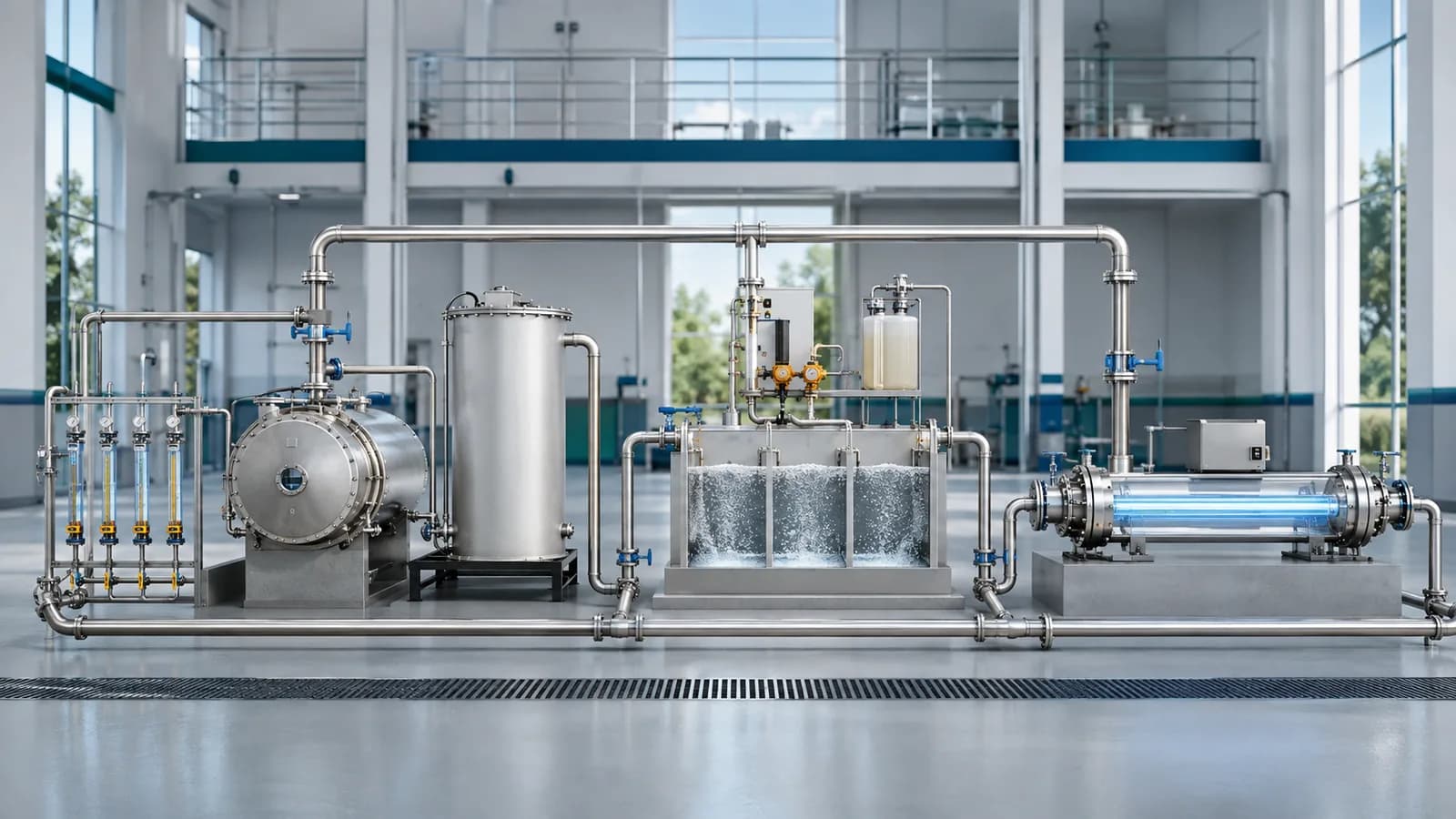
Technology
Ozone vs Chlorine vs UV for Water Disinfection: How to Choose
Compare ozone, chlorine and UV by treatment role, residual, water quality, by-products, validation and complete-system scope—not by a universal winner table.
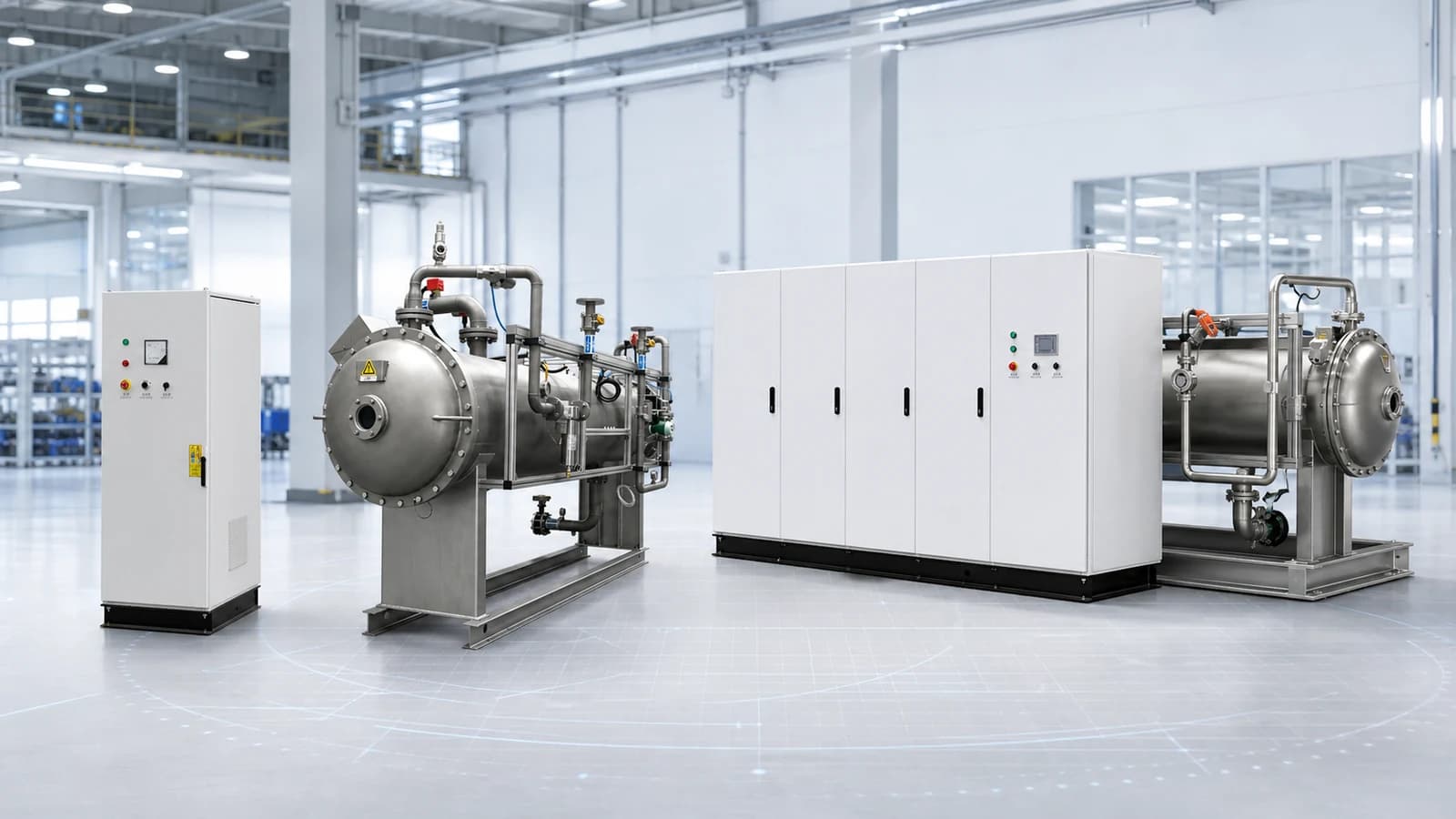
Buying Guide
Industrial Ozone Generator Sizing for Water Treatment: Inputs, Calculations, and Limits
Learn how to calculate industrial ozone-generator capacity from water flow, defined ozone dose and transfer efficiency—without confusing generated, transferred or residual ozone.

Buying Guide
How to Prepare an Industrial Ozone System RFQ: A Specification Checklist
Build a comparable industrial ozone system RFQ with a clear design basis, scope boundary, operating cases, bidder response schedule and acceptance requirements.
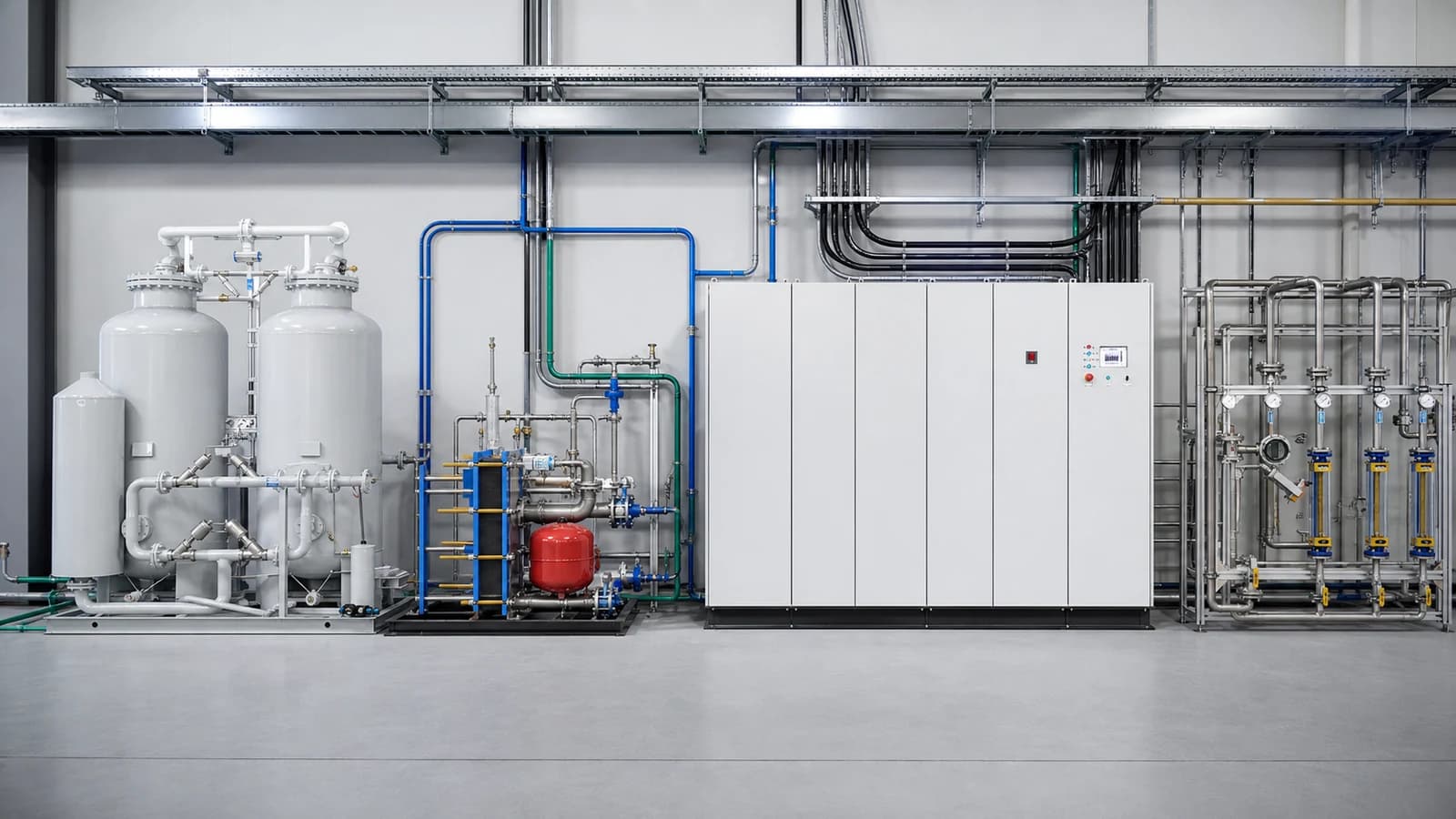
Buying Guide
Industrial Ozone System Utility Requirements: A Site-Preparation Checklist
Prepare power, feed gas, cooling, ventilation, drainage, layout and control interfaces for an industrial ozone system using a responsibility-based site checklist.
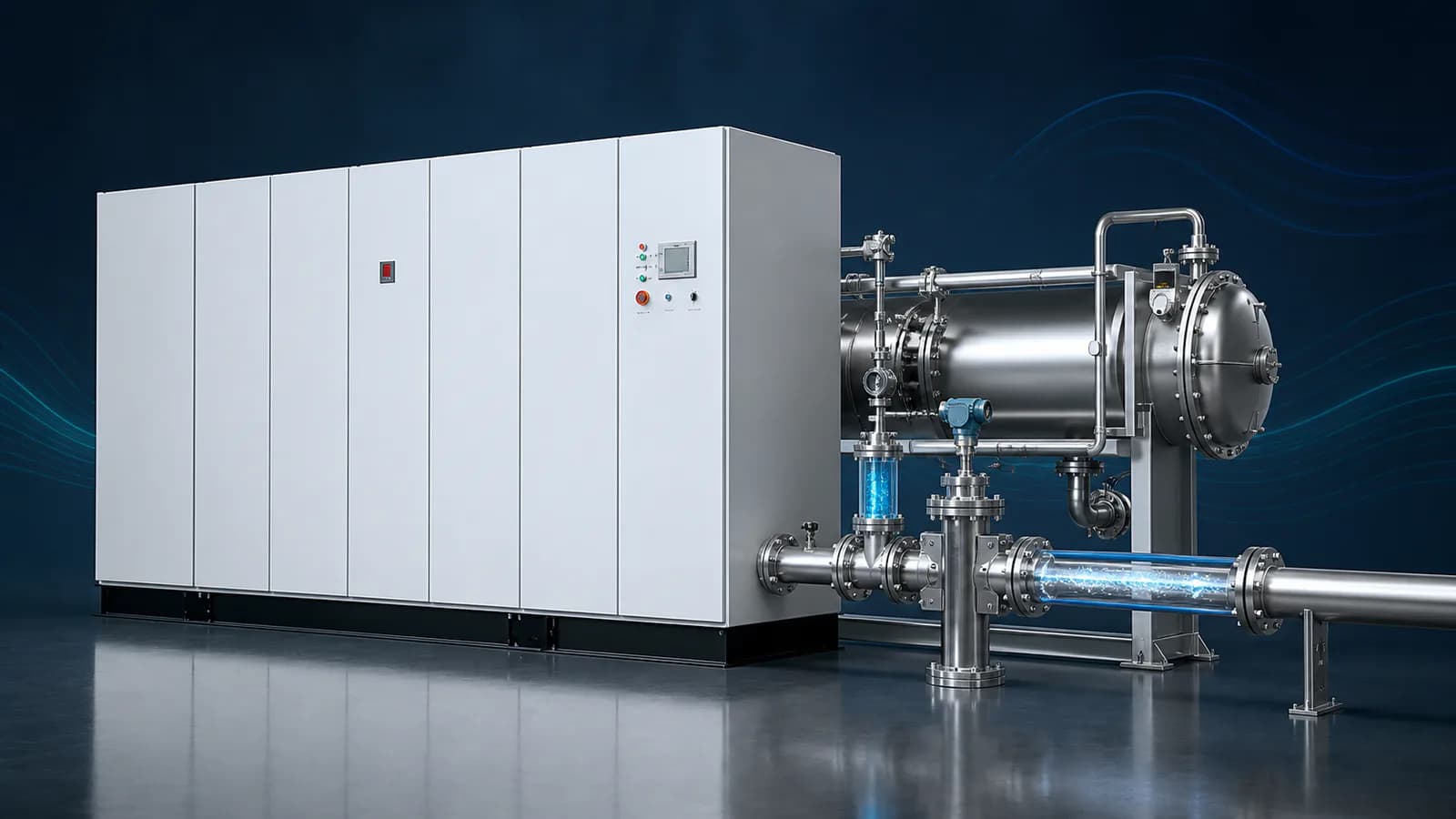
Technology
Ozone Concentration vs Ozone Output: g/Nm³, wt%, g/h and kg/h Explained
Learn how ozone concentration, product-gas flow and ozone output relate—and how to compare g/Nm³, wt%, g/h and kg/h without mixing measurement bases.
Buying Guide
Air-Fed vs Oxygen-Fed Industrial Ozone Generators: How to Choose the Feed-Gas Route
Compare air-fed and oxygen-fed industrial ozone generators by concentration, product-gas flow, utilities, oxygen supply, operating profile and complete-system cost.
Buying Guide
What Is Included in a Complete Industrial Ozone System?
See which equipment, controls, utilities and project interfaces may be included in a complete industrial ozone system—and what every proposal must define.