
Ozone Concentration vs Ozone Output: g/Nm³, wt%, g/h and kg/h Explained
Learn how ozone concentration, product-gas flow and ozone output relate—and how to compare g/Nm³, wt%, g/h and kg/h without mixing measurement bases.
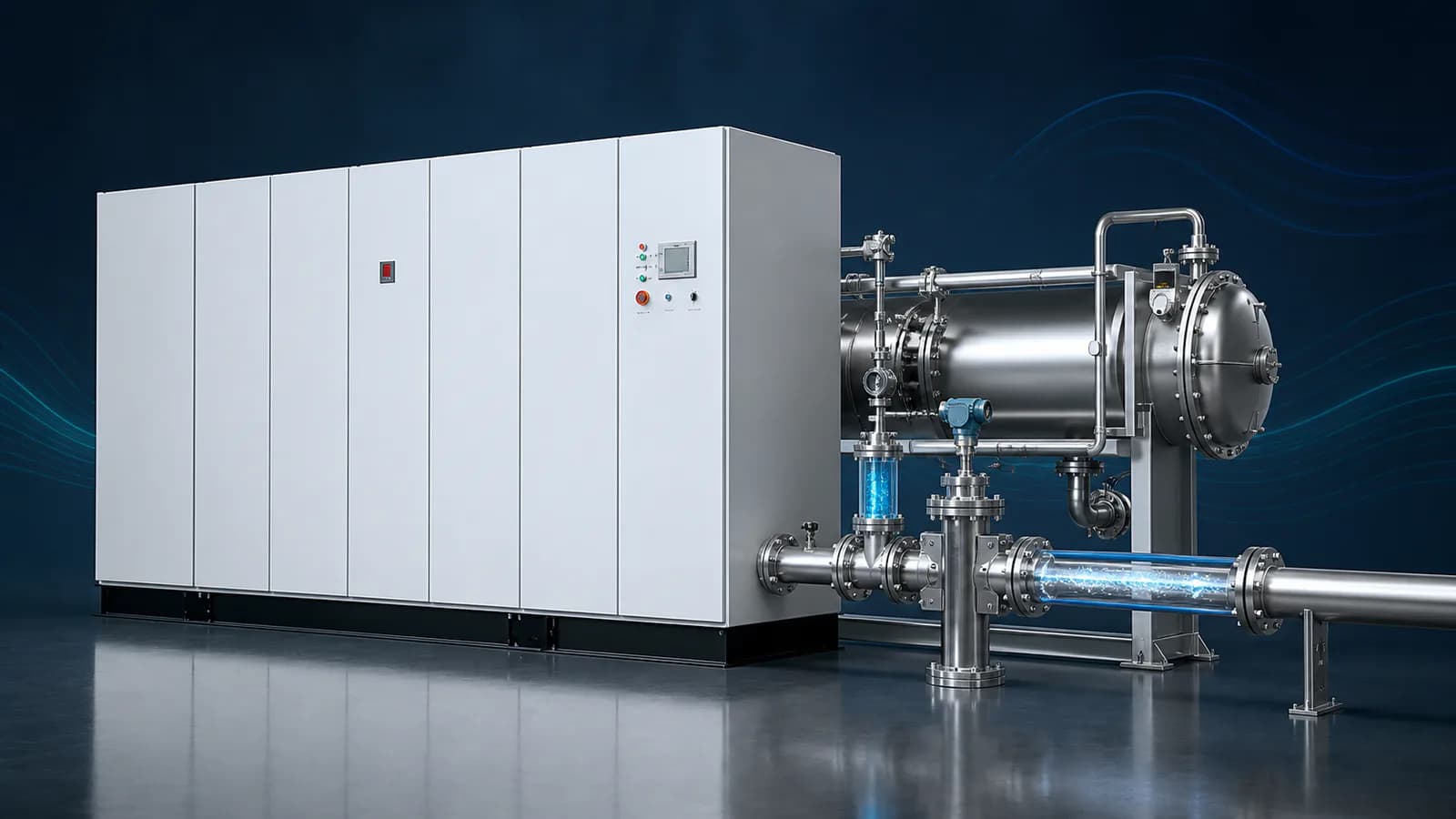
Short answer: ozone concentration and ozone output are not the same specification. Concentration tells how much ozone is present in the ozone-containing gas, commonly as g/Nm³, wt% or ppmv. Output tells how much ozone the generator produces per unit time, commonly as g/h or kg/h. When concentration and volumetric flow describe the same product-gas stream on the same declared reference basis, the idealized relationship is concentration × flow = mass output. A concentration value alone is not generator capacity.
This guide is for owners, EPC teams, consultants, plant engineers and technical buyers comparing industrial ozone-generator data. It explains what the common units answer, which fields must accompany a conversion and how to normalize proposals without turning one operating point into a universal performance claim.
If the project is still calculating the required ozone mass duty from water or process data, begin with the industrial ozone-generator sizing guide. This page starts after a duty has been estimated and focuses on interpreting the generator-side gas data.
Three quantities must stay separate
A useful data sheet or proposal distinguishes three quantities before it attempts any comparison:
- Ozone concentration: the composition of the ozone-containing gas or the mass of ozone per stated gas volume.
- Product-gas flow: the volumetric or mass flow of the gas leaving the ozone-generation stage, with its stream location and reference conditions stated.
- Ozone output: the ozone mass produced per unit time at the declared operating point.
A fourth group begins downstream: ozone applied to the process, ozone transferred into water, off-gas ozone and liquid residual. Those values may be needed for treatment design, but none is automatically equal to generator output.
Measurement boundary
Three quantities create one declared generator operating point
Concentration and product-gas flow must describe the same stream and reference basis before they can reconcile with mass output.
Concentration
g/Nm³ · wt% · ppmv
How ozone-rich is the gas?
Product-gas flow
Nm³/h · kg/h gas
How much of that same gas moves per hour?
Ozone output
g/h · kg/h O₃
How much ozone mass is produced per hour?
Downstream quantities are separate
Applied dose, transferred ozone, liquid residual and off-gas require the process/contact boundary. They are not alternate labels for generator output.
How are ozone concentration, gas flow and output related?
For a product-gas concentration reported as mass per normalized volume, the dimensional relationship is straightforward:
Ozone output (g/h) = ozone concentration (g/Nm³) × ozone-containing product-gas flow (Nm³/h)
The units confirm the result: g/Nm³ × Nm³/h = g/h. To express the result in kg/h, divide g/h by 1,000. To calculate a required product-gas flow from an agreed mass rate and concentration, rearrange the same relationship:
Product-gas flow (Nm³/h) = ozone output (g/h) ÷ ozone concentration (g/Nm³)
An illustrative calculation
Suppose a proposal states an ozone-containing product-gas flow of 4.0 Nm³/h and an ozone concentration of 25 g/Nm³ at the same declared normal condition and operating point:
25 g/Nm³ × 4.0 Nm³/h = 100 g/h = 0.10 kg/h
This is fictional arithmetic used only to demonstrate the relationship. It is not a GUOLIN model rating, a recommended operating point or an equipment-selection result. Before using the equation on real supplier data, confirm that both values refer to the same product stream, time period, temperature/pressure reference and dry or wet basis.
The formula also shows why “higher concentration” does not necessarily mean “higher output.” If concentration rises while product-gas flow falls, the mass output can increase, decrease or remain the same. Both values are required.
What do g/Nm³, g/m³, wt%, ppmv, g/h and kg/h mean?
These units answer different questions. Some describe concentration; others describe a mass rate. They should not be placed in one ranking column without identifying the quantity and basis.
Unit decoder
The unit says what quantity you have—not whether two bids are comparable
g/Nm³
Quantity: Mass / normal volume
Answers: Gas concentration
Must declare: Reference T, absolute P, dry/wet basis, stream
g/m³
Quantity: Mass / actual volume
Answers: Gas concentration
Must declare: Actual T, P, moisture and sample location
wt%
Quantity: Mass fraction
Answers: Gas composition
Must declare: Mixture definition and carrier-gas composition
ppmv
Quantity: Mole / volume fraction
Answers: Gas composition
Must declare: T, P and carrier basis for mass conversion
g/h · kg/h
Quantity: Ozone mass / time
Answers: Generator output
Must declare: Operating point, test/calculation method and limits
No universal factor converts every wt%, ppmv and g/Nm³ value. Carrier composition and the declared gas state are part of the calculation.
g/Nm³: mass concentration on a declared normal-volume basis
Grams per normal cubic metre expresses ozone mass per gas volume after that gas volume has been referenced to declared “normal” conditions. It is often convenient because multiplying it by product-gas flow in Nm³/h can yield g/h. The letter N does not remove the need to state the chosen temperature, absolute pressure and moisture convention.
g/m³: mass concentration at the stated actual conditions
Grams per cubic metre can describe ozone mass per actual gas volume at the measurement condition. It should not be silently treated as g/Nm³. Gas volume changes with temperature and pressure, so the numerical value can change when the same gas is expressed at a different condition.
wt%: ozone mass fraction
Weight percent expresses the mass of ozone as a percentage of the total gas-mixture mass. It is not a volumetric concentration and it is not output. Converting wt% to g/Nm³ requires the gas-mixture composition and reference-state convention; the carrier stream may be conditioned air, oxygen-enriched gas or another supplier-approved composition.
ppmv: ozone mole or volume fraction
Parts per million by volume is a mole/volume fraction for gas mixtures under the usual ideal-gas interpretation. It is common in lower-concentration monitoring and calibration contexts. A ppmv-to-mass conversion needs molecular weight plus temperature and pressure, and a ppmv-to-wt% conversion also needs the mixture's mean molecular weight. There is no responsible one-factor conversion for every carrier gas and state.
g/h and kg/h: ozone mass output
These are production rates. They answer how much ozone mass is generated per hour at the declared operating point. One kilogram per hour equals 1,000 grams per hour. The unit conversion is universal; the equipment performance behind the number is not. Feed gas, concentration, product-gas flow, cooling, electrical setting, pressure, turndown and test method still belong beside it.
Why “normal” or “standard” gas conditions must be written out
Normal and standard volumetric flow are ways to represent gas quantity at a selected reference temperature and pressure. They are useful because the same mass flow can otherwise occupy different actual volumes as temperature and pressure change. The words alone are not enough: different documents and industries use different reference temperatures, and moisture conventions can differ.
For every Nm³/h, Sm³/h, g/Nm³ or similar value, ask the supplier to state:
- reference temperature;
- absolute reference pressure;
- dry or wet gas basis;
- gas composition or carrier-gas basis;
- actual measurement location; and
- the method used to normalize the reading.
If two bids use different reference states, first bring them to one agreed basis. Do not change a unit label in a spreadsheet and assume the values have been converted.
Use the ozone-containing product stream—not an ambiguous “gas flow”
The formula requires the volumetric flow of the same gas mixture whose concentration is being reported. That detail matters because an upstream feed or carrier-gas flow may be measured before ozone is formed, while the concentration analyzer samples the ozone-containing product gas after the generator.
At lower concentrations, a simplified calculation may appear to reconcile closely. At higher ozone concentrations, converting some oxygen into ozone changes the product-gas composition and can affect the relationship between upstream carrier-gas normal flow and downstream product-gas normal flow. Specialist measurement methods may therefore apply a composition/contraction treatment.
Do not invent a universal correction factor. Instead, require the supplier to identify:
- whether the stated flow is feed gas or ozone-containing product gas;
- where flow and concentration are measured;
- whether both values are time-aligned and normalized to the same conditions;
- how any feed-to-product composition correction is handled; and
- whether mass output is directly measured, calculated or reconciled by another accepted method.
This is especially important when comparing conditioned-air and oxygen-fed generator configurations. A feed-gas decision can change concentration and product-gas flow, but neither route should be judged from a concentration headline alone.
Why an analyzer reading alone does not prove g/h or kg/h
A gas-phase ozone analyzer measures concentration in the gas presented to its optical or electrochemical measurement path. It does not know the plant's total ozone mass rate unless a representative flow for the same stream is also available and the calculation basis is defined.
A defensible measurement plan records:
- analyzer identity and range: a low-concentration ambient monitor, high-concentration process analyzer and dissolved-ozone instrument are not interchangeable;
- measurement principle: for example, UV photometry with the applicable instrument method and conversion settings;
- sample point: a representative location with the required pressure and flow control;
- sample conditioning: materials, temperature, pressure, filtration or other treatment that does not invalidate the sample;
- calibration and traceability: the reference chain, calibration interval and checks used for the acceptance task;
- flow instrument: its location, range, accuracy basis and reference-condition treatment; and
- calculation/reporting method: how concentration and flow become a reported mass output, including averaging period and data synchronization.
The required acceptance method should be agreed before purchase, not reconstructed after commissioning. A website explanation cannot replace the project instrument data sheets, calibration records or performance-test procedure.
Generator output is not applied dose, transferred ozone or residual
One of the most costly specification mistakes is to carry a generator-side number directly into the treatment process without preserving the boundary.
- Generated ozone: mass leaving the ozone-generation stage.
- Applied ozone: mass sent toward the injection or diffusion system, after any defined gas-side losses or recycle boundary.
- Transferred ozone: mass actually transferred into the liquid or target process.
- Consumed ozone: ozone reacting with immediate and target demand over the stated time.
- Residual ozone: ozone measured at a defined downstream sampling point and time.
- Off-gas ozone: ozone remaining in gas leaving the contacting stage.
The ozone dosing or contacting system, hydraulics, gas-to-liquid ratio, pressure, temperature, water matrix, contact time and residual-gas destruction boundary determine how generator production connects to the process. No universal transfer factor turns kg/h at the generator into mg/L residual at a sample point.
If the functional boundaries themselves are unclear, review what a complete industrial ozone system includes before setting an acceptance value.
Compare three operating points, not one maximum number
A maximum ozone-output row is not an operating curve. A useful comparison asks each supplier to complete minimum, normal and peak cases using the same project duty and site conditions. At each point, record ozone output, concentration, product-gas flow, feed-gas conditions, power, cooling, pressure, control limit and measurement method.
Proposal normalization
Reconcile the same fields at minimum, normal and peak duty
One maximum value cannot show concentration, flow, utilities or control behavior across the required operating range.
1. Minimum
Stable controlled duty
- • Output: g/h or kg/h
- • Concentration + same-stream flow
- • Reference state + feed gas
- • Power, cooling and pressure
- • Measurement method + limits
2. Normal
Expected operating duty
- • Output: g/h or kg/h
- • Concentration + same-stream flow
- • Reference state + feed gas
- • Power, cooling and pressure
- • Measurement method + limits
3. Peak
Continuous or time-limited
- • Output: g/h or kg/h
- • Concentration + same-stream flow
- • Reference state + feed gas
- • Power, cooling and pressure
- • Measurement method + limits
Same basis
Same stream, T/P, moisture and time basis
Mass balance
Concentration × flow reconciles by the declared method
Same boundary
Feed gas, cooling, transfer, off-gas and controls visible
Then check four relationships:
- Mass balance: do concentration and same-stream flow reconcile with the stated output using the declared method?
- Turndown: can the offered system control the required minimum duty without leaving its supported concentration, cooling or electrical envelope?
- Peak case: is peak output continuous, time-limited, redundant-module dependent or conditioned on different feed gas or cooling?
- Complete-system loads: are feed-gas preparation, oxygen generation, cooling, dosing, off-gas and control loads included on the same boundary?
The industrial ozone-system utility checklist helps close the site conditions behind these points. The ozone-system RFQ guide then turns them into bidder-response fields and acceptance records.
Specification block for comparable ozone-generator proposals
Copy this field set into the technical inquiry and require a response for every offered configuration:
Required ozone duty: [minimum / normal / peak, g/h or kg/h]
Duty boundary: [generated / applied / transferred]
Required gas concentration: [value or supplier-proposed range, unit]
Product-gas flow: [minimum / normal / peak, unit]
Reference basis: [temperature, absolute pressure, dry/wet convention]
Feed gas: [conditioned air / oxygen-enriched gas, composition, pressure, temperature and moisture]
Operating profile: [hours, turndown, seasonal cases, start/stop pattern]
Measurement points: [concentration sample point and flow-measurement point]
Instrumentation: [principle, range, calibration/traceability and calculation method]
Utilities by operating point: [power, cooling, compressed air, oxygen and other services]
Downstream interface: [injection/diffusion, contact, off-gas and controls]
Acceptance: [test conditions, duration, averaging, tolerances and responsible party]
Exceptions: [limits, exclusions and assumptions]
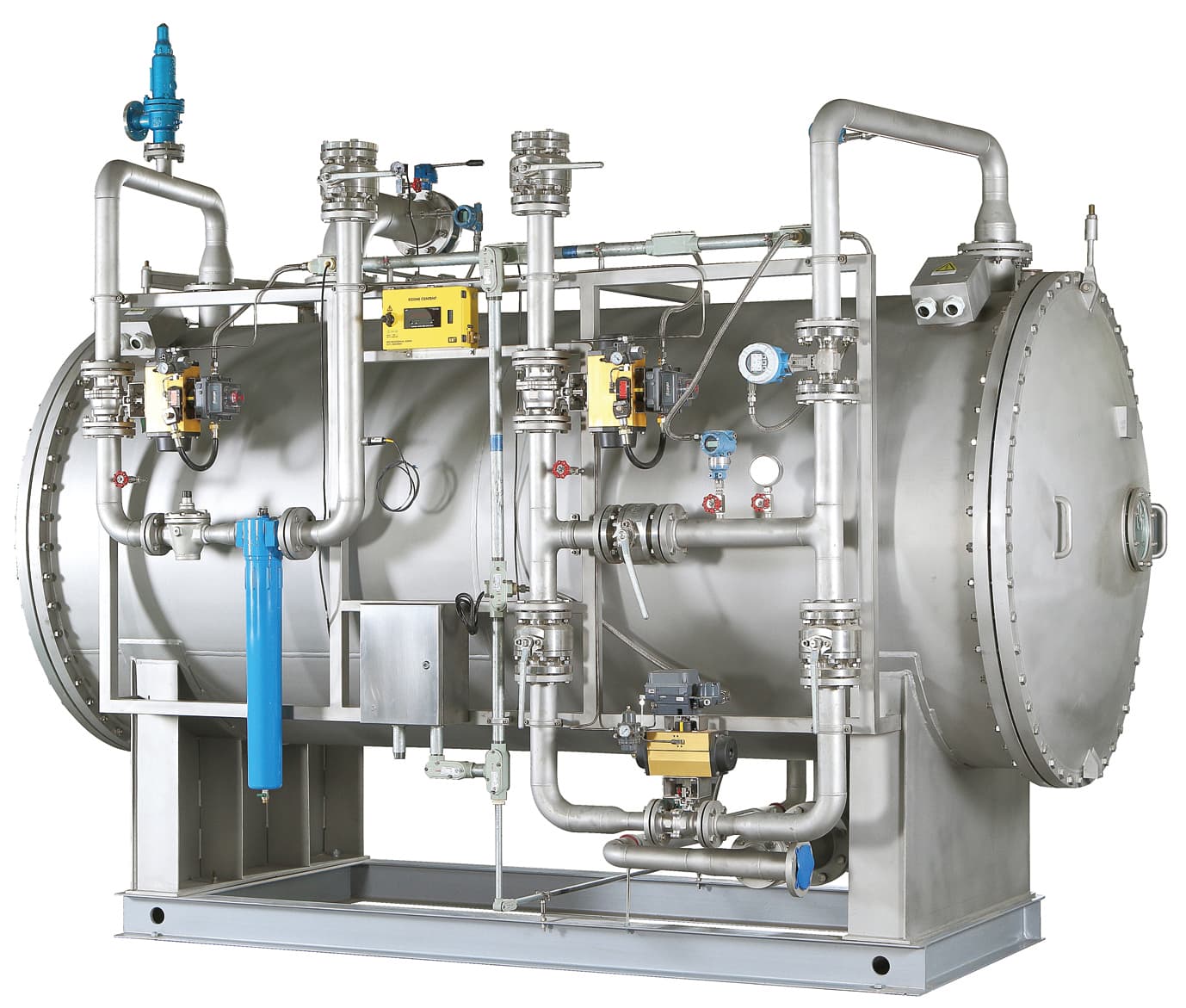
This structure also makes product-range conversations more efficient. GUOLIN's published catalogue-supported configurations span 10 g/h to 150 kg/h depending on feed gas and project configuration. The compact 10–800 g/h range, 1–10 kg/h range and 10–150 kg/h large-system range remain separate equipment owners; their final operating points must be confirmed from project data rather than inferred from this article's example.
Where one packaged boundary is preferable, review the integrated ozonator route. Where oxygen supply is part of the project, the PSA oxygen package and VPSA oxygen-system pages define the relevant equipment categories. The appropriate arrangement still depends on duty, concentration, utilities, operating profile and site responsibility.
The practical buying rule
Never ask only “what concentration can the generator make?” Ask “what ozone mass rate does the complete offered system deliver at each required operating point, at what concentration and same-stream product-gas flow, on which reference and measurement basis, with which utilities and limits?”
That question prevents three common comparison errors: treating concentration as capacity, comparing differently normalized gas values and carrying generator output directly into an application dose or residual. It also gives the supplier enough structure to state a measurable performance boundary.
GUOLIN is China’s only publicly listed ozone-system manufacturer, with complete-system design, manufacturing and integration capabilities. Send your process duty, minimum/normal/peak cases, feed-gas route, required concentration basis, utilities and measurement requirements through the technical project-review form. GUOLIN can then define the generator, gas-supply, cooling, dosing/contact, off-gas and control interfaces needed for the actual project. The industrial ozone-system product hub and application solution pages provide the starting routes.
Frequently asked questions
What is the difference between ozone concentration and ozone output?
Ozone concentration describes how much ozone is present in the ozone-containing gas, such as g/Nm³, wt% or ppmv. Ozone output describes ozone mass produced per time, such as g/h or kg/h. Concentration alone is not generator capacity.
How do I calculate ozone generator output in g/h?
When both values describe the same ozone-containing product stream on the same declared reference basis, multiply concentration in g/Nm³ by product-gas flow in Nm³/h to obtain g/h. Confirm the stream, reference temperature and pressure, moisture basis and measurement method before using real data.
Does a higher ozone concentration mean a larger ozone generator output?
Not necessarily. Output depends on both concentration and product-gas flow. Concentration can rise while gas flow falls, so the ozone mass rate may increase, decrease or remain unchanged. Compare all three values at the same operating point.
Can I convert ozone wt% directly to g/Nm³?
Only after the mass-fraction definition, carrier-gas composition and gas reference conditions are known. A single universal factor is unsafe because air, oxygen-enriched gas and other mixtures have different mean molecular weights and normalization bases.
Are g/m³ and g/Nm³ the same for ozone?
Not automatically. g/m³ may refer to the actual measurement condition, while g/Nm³ uses a declared normal reference condition. Temperature, pressure and dry or wet basis must be reconciled before comparing the numbers.
Can feed-gas flow be used to calculate ozone output?
Do not assume it can. The concentration normally describes the ozone-containing product gas, while feed flow may be measured upstream. At higher ozone concentrations, composition and gas-contraction treatment can matter. Ask the supplier for the declared stream and calculation method.
Is generator output the same as ozone dose or dissolved residual?
No. Generator output is ozone mass produced. Applied dose, transferred ozone, consumed ozone, dissolved residual and off-gas ozone belong to downstream process boundaries and depend on contacting, process conditions and ozone demand.
What data should an ozone-generator proposal show?
Request minimum, normal and peak output, concentration and same-stream product-gas flow; reference temperature and pressure; dry or wet basis; feed-gas condition; power and cooling; measurement points, instruments and calculation method; turndown, limits and the acceptance-test boundary.
Related articles
Buying Guide
Air-Fed vs Oxygen-Fed Industrial Ozone Generators: How to Choose the Feed-Gas Route
Compare air-fed and oxygen-fed industrial ozone generators by concentration, product-gas flow, utilities, oxygen supply, operating profile and complete-system cost.
Buying Guide
Industrial Ozone Generator Sizing for Water Treatment: Inputs, Calculations, and Limits
Learn how to calculate industrial ozone-generator capacity from water flow, defined ozone dose and transfer efficiency—without confusing generated, transferred or residual ozone.
Buying Guide
Industrial Ozone System Utility Requirements: A Site-Preparation Checklist
Prepare power, feed gas, cooling, ventilation, drainage, layout and control interfaces for an industrial ozone system using a responsibility-based site checklist.

Buying Guide
How to Prepare an Industrial Ozone System RFQ: A Specification Checklist
Build a comparable industrial ozone system RFQ with a clear design basis, scope boundary, operating cases, bidder response schedule and acceptance requirements.
Buying Guide
What Is Included in a Complete Industrial Ozone System?
See which equipment, controls, utilities and project interfaces may be included in a complete industrial ozone system—and what every proposal must define.