
What Is Included in a Complete Industrial Ozone System?
See which equipment, controls, utilities and project interfaces may be included in a complete industrial ozone system—and what every proposal must define.
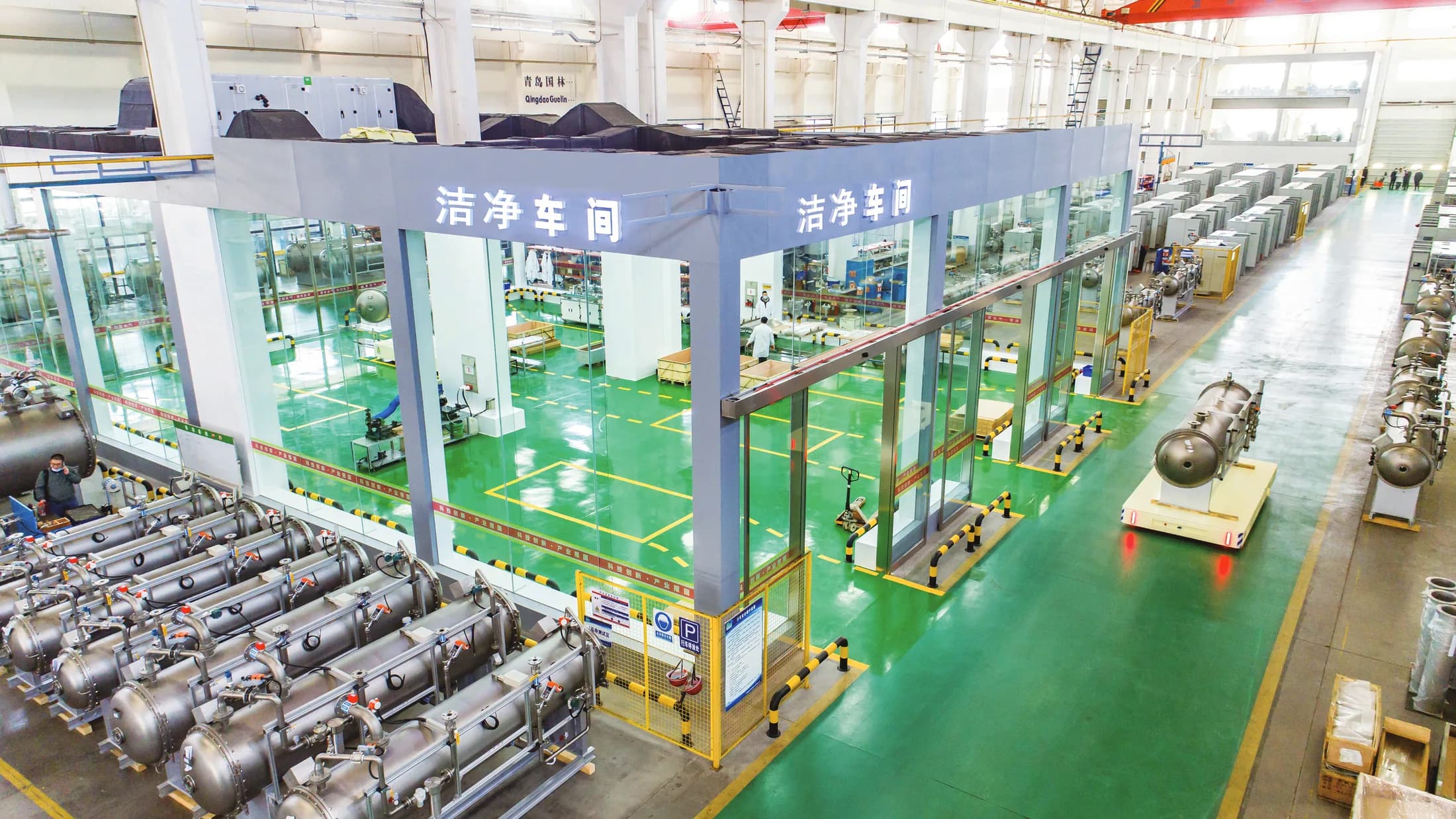
Short answer: a complete industrial ozone system is not simply an ozone generator plus a list of accessories. It is the coordinated process that prepares the feed gas, generates and cools the ozone, transfers it into the process, handles ozone-bearing residual gas, and controls safe operation. The exact equipment and responsibility split still have to be defined for each project.
This distinction matters when comparing proposals. Two suppliers can support the same treatment duty while drawing the package boundary in different places. One may include oxygen generation, a chiller and an injection skid; another may connect to owner-supplied oxygen, cooling water and an existing contact tank. Both offers can be technically workable, but they are not commercially comparable until the functions, interfaces and owners are made explicit.
This guide treats “complete” as an engineered system boundary, not a universal box count. It was prepared for international industrial buyers, engineers and EPC teams outside a single national code context. Local safety rules, water standards and contract documents always take precedence.
What does “complete industrial ozone system” actually mean?
Across technical guidance and real equipment manuals, the durable pattern is a chain of required functions: feed-gas preparation, ozone generation, ozone-to-process transfer, residual or off-gas management where applicable, and monitoring and control. Cooling, power conversion and safety interlocks support that chain. This functional view appears in US EPA process guidance and in manufacturer system manuals, even though their physical packages differ.
The practical inference is simple: compare functions and interfaces before comparing hardware names. A package can be skid-mounted, installed in an equipment room or integrated into a container, but the project still needs to assign every process, utility, control and safety connection.
Functional system boundary
Five functions—one coordinated process
The hardware can change, but each required function and its owner must be resolved.
Prepare feed gas
Air or oxygen supply, conditioning and flow control
Generate ozone
Discharge modules, power electronics and controls
Reject heat
Integral cooling or a separate cooling-water boundary
Transfer and contact
Injection, mixing, diffusion or a side-stream/contact vessel
Manage residual gas
Contain, monitor, recycle or destroy when applicable
Guolin supplies configured industrial ozone-generator systems, rather than operating as a standalone-parts retailer. Depending on the application and quotation, the system scope may extend from feed-gas equipment through generation, cooling, dosing/contact equipment, off-gas treatment, controls and containerized integration. Guolin's catalogue-supported configurations span 10 g/h to 150 kg/h, depending on feed gas and project configuration; that range describes multiple product families, not one universal model.
Which equipment may be part of the system?
1. Feed-gas supply and conditioning
The generator needs a controlled gas feed. Depending on capacity, concentration requirements and site utilities, the project may use conditioned air, an on-site PSA oxygen generator, a VPSA oxygen system, or supplied oxygen. Drying, filtration, pressure regulation, flow control and storage or buffering can sit inside or outside the ozone supplier's boundary.
Do not select this subsystem from a generic purity or pressure number copied from another project. Gas quality, flow, pressure and connection responsibility must match the selected generator and operating profile. A later technical decision should compare air and oxygen sources using site-specific availability, scale, energy, maintenance and redundancy requirements.
2. Ozone generation, power and heat rejection
The generation stage includes the discharge or reactor modules, power electronics and the controls needed to produce ozone. The appropriate generator family depends on required output, feed gas, target concentration, duty profile, redundancy and site conditions. Guolin's public ranges include compact generators, 1–10 kg/h selection configurations and large-capacity systems.
Ozone generation also creates heat. Some packaged systems use integral air cooling; other systems require a separate closed-loop or plant-water cooling interface. Therefore, “generator included” does not by itself answer who supplies the chiller, pumps, heat exchanger, water treatment, heat rejection or standby capacity.
3. Ozone transfer and process contact
Generated ozone only becomes useful when it is transferred to the treatment process. Possible arrangements include a Venturi injector, static mixer, fine-bubble diffuser, side-stream loop, purpose-built contact vessel or an existing process tank. The dosing and distribution system may include pumps, injectors, mixers, valves, piping and instruments, but the exact arrangement depends on hydraulics, mass-transfer duty and the treatment objective.
A complete proposal should state whether the contact volume is new or existing; who owns the recirculation pump and main process piping; what backflow protection is used; where ozone is injected; and how the gas and liquid phases are contained. An equipment list alone cannot establish dose, contact time or treatment performance.
4. Residual gas and off-gas management
When the contacting process creates ozone-bearing off-gas, the project has to define how that gas is contained, monitored, recycled where appropriate, destroyed and safely discharged. An off-gas destructor is one possible part of that solution. The engineering need for safe residual-gas management does not prove that a destructor is automatically included in every supplier's package.
The correct arrangement depends on the contact process, residual load, ventilation concept and local requirements. No worldwide discharge limit, destructor size or room-monitor setpoint should be inferred from this guide.
5. Instrumentation, controls and safety functions
Monitoring and interlocks form a cross-system layer. Depending on the process, measurement points may include feed-gas conditions, generator output, dissolved or residual ozone, ambient ozone, cooling status, off-gas or destructor outlet, flow, pressure and valve position. The PLC or controller may also exchange status, alarms, permissives and shutdown commands with the plant DCS or SCADA.
Not every instrument is mandatory for every application, but every project must decide what is measured, which party supplies each device, where the signal terminates, and what happens when a limit or utility failure occurs. Ozone is an inhalation hazard; detection, containment, ventilation, alarms and shutdown logic require a project-specific safety review rather than a generic accessory checklist.
Included, optional, or supplied by others?
“Complete”, “integrated” and “turnkey” are commercial descriptions, not a universal international scope definition. Manufacturer literature shows materially different package boundaries: some systems integrate oxygen, injection and controls; others make the contact tank, room monitor, chiller, off-gas destructor or analyzers optional. Public procurement clarifications likewise show that piping, manifolds, SCADA, cooling and commissioning responsibilities must be resolved in the contract.
Illustrative RFQ matrix
Turn “complete” into named responsibilities
These are possible boundaries—not Guolin standard scope. The signed quotation must assign every item.
Supplier package may include
- Ozone generation and package PLC
- Internal skid piping and instruments
- Defined power and cooling equipment
Priced project options may include
- Oxygen supply or cooling package
- Injection, monitoring or destruction equipment
- Containerized integration and services
Customer or EPC scope may include
- Process tank and main plant piping
- Power, civil works, HVAC and drainage
- Plant SCADA, field installation and permits
The matrix is an RFQ tool, not a statement of Guolin's standard supply. A usable quotation should replace every “may” with a named owner and a clear interface. It should also separate base supply, priced options, customer or EPC work, installation services and acceptance deliverables.
Which project interfaces must be defined?
An interface is the point where the ozone package depends on the plant, another vendor or a contractor. These points create many of the hidden differences between low and high quotations. They also determine whether equipment can be installed, commissioned and operated as intended.
Project interface checklist
Confirm these boundaries before ranking price
Process
- Flow and hydraulic envelope
- Injection and contact point
- Ozone and off-gas battery limits
Utilities
- Feed-gas source and connection
- Power and grounding
- Cooling, heat rejection and drainage
Controls & safety
- Instruments and analyzers
- Signals, protocol and I/O owner
- Alarms, ventilation and shutdown logic
Site & delivery
- Space, access, lifting and civil works
- Installation and commissioning owner
- FAT, documents, training and acceptance
At minimum, the RFQ should state the process flow and hydraulic envelope; feed-gas source and connection conditions; power supply; cooling and heat-rejection boundary; drainage and ventilation; ozone and off-gas piping limits; instrument and analyzer ownership; communications protocol; alarm and shutdown philosophy; and civil, lifting and access constraints.
For each interface, ask for the connection location, design condition, permitted operating range, physical standard, signal type, supplier, installer, tester and acceptance owner. A single-page battery-limits drawing and an I/O responsibility list often reveal more than a longer marketing brochure.
How do skid, equipment-room and containerized systems differ?
These are physical integration approaches, not automatic performance tiers:
- Skid-mounted package: groups selected equipment and internal piping on one or more frames. It can reduce field assembly, but site utilities, external piping, ventilation and process contact may remain outside the skid.
- Equipment-room installation: allows larger or distributed systems to use the building and plant utilities. The project must coordinate layout, access, drainage, HVAC, detection, cable routing and safe maintenance zones.
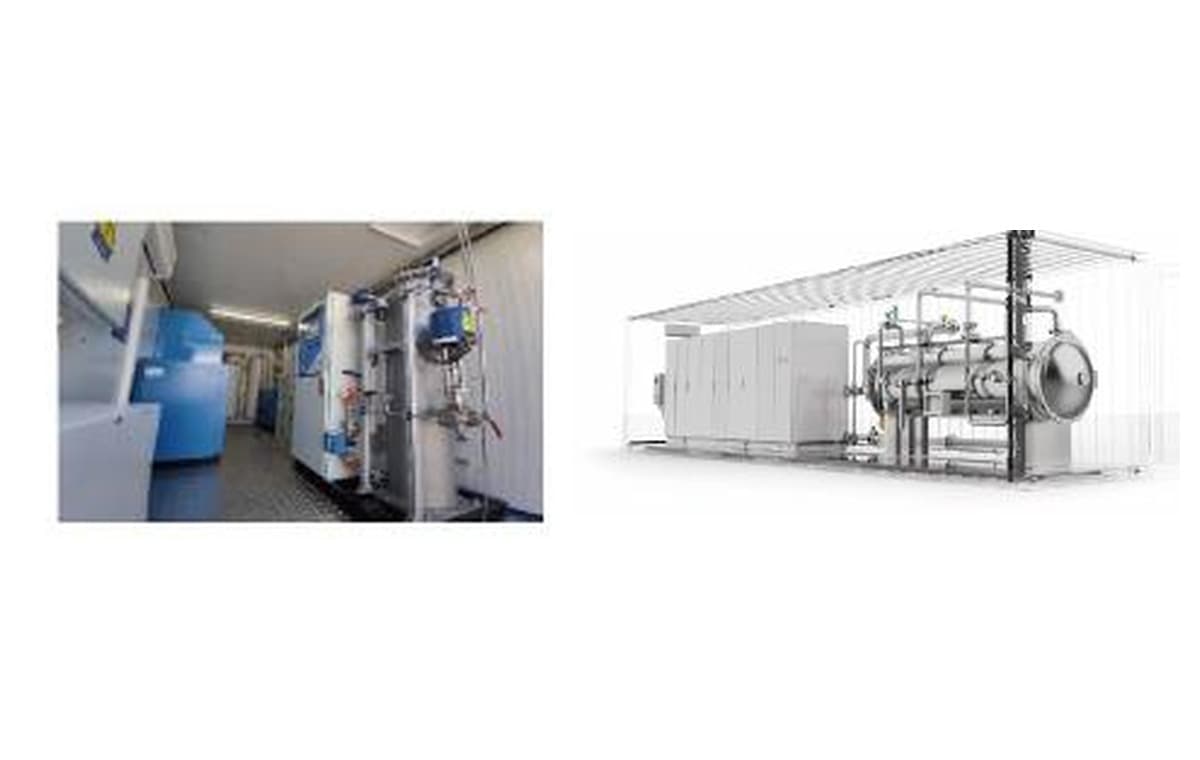
- Containerized ozone system: can integrate more environmental control, internal wiring and auxiliary equipment into a transportable enclosure. External process connections, foundations, power, cooling or heat rejection, feed water, discharge and site permits still require definition.
The best layout follows the treatment duty, climate, site space, construction strategy, transport limits, maintenance approach and local requirements. A container is not automatically more complete, and a site-built equipment room is not automatically less integrated.
How does the application change the system boundary?
The functional chain remains recognizable, but the treatment objective changes the contacting arrangement, monitoring points, redundancy and acceptance method. For municipal drinking water, the ozone stage must be placed within the full treatment train and evaluated against source-water and water-quality goals. For municipal wastewater and reuse, upstream solids and organic load, downstream biological or filtration stages, residual management and validation method can change the design.
In industrial wastewater, treatability and upstream variability may require testing before equipment selection. Aquaculture, food processing, pools and process-water applications have different hygiene, material, residual and operational constraints. This is why a system cannot be selected from flow rate or generator output alone.
What should an industrial ozone quotation answer?
- What treatment objective and design basis are being used?
- Which feed-gas source, quality, pressure, flow and redundancy are required?
- Which ozone-generator family, operating range and duty profile are proposed?
- How are cooling and heat rejection provided in normal and standby operation?
- How is ozone transferred, mixed and contacted with the process?
- How are residual gas, backflow and ambient ozone risks managed?
- Which instruments, alarms, interlocks and plant communication points are included?
- What lies inside the supplier battery limits, what is optional, and what belongs to the customer or EPC?
- Who supplies installation, FAT, commissioning, training, documentation, spares and performance acceptance?
- Which local codes, standards, permits and owner specifications govern the project?
Send these questions with available project data—not just a requested model number. Useful inputs include process flow, water or gas analysis, treatment target, operating hours, site conditions, utilities, plot constraints, control requirements and the desired responsibility split. Guolin can then prepare a project-specific technical proposal through the project review form.
What can an equipment list not tell you?
A list of generators, oxygen equipment, pumps and tanks cannot by itself establish ozone dose, transfer efficiency, contact time, treatment result, redundancy, operating cost or compliance. Those outcomes depend on the actual process, water or gas matrix, hydraulics, operating profile, measurement method and acceptance criteria.
Be cautious with universal claims such as “chemical-free”, “no by-products”, “maintenance-free”, “highest efficiency” or “lowest cost”. They either omit important conditions or collapse a project decision into a marketing slogan. A credible proposal states the design basis, exclusions, evidence limits and verification plan.
A practical way to compare proposals
- Normalize the design basis. Make every bidder use the same flow, quality, duty, site and acceptance inputs.
- Compare the five functional stages. Confirm feed gas, generation/cooling, transfer/contact, residual-gas management, and controls/safety.
- Mark every responsibility. Assign supplier, customer, EPC or third party at each battery limit.
- Compare operating envelopes. Review normal, turndown, standby, start-up and utility-failure conditions—not just nominal output.
- Compare deliverables. Separate hardware from drawings, software, FAT, installation, commissioning, training, spares and performance tests.
- Resolve exceptions before price ranking. A lower price may simply reflect a narrower scope or an unassigned interface.
This method does not guarantee a project outcome, but it makes technical and commercial differences visible early enough to manage them.
Frequently asked questions
What is normally included in a complete industrial ozone system?
The system must cover feed-gas preparation, ozone generation and cooling, transfer/contact, residual or off-gas management where applicable, and monitoring and safe control. The equipment used and the commercial supply boundary vary by project, so the quotation must name what is included, optional and supplied by others.
Does every ozone system need an oxygen generator?
No. Feed gas may come from conditioned air, an on-site PSA or VPSA oxygen plant, or supplied oxygen. The right source depends on the selected generator, required operating conditions, site utilities, scale, maintenance strategy and redundancy.
Is a contact tank always part of the ozone supplier's package?
No. Ozone may be transferred through injectors, mixers, diffusers, side-stream loops, a new contact vessel or an existing process tank. The hydraulic design and responsibility boundary must be stated in the project documents.
Does every complete system include an off-gas destructor?
Not automatically. Where ozone-bearing off-gas is produced, the project must define containment, monitoring, recycle or destruction, and safe discharge. Whether a destructor is required and who supplies it depend on the contact arrangement, residual load and local requirements.
Does turnkey mean the same scope from every ozone supplier?
No. Turnkey is not a universal international scope definition. Compare the battery limits, options, customer and EPC responsibilities, utilities, controls, installation services, documentation and acceptance deliverables in each offer.
What information is needed before selecting an industrial ozone system?
Start with process flow, water or gas analysis, treatment target, operating hours, site conditions, available utilities, plot constraints, control requirements and the desired responsibility split. Equipment output alone is not enough to define a system.