
Industrial Ozone System Safety: A Practical Checklist
Review the safeguards an industrial ozone installation needs, from ventilation and leak detection to interlocks, oxygen supply and emergency planning.
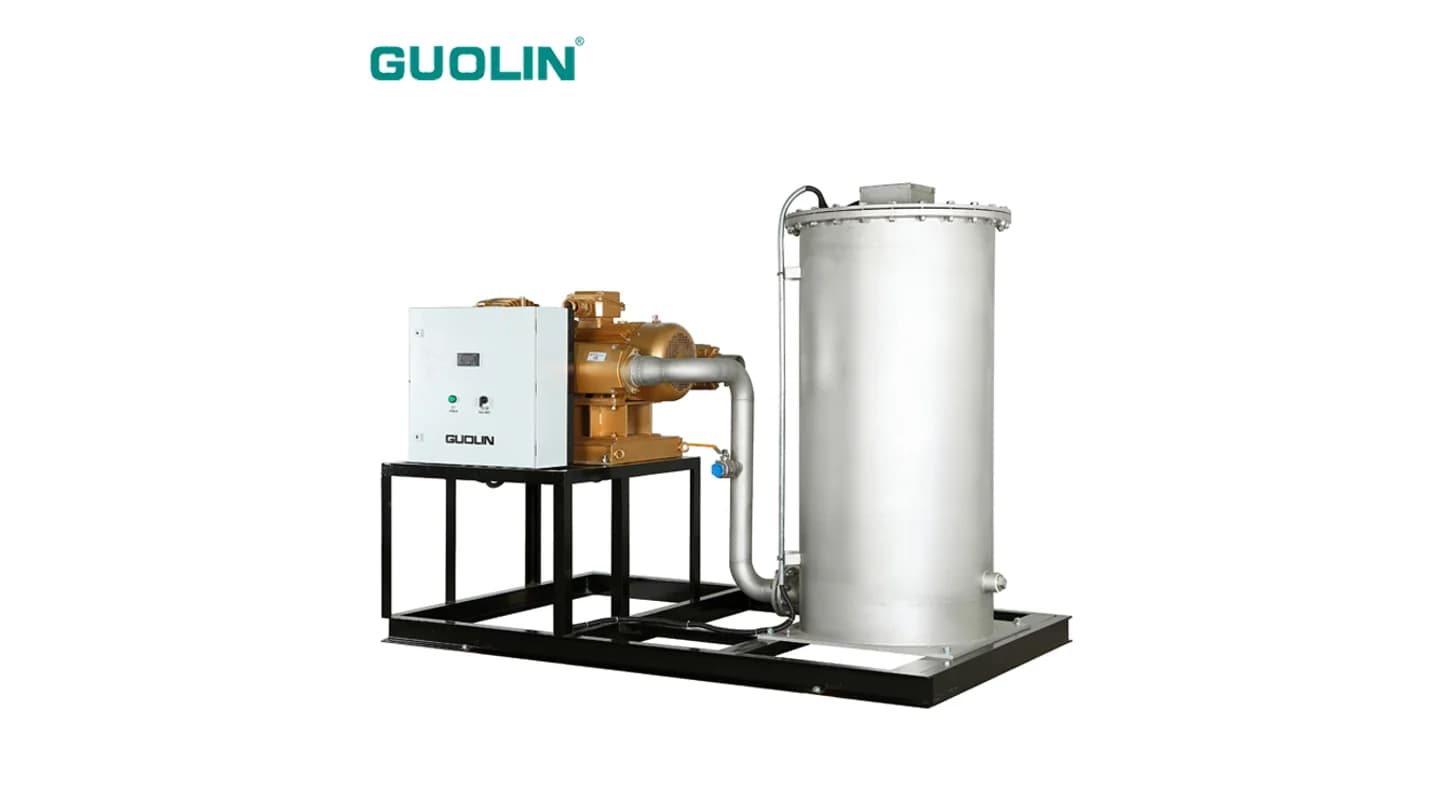
What happens if an ozone pipe leaks, the cooling stops or the room ventilation fails? A safe installation needs a defined response to each event. A leak detector is useful only when the alarm reaches someone and the equipment takes the protective action the site requires.
Plan containment, off-gas treatment, ventilation, detection and shutdown together. Include oxygen supply, electrical equipment, pressure and maintenance access in the review. Use the checks below during design and procurement; operating procedures, exposure limits and emergency actions must be set by the qualified site team using current equipment instructions and local requirements.
The NIOSH Pocket Guide for ozone describes ozone as a powerful oxidizer and identifies inhalation, eye and skin exposure routes. The UK HSE's EH38 ozone guidance similarly focuses on preventing and controlling worker exposure. These sources explain why exposure control matters; they do not replace the site's jurisdiction-specific risk assessment.
What does an industrial ozone safety review include?
The review starts at the feed-gas boundary and continues through ozone generation, gas distribution, injection or diffusion, the contactor, off-gas separation and destruction, room exhaust, monitoring, controls and maintenance access. It also asks what happens when a component loses power, cooling, gas flow, water flow, vacuum, communication or ventilation.
Use a hazard register that names at least these interfaces:
- Ozone exposure: leakage from generators, piping, valves, instruments, contactors, degassing points or destruct equipment.
- Oxidizing atmosphere and materials: incompatible elastomers, lubricants, contaminants or construction materials in ozone service.
- Oxygen enrichment and fire: leaks from oxygen storage, vaporizers, PSA/VPSA systems, hoses, valves or oxygen-rich off-gas.
- Electrical energy: high-voltage power supplies, stored energy, grounding, isolation and safe access to cabinets.
- Pressure, vacuum and backflow: pressure excursions, liquid ingress, siphoning, failed check devices or loss of injector vacuum.
- Heat and cooling: loss of cooling flow, excessive inlet or outlet temperature, ventilation failure and cabinet heat load.
- Entry and maintenance: contactors, tanks, rooms or enclosures that require isolation, purge, atmospheric verification or confined-space controls.
The purpose is not to turn every signal into the same shutdown. It is to decide which hazard is being controlled, which instrument detects it, what safe action follows, how operators are notified, and what evidence permits restart.
Layered safety boundary
A detector is one layer—not the safety system
Each layer either reduces the release, contains it, removes it, detects it or controls the human response.
Prevent
Minimize inventory; specify compatible materials, joints and operating envelope.
Contain
Control pressure, backflow, enclosure and the complete ozone gas path.
Remove
Destroy residual off-gas and ventilate credible release and accumulation zones.
Detect & act
Monitor the right locations and execute an approved cause-and-effect sequence.
Prove & respond
Challenge the full loop, train operators and control reset, entry and change.
Why is a gas detector alone not an ozone safety system?
An ambient ozone detector is a last-line engineering control: it identifies ozone after containment has failed or process gas has escaped. It cannot substitute for compatible materials, sound joints, negative-pressure contactor operation where applicable, properly sized off-gas destruction, ventilation, safe routing or preventive maintenance.
Use the hierarchy of controls. First minimize the inventory and credible release. Then contain and route the gas. Keep the contact and off-gas train under the intended pressure regime. Destroy residual ozone before discharge. Ventilate rooms and enclosures. Add monitoring and automatic safe actions. Support those layers with inspection, calibration, procedures, training, access control and personal protective equipment selected by the site's EHS authority.
Odour must not be the alarm system. People differ in sensitivity, exposure can impair reliable recognition, and an operator may not be present at the release point. The US EPA's Alternative Disinfectants and Oxidants Guidance Manual explicitly warns that smell should not be relied upon for detection and describes continuous monitoring, alarms, shutdown and ventilation as separate safeguards.
How should an ozone generator room be ventilated?
Separate two jobs that are often confused:
- Normal ventilation manages equipment heat, ordinary room conditions and any continuously permitted discharge.
- Emergency ventilation dilutes and removes a credible accidental release while limiting migration to occupied areas, air intakes and adjacent rooms.
There is no responsible universal air-change rate for every ozone room. Required airflow depends on the maximum credible release, room volume and geometry, release height and momentum, detector response, exhaust location, makeup-air path, occupancy, adjacent spaces, climate, equipment heat and applicable code. A project should document the release scenario and ventilation calculation rather than copy an air-change number from an unrelated plant.
Arrange supply and exhaust so air sweeps the credible release and accumulation zones instead of short-circuiting between grilles. Avoid discharging ozone-bearing air near occupied areas, openings or fresh-air intakes. Where the process design requires a contactor under negative pressure, confirm the pressure-control and off-gas route in normal, startup, shutdown and fault conditions. Ontario's current drinking-water design guideline calls for ambient monitoring near generators and contactors, monitors where ozone may accumulate, negative-pressure contactors and exhaust ventilation before maintenance entry; those points are useful design checks even when the project is not in Ontario.
Ventilation status should be a real signal, not an assumption based only on a fan command. Depending on the design, proof may come from airflow, duct pressure, damper position, motor feedback or a combination. Define what the ozone system does when that proof is lost.
Where should ambient ozone monitors be installed?
Place detectors using the credible leak locations and airflow study. Review the generator, gas manifolds and instruments, contactor access points, separators, destructor equipment and enclosed skids or containers. Check whether room geometry creates pockets that the proposed monitoring would miss.
Do not place a detector merely where installation is convenient. For every sensor, record:
- the release source and airflow path it is intended to cover;
- measurement range, response time, cross-sensitivities and environmental limits;
- sample-conditioning or diffusion assumptions;
- local display, audible and visible annunciation, and remote alarm routing;
- power-loss, communication-failure and instrument-fault behavior;
- calibration, functional challenge and replacement requirements; and
- the portable-monitor rule for investigation, entry and maintenance.
A fixed monitor's datasheet is part of the safety basis. Follow its manufacturer-approved zero, span, calibration and environmental requirements; do not invent one maintenance interval for all sensor technologies. Calibration verifies measurement. A separate functional test should prove that the full signal path—sensor, PLC input, logic, alarm devices, final elements and event record—performs the intended action.
What should the ozone cause-and-effect matrix contain?
The matrix translates hazards into deterministic actions. Each row needs a tag, normal state, warning state, trip condition, time delay if justified, automatic action, alarm destination, latching rule, reset authority and test method. Keep the occupational exposure program separate from the machine-protection logic, while showing how the two interact.
Signal → action → recovery
Build the cause-and-effect matrix around hazards
The table defines questions to close; it does not prescribe one shutdown sequence for every plant.
Ambient ozone
Detect: Warning / trip / detector fault
Response: Alarm; approved ventilation and ozone safe-state sequence
Restart: Atmosphere verified; release investigated
Ventilation
Detect: Airflow or pressure proof lost
Response: Block start or execute reviewed shutdown sequence
Restart: Air path and proof device restored
Cooling
Detect: Low flow or high temperature
Response: Remove affected generator or power section from service
Restart: Cooling stable; equipment condition checked
Process / contact
Detect: Low water flow, lost vacuum, high pressure or backflow
Response: Stop ozone production and isolate according to the P&ID
Restart: Hydraulics restored; liquid ingress excluded
Off-gas destruction
Detect: Temperature, flow, fan or performance fault
Response: Prevent uncontrolled ozone production or route to approved safe state
Restart: Destruct path proven available
Emergency stop
Detect: Hardwired demand
Response: Execute defined de-energization, isolation and retained safety functions
Restart: Authorized manual reset after cause is cleared
Reset rule: a cleared signal is not proof that the release, equipment fault or unsafe atmosphere has been resolved.
Common inputs include ambient ozone, ventilation proof, feed-gas pressure and purity, gas dew point where relevant, generator cooling flow and temperature, power-supply cooling, process-water flow, injector vacuum or diffuser pressure, contactor pressure, backflow detection, destructor temperature or status, emergency-stop circuits and communications health.
Possible safe actions include removing generator power, closing ozone or oxygen isolation valves, maintaining cooling or purge functions where the reviewed design requires them, stopping incompatible upstream actions, starting emergency ventilation, annunciating locally and remotely, and preventing automatic restart. The correct sequence is project-specific. An abrupt stop can itself create a pressure, purge or process hazard, so a process-safety reviewer must approve the sequence.
For each automatic protective action, document which equipment stops, which safety functions continue and how the plant confirms that the hazard has cleared. Test that sequence with the responsible site team before relying on it during operation.
Are exposure limits, alarm values and shutdown values the same?
No. Treat them as four different decisions:
- Occupational exposure limit: a legally or professionally applicable worker-exposure criterion, often with a stated averaging period or ceiling.
- Warning or alarm setpoint: an operational threshold selected to provide timely notice and response.
- Automatic trip setpoint: a control threshold that moves specified equipment to an approved safe state.
- Emergency entry or evacuation criterion: a condition linked to the facility emergency and respiratory-protection program.
Published values differ by jurisdiction, purpose and averaging period. For example, the NIOSH Pocket Guide lists US recommendations and OSHA values, while other countries apply their own workplace-exposure systems. These numbers cannot be pasted into a global equipment specification without checking current local law, industrial-hygiene practice, detector performance and the facility's emergency plan. A detector's alarm display also does not by itself prove personnel exposure; location, response and time history matter.
Four decisions—not one copied number
Keep exposure, warning, trip and entry boundaries separate
Exposure limit
Owner: Jurisdiction + industrial hygienist
Defines the applicable worker-exposure basis and averaging period.
Warning alarm
Owner: Operations + EHS
Gives time for an approved operator response before risk escalates.
Automatic trip
Owner: Process safety + controls
Moves named equipment to a documented safe state.
Entry / evacuation
Owner: Emergency-response authority
Controls access, respiratory protection, investigation and rescue.
Do not universalize: reconcile current local law, purpose, averaging period, detector capability, process risk and the site's emergency plan.
What changes when the ozone generator uses oxygen?
Oxygen is not a fuel, but oxygen enrichment makes materials easier to ignite and makes fires burn more intensely. The HSE's oxygen-use guidance highlights leaks, poor ventilation, contamination and incompatible equipment as important causes of oxygen fire and explosion risk. Oxygen-service components must be compatible, properly cleaned, protected from oil and grease, and installed according to the responsible supplier, code and fire authority.
Review the complete oxygen boundary: LOX storage and vaporization or PSA/VPSA output, pressure regulation, isolation, relief, cleanliness, flexible connections, room ventilation, oxygen-enrichment monitoring if required, separation from ignition or combustible materials, and the fate of oxygen-rich process and off-gas streams. Coordinate these decisions with the air-fed versus oxygen-fed selection boundary and the site's oxygen supplier.
Do not assume an ambient ozone monitor also detects oxygen enrichment. They are different hazards and generally require different sensing, locations, alarm logic and response.
How should an ozone system safety function be commissioned?
Commissioning proves the installed function, not just the presence of hardware. Build the test protocol from the approved cause-and-effect matrix and record the instrument, stimulus, expected response, actual response, time, operator, witness, result and open item.
- Verify physical installation: tag, range, orientation, sampling route, accessibility, exhaust routing, isolation, materials and drawing match.
- Verify instruments: certificates, zero/span or approved calibration, fault signal, power-loss behavior and local display.
- Challenge detection: use the manufacturer-approved test method and confirm the intended detector responds at the installed location.
- Prove the signal path: verify PLC/DCS input, voting or delay, local and remote alarms, historian and event time stamps.
- Prove final actions: confirm the generator, valves, ventilation, purge and affected process equipment reach the approved states.
- Test failure modes: simulate loss of power, communication, airflow proof, cooling, process flow and other approved trip inputs.
- Verify reset: show that a trip cannot silently clear or restart before the designated authority confirms safe conditions.
- Run the response drill: operators must recognize the alarm, control access, communicate, investigate with approved equipment and escalate correctly.
Retain test records and unresolved deviations. If bypasses are used during commissioning or maintenance, they need formal authorization, visible status, compensating measures, expiration and removal verification.
What belongs in operating and maintenance procedures?
Procedures should identify normal indicators, alarm meaning, immediate operator actions, escalation, shutdown, isolation, purge, lockout/tagout, atmospheric verification, access restrictions and restart authority. They should also name the person or role responsible for fixed-monitor calibration, portable-monitor readiness, ventilation inspection, destructor inspection and proof testing.
Before opening ozone-service equipment or entering a contactor, vessel or enclosed area, isolate all sources, remove stored energy, purge through an approved route, verify the atmosphere with suitable instruments, and apply the facility's entry and rescue program. Never improvise a rescue into a suspected ozone or oxygen-enriched atmosphere. The site's EHS owner determines respiratory protection and emergency entry conditions.
Keep change control connected to safety functions. Moving a wall, adding a cabinet, changing a fan, replacing a sensor technology, altering a destructor, raising ozone output or modifying the process-water route can invalidate the original dispersion, detector-placement or cause-and-effect assumptions.
Industrial ozone safety review checklist for an RFQ
Provide this information before suppliers define scope. Unknown items should have an accountable owner and closure date rather than disappearing into “by others.”
Facility and jurisdiction: [country/region, site standards, authority and EHS owner]
Process duty: [water/gas application, flow envelope, ozone output and concentration]
System boundary: [feed gas, generation, cooling, injection/contact, off-gas, destruction, ventilation and controls]
Occupancy and layout: [rooms, enclosures, access, adjacent areas, air intakes and exits]
Credible releases: [sources, maximum inventories, pressure states and release scenarios]
Ventilation basis: [normal heat load, emergency case, airflow path, proof signal and discharge point]
Ambient monitoring: [locations, range, response, environmental limits, alarms, faults and portable backup]
Applicable exposure basis: [current local limit, averaging period and industrial-hygiene owner]
Alarm philosophy: [warning, trip, evacuation/entry boundary, routing and acknowledgement]
Cause-and-effect: [input, action, retained functions, latch, reset and test method for each row]
Oxygen safety: [source, storage, enrichment case, compatibility, cleanliness, isolation and fire-code owner]
Electrical and mechanical isolation: [high voltage, stored energy, pressure/vacuum, cooling and backflow]
Entry and maintenance: [purge, atmosphere verification, LOTO, confined-space and rescue program]
Commissioning: [calibration, gas challenge, loop proof, final-action proof, failure modes and witness]
Documentation: [P&ID, layout, I/O list, cause-and-effect, manuals, certificates, training and handover]
Scope split: [owner / EPC / EHS / fire authority / oxygen supplier / GUOLIN / commissioning party]
Use the industrial ozone RFQ guide for the complete commercial package and the utility checklist for power, cooling, feed gas and room-interface data. The mass-transfer and off-gas guide explains process-side contact and destructor requirements.
What to ask at the design review
Do not ask whether an ozone room has a detector. Ask whether every credible release has a prevention layer, containment path, ventilation basis, detection point, deterministic safe action, trained response and periodically proven test. That question turns a collection of components into an auditable safety function.
Bring the safety questions into the equipment discussion early. Send GUOLIN your proposed layout, site country, utilities and known safety requirements through the project-review form. We can review equipment and control connections within the agreed supply. The qualified site team remains responsible for hazard assessment, ventilation, emergency procedures and local approval.
Frequently asked questions
What are the main hazards in an industrial ozone system?
The main review areas are ozone inhalation and oxidizing exposure, incompatible ozone-service materials, oxygen enrichment and fire, high voltage and stored electrical energy, pressure or vacuum and liquid backflow, heat and cooling failure, and safe maintenance or confined-space entry.
Is one ozone leak detector enough for a generator room?
Not automatically. The number and location of monitors depend on credible release points, airflow, room geometry, contactor and destructor locations, enclosures and accumulation zones. Monitoring is also only one layer alongside containment, ventilation, off-gas destruction, interlocks and procedures.
How many air changes per hour does an ozone room need?
There is no universal value for every installation. Normal and emergency ventilation should be designed from the credible release, room geometry, occupancy, detector response, exhaust and makeup-air arrangement, equipment heat and applicable local code, then verified in the installed system.
Can workers rely on ozone smell as a warning?
No. Odour perception varies, can become unreliable, and does not provide a calibrated or recorded exposure measurement. Fixed monitoring, alarms, ventilation, access control and the site's emergency procedure should provide the warning and response system.
Should an ambient ozone alarm automatically stop the generator?
Often an ambient ozone signal is included in automatic protective logic, but the exact action, threshold, delay, retained cooling or purge, valve sequence, latching and restart rules must come from the approved project cause-and-effect and hazard review.
Are ozone exposure limits and shutdown setpoints the same?
No. An occupational exposure limit, operational warning, automatic equipment trip, and emergency entry or evacuation criterion serve different purposes. The project must reconcile current local law, industrial-hygiene decisions, detector capability and process risk instead of treating one published number as all four.
Does an oxygen-fed ozone generator need additional safety controls?
Yes. The project must assess oxygen enrichment and intensified fire risk, oxygen-service cleanliness and material compatibility, leak control, ventilation, storage or generation equipment, isolation and applicable fire-code requirements. An ozone detector does not normally replace oxygen monitoring where that is required.
What should be tested before an ozone system is handed over?
Verify installation and calibration, challenge the detectors using approved methods, prove the complete signal path and final safe actions, simulate defined failure modes, confirm ventilation proof and alarm routing, test latching and reset authority, close deviations and run the operator response drill.
Related articles
Buying Guide
Industrial Ozone Generator Installation Requirements
Prepare power, air or oxygen, cooling, ventilation and site connections before installation. Use the checklist to clarify supplier and site responsibilities.
Technology
Ozone Generator Feed-Gas Requirements: Dew Point and Purity
Check the air or oxygen your ozone generator needs: dryness, purity, pressure, flow and cleanliness, with practical questions for the equipment supplier.
Technology
Ozone Mass Transfer and Contact Time Explained
See how ozone reaches the water, compare injectors and diffusers, and understand how transfer efficiency, contact time and off-gas affect system design.
Buying Guide
Industrial Ozone System RFQ: What to Include
Request comparable ozone-system quotations with a practical RFQ checklist covering treatment goals, equipment scope, site data, testing and commercial terms.