
Ozone Generator Feed-Gas Requirements: Dew Point and Purity
Check the air or oxygen your ozone generator needs: dryness, purity, pressure, flow and cleanliness, with practical questions for the equipment supplier.
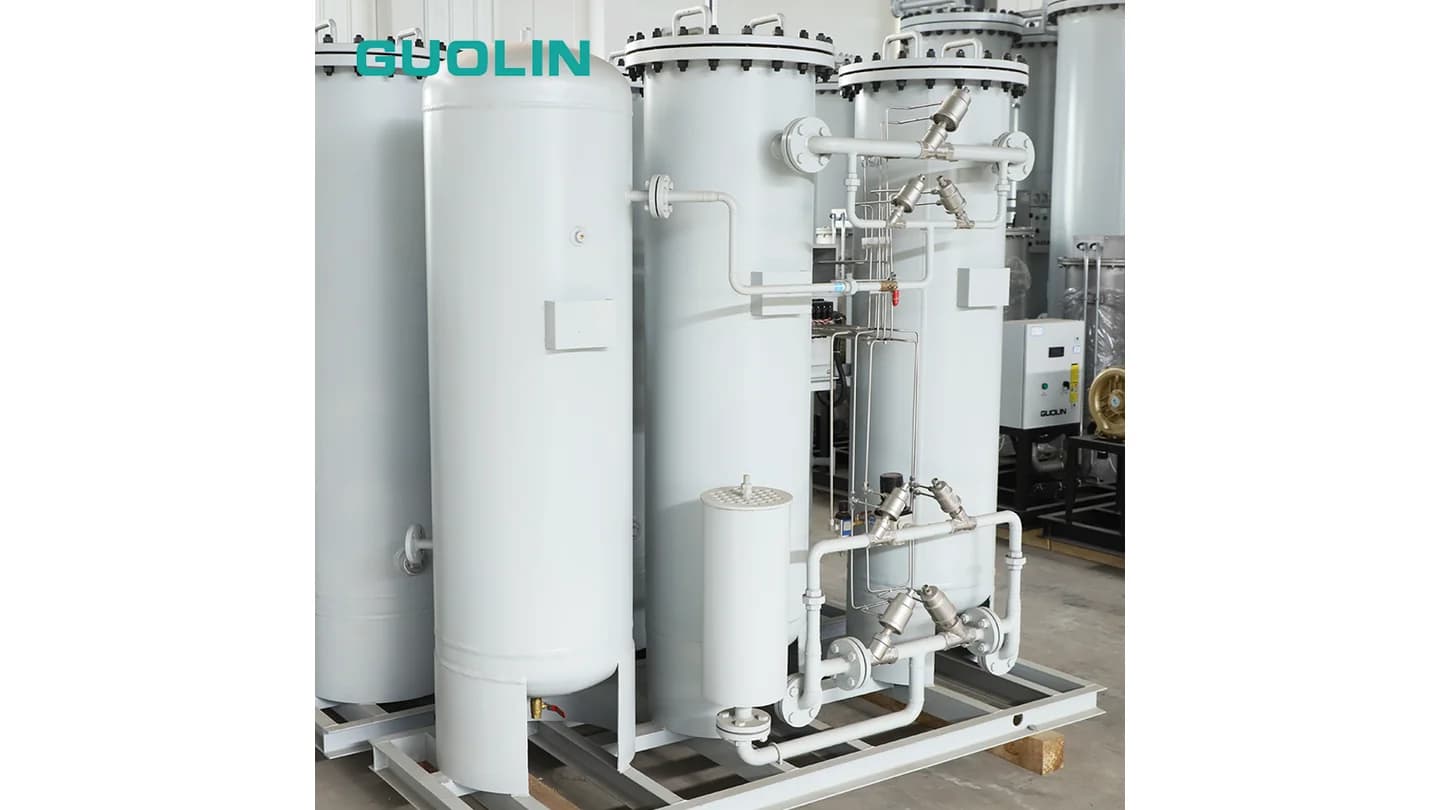
Having oxygen or compressed air on site does not yet tell you whether it is suitable for an ozone generator. The gas can pick up moisture or contamination in storage and piping, or arrive at the wrong pressure when the plant is running at peak demand.
Confirm dryness, composition, cleanliness, pressure, flow and temperature at the generator inlet against the selected equipment's specification. “Dry air” and “93% oxygen” leave important questions unanswered. The checks below help you agree what to measure and who will correct an out-of-specification supply.
If you are still deciding which gas source to use, start with the air-fed versus oxygen-fed selection guide. Numerical limits in this guide remain model-specific: use the selected generator's approved data sheet rather than copying another manufacturer's settings.
What belongs in an ozone-generator feed-gas specification?
A useful specification closes three boundaries at the same time:
- Source boundary: ambient-air preparation, PSA/VPSA oxygen, vaporized liquid oxygen or another approved source, including normal and backup arrangements.
- Delivered-gas boundary: the composition, dryness, cleanliness, pressure, flow and temperature actually reaching the generator connection.
- Proof boundary: where each variable is measured, under which pressure and reference condition, how it is recorded, and what happens when it leaves the approved envelope.
Writing only the source name leaves too much unresolved. Two PSA plants can deliver different purity, pressure, flow stability, moisture and contaminant conditions. Two compressed-air systems can use the same dryer technology but produce different point-of-use gas because of inlet temperature, load, regeneration, piping, leakage or condensate. The ozone generator receives the delivered gas—not the marketing label on the upstream package.
Feed-gas quality boundary
A source name is not an inlet specification
Close the route from source to measured acceptance before generator performance is compared.
Source
Prepared air, PSA/VPSA or supplied oxygen
Condition
Dry, filter, regulate and protect the route
Measure
Purity, dew point, pressure, flow and temperature
Accept
Prove the envelope at the generator inlet
State: normal, startup, changeover and fault
Basis: location, pressure, units and reference condition
Action: warn, trip, isolate, retain or reset
Why does feed-gas quality affect ozone generation?
Corona-discharge ozone generation is an electrical conversion process inside a controlled gas stream. The supplied gas affects the amount of oxygen available, the discharge environment, gas residence and heat removal, and therefore the operating point at which output and ozone concentration are stated.
Moisture and contamination can reduce ozone production and increase fouling or maintenance. Confirm the gas condition at the generator inlet after the piping has been installed and prepared for service. An assumption that the source is dry will not reveal moisture or debris introduced downstream.
Feed gas should therefore remain attached to every performance statement. Ozone output, ozone concentration and energy data are meaningful only with the source composition, gas flow, pressure, temperature, cooling condition and measurement basis used for that rating. The ozone concentration versus output guide explains why concentration, product-gas flow and mass output cannot be substituted for one another.
How should dew point be specified?
Dew point is the temperature at which water vapour in a gas would reach saturation at a stated pressure. That last phrase matters. The same gas sample can have a different dew-point temperature when measured at process pressure and after expansion to atmospheric pressure. A number without its pressure basis can therefore be ambiguous by many degrees.
State all of the following:
- whether the requirement is pressure dew point or dew point referenced to atmospheric pressure;
- the actual pressure or reference pressure;
- the measurement location—preferably the defined generator-inlet battery limit;
- the instrument range, accuracy, response and calibration evidence;
- sample pressure, sample flow and any regulator, tubing, filter or conditioning;
- normal, startup, dryer-changeover and upset conditions; and
- warning, trip, isolation or purge action for an out-of-range result.
Check the pressure basis before comparing dew-point readings. Gas measured after expansion to atmospheric pressure will not have the same dew point as the pressurized gas at the generator inlet. Use a method that reports or converts to the required basis, and protect the sample from leaks, wet lines and stagnant sections. In very dry gas, small amounts of moisture entering the sample can dominate the result.
Ask for the selected generator's gas-quality specification, including whether its dew-point limit is stated at atmospheric or operating pressure. Keep that basis on the acceptance sheet. A value from a different generator's manual may use a different pressure basis or equipment limit.
Dew-point basis check
One moisture content can produce different dew-point readings
Measured at process pressure
Sensor and sample system see the pressurized gas; the pressure must be recorded or compensated.
Measured after expansion
The reported dew point changes after pressure reduction; correction may be required for comparison.
Five questions before accepting the number
- Pressure dew point or atmospheric-reference dew point?
- At what exact pressure and sample location?
- Has the sample line reached equilibrium without leaks?
- Are range, response and calibration fit for very dry gas?
- What alarm or trip follows an out-of-range result?
Is oxygen purity the whole oxygen-feed specification?
No. Oxygen purity is one composition variable. It does not by itself establish moisture, hydrocarbons, particles, pressure, flow, temperature, stability or compatibility with the selected ozone generator.
For PSA or VPSA oxygen, request the purity envelope at minimum, normal and peak flow rather than one nominal figure. Also define analyzer location, measurement principle, calibration gases, accuracy, low-purity alarm, data trend and response to a source change. On adsorption plants, increasing product flow or changing cycle conditions can change delivered purity, so purity and flow must be reviewed together.
The oxygen source may also contain argon, nitrogen and other constituents according to the separation process. A medical-oxygen specification does not establish the feed-gas requirements for an ozone generator. Assess PSA purity and output together, and obtain the generator supplier's permitted gas composition and any controlled secondary-gas requirement before selecting the oxygen supply.
For supplied liquid oxygen, define product assay, vaporizer capacity, delivery pressure and temperature, storage/autonomy, source-change behavior, cleanliness and the impurity certificate required at delivery. A high oxygen assay does not remove the need to protect downstream piping from construction debris, wet commissioning lines or incompatible materials.
What changes for prepared-air feed gas?
An air-fed generator normally needs a designed preparation train. Depending on the equipment and pressure architecture, that can include intake protection, compression, aftercooling, bulk-liquid separation, automatic drains, prefiltration, coalescing filtration, adsorption drying, afterfiltration, receivers, regulation and point-of-use instruments.
Specify the quality required at the ozone generator, then size the train backward from the worst credible inlet condition. Ambient temperature and humidity, compressor discharge temperature, maximum flow, minimum pressure, dryer regeneration, parallel-train changeover, pressure loss and seasonal extremes all matter. A dryer catalogue capacity at nominal conditions is not proof of the delivered result at the site.
ISO 8573-1 provides a framework for compressed-air purity classes covering particles, water and oil. It can make a requirement more testable, but an ISO class should not be invented for the ozone generator. First obtain the generator's limits; then express the agreed air-quality requirement and use the relevant ISO 8573 measurement parts where formal classification is required. The point of measurement must remain explicit because air quality can change across receivers, piping and pressure-reducing devices.
Also define condensate ownership. Drains, separators and dryers remove water from one location so it does not travel downstream. Their discharge, freeze protection, failure alarm and maintenance access are part of the working system rather than miscellaneous piping.
How should particles, oil and hydrocarbons be controlled?
Use separate limits and proof methods. “Oil-free” is not a complete analytical specification, and a nominal filter rating is not the same as a measured downstream concentration.
- Solid particles: define the permitted size/count or mass basis, final-filter location, differential-pressure monitoring and test method.
- Liquid water and aerosols: define separation, coalescing, drains and upset detection rather than relying only on a vapour dew-point reading.
- Oil aerosol and liquid oil: define the applicable test method and sampling point downstream of the complete treatment train.
- Oil vapour and hydrocarbons: specify them separately where required. Current ISO 8573-5 addresses pressurized sampling and gas-chromatographic determination of oil vapour.
- Construction contamination: include pipe cleaning, inspection, purge and documented release for service.
Compressor type alone does not prove the delivered gas is free of every contaminant. Ambient hydrocarbon vapour, maintenance products, degraded seals, wet piping, pipe scale and installation debris can enter through different paths. Conversely, a fine filter does not prove vapour removal or dew-point performance. The treatment train and verification must match the contaminant form.
Oxygen-enriched gas adds a safety boundary. EIGA's current oxygen and oxygen-enrichment guidance requires compatible materials and cleaning practices and warns against contamination, leaks and unsuitable lubricants. Oxygen cleanliness, ignition risk and ventilation remain under the responsible oxygen-system and site-safety authorities; a gas-quality test for ozone performance does not replace the oxygen hazard review.
Why must pressure, flow and temperature be specified together?
The generator requires a controlled operating point, not three independent maximum values. Upstream pressure must deliver the required flow through regulators, filters, valves and piping while staying inside the generator's approved inlet range. Temperature affects gas density, dryer duty and generator operation. Flow basis determines whether two quoted values are comparable.
For each minimum, normal and peak ozone case, request feed-gas composition and purity; mass flow or volumetric flow with stated reference temperature and pressure; generator-inlet pressure; generator-inlet temperature; expected ozone output and gas-phase concentration at the same operating point; control range; and alarm/trip boundaries. Do not combine the maximum flow from one case with the maximum pressure from another and call it a design point. Ask the supplier for a case table or performance map.
Where should instruments and sample points be located?
Put the acceptance point where the contractual condition must be true: normally at or immediately upstream of the generator's defined inlet connection, before gas divides among modules unless the equipment design requires module-level proof. Upstream instruments help diagnose the source package, but they do not prove the final condition after a long or exposed distribution line.
For every analyzer or transmitter, document tag, measurand, range, units and pressure basis; sample point; in-situ or extracted arrangement; materials and line length; pressure regulation and sample flow; response time; calibration and reference method; fault behavior; data logging; and warning, trip, bypass and reset ownership.
Record feed-gas temperature, pressure, flow, dew point and oxygen purity at the same time as the ozone performance test. If those conditions change between measurements, the report may not explain the generator's actual operating point. Agree the logging interval and test conditions for the equipment and project.
Which operating cases should the acceptance plan include?
Normal steady operation is only one case. Feed gas can be wettest or least stable during startup, after maintenance, during dryer regeneration, at source changeover or when an upstream plant is near its flow limit.
Acceptance matrix
Prove the difficult transitions—not only steady operation
Pre-start
Clean/dry line, analyzers ready
Release to purge or energize
Minimum / normal / peak
Stable quality at each operating point
Accept performance map
Dryer or PSA changeover
Transient moisture, purity and pressure
Prove no unsafe excursion
Backup-source transfer
Composition, pressure and sequence
Accept changeover or block it
Treatment or analyzer fault
Fault signal and final condition
Warn, trip, isolate and latch
- Pre-start and first commissioning: piping completion, cleanliness, dryness, purge completion, analyzer readiness and release to energize.
- Minimum/normal/peak duty: stable delivered quality and corresponding generator output/concentration.
- Dryer or adsorption-vessel changeover: transient moisture, purity and pressure response.
- Primary-to-backup source change: composition, pressure, temperature and sequence compatibility.
- Loss of treatment or analyzer fault: warning, generator power removal, valve positions and approved retained functions.
- Restart after wet maintenance: proof that the line and generator boundary have returned to an acceptable condition.
A jurisdiction may prescribe additional monitoring or shutdown requirements. Utah's published ozone design rule, for example, requires continuous feed-gas dew-point monitoring and an alarm/shutdown boundary. That is useful evidence that dew point can be a protective function, but its numerical and legal scope must not be exported to another jurisdiction without review.
Copyable feed-gas schedule for an ozone-system RFQ
Selected source route: [prepared air / PSA / VPSA / supplied oxygen / other approved source]
Generator/model basis: [offered configuration and approved data-sheet revision]
Operating cases: [pre-start / minimum / normal / peak / standby / changeover / upset]
Composition: [oxygen purity and permitted balance/secondary gases by case]
Moisture: [maximum dew point, pressure basis, location and measurement method]
Cleanliness: [particle, oil aerosol, oil vapour/hydrocarbon and liquid-water limits with methods]
Pressure: [minimum/normal/maximum at generator inlet and allowed fluctuation]
Flow: [minimum/normal/peak with reference temperature, pressure and dry/wet basis]
Temperature: [normal range, maximum transient and measurement point]
Delivery point: [flange/connection, battery limit and upstream pressure-loss allowance]
Instrumentation: [tags, ranges, accuracy, sample systems, calibration and data logging]
Protective logic: [warning, trip, isolation, retained functions, latch and reset authority]
Commissioning evidence: [cleaning, purge, certificates, calibration, trend duration and witnessed tests]
Responsibility split: [owner / EPC / oxygen supplier / GUOLIN / commissioning party]
Use the utility checklist to close power, cooling, room and control interfaces, and the RFQ guide to normalize scope across bidders. The PSA oxygen and VPSA oxygen pages show equipment families; final flow, purity, pressure and interface are selected for the actual project.
What to confirm before accepting the gas supply
Do not accept “oxygen available,” “dry air supplied” or a remote source certificate as proof of generator-inlet quality. Accept a defined gas at a defined point, under a defined pressure and operating case, measured by an agreed method, with a recorded response when any critical variable leaves its envelope.
Send GUOLIN the gas source, available inlet measurements, proposed piping arrangement and intended ozone duty through the project-review form. If a dew-point report does not state its pressure basis, flag that gap. We can review the source, conditioning and generator requirements together; the final limits and protective actions must match the selected equipment and site safety review.
Frequently asked questions
What feed gas does an industrial ozone generator require?
The approved source depends on the generator configuration and may be prepared air, PSA/VPSA oxygen or supplied oxygen. The specification must also define delivered composition, dew point and pressure basis, pressure, flow, temperature, particles, oil or hydrocarbons, measurement point and protective logic.
What dew point is required for an ozone generator?
There is no responsible universal value for every model. Use the selected generator's approved data sheet and state whether the value is pressure dew point or referenced to atmospheric pressure, where it is measured, which operating cases it covers and what happens if the limit is exceeded.
Is 93% oxygen suitable for ozone generation?
It can be suitable for ozone generators specifically rated for that PSA/VPSA composition, but 93% alone is not an acceptance specification. Confirm the permitted composition, purity envelope, moisture, pressure, flow, temperature, cleanliness, analyzer method and model performance at each required operating point.
Are pressure dew point and atmospheric dew point the same?
No. Dew point changes with gas pressure. A measurement after pressure reduction can differ materially from process-pressure dew point, so every requirement and reading should state pressure, location and any correction or compensation used.
Can ISO 8573-1 be used for ozone-generator air quality?
ISO 8573-1 can express compressed-air purity classes for particles, water and oil, but the ozone-generator supplier must first define the required limits and delivery point. Formal classification also requires the applicable ISO 8573 sampling and measurement methods, not only a class label.
Does an oil-free compressor guarantee clean ozone feed gas?
No. Delivered gas can still contain particles, ambient hydrocarbon vapour, moisture, construction debris or contamination from piping and maintenance materials. Verify the complete treatment train at the generator inlet with methods suited to each contaminant form.
Where should ozone feed-gas quality be measured?
The contractual acceptance point is normally at or immediately upstream of the generator inlet, because upstream source measurements do not include changes across distribution piping, filters, regulators or source changeover. The supplier's design may add module-level or diagnostic points.
Which feed-gas conditions should trip an ozone generator?
The approved cause-and-effect should define warnings and trips for critical variables such as moisture, purity, pressure, flow, temperature and analyzer faults. Exact thresholds, delays, retained purge or cooling functions, valve actions, latching and restart authority are model- and project-specific.
Related articles
Buying Guide
Air-Fed vs Oxygen-Fed Ozone Generators: How to Choose
Compare air-fed and oxygen-fed ozone systems by concentration, gas supply, operating costs and site requirements to decide which route suits your project.
Buying Guide
Industrial Ozone Generator Installation Requirements
Prepare power, air or oxygen, cooling, ventilation and site connections before installation. Use the checklist to clarify supplier and site responsibilities.
Technology
Ozone Concentration vs Output: Units and Calculations
Understand the difference between ozone concentration and generator capacity, interpret g/Nm³, wt%, g/h and kg/h, and compare supplier specifications.
Technology
Industrial Ozone System Safety: A Practical Checklist
Review the safeguards an industrial ozone installation needs, from ventilation and leak detection to interlocks, oxygen supply and emergency planning.