
Ozone for Cooling Towers: Can It Replace Chemicals?
Explore ozone cooling tower water treatment: which chemical duties may change, what protects against scale and corrosion, and how to verify claimed savings.
If your aim is to buy fewer drums of treatment chemicals, start with what each drum does. Ozone may reduce or replace part of a cooling tower's biocide programme where the site's approved control strategy permits it. That does not mean it replaces scale protection, corrosion control, cleaning and water-quality management as a group.
Ozone cooling tower water treatment uses ozone generated at the site and transferred into the circulating water. It is an option to assess for microbial control, not a shortcut to declaring the whole tower chemical-free. Ozone is itself a chemical oxidant; producing it on site changes how it is supplied, not the need to manage its effects.
Which chemicals could ozone replace?
The first candidate is a purchased biocide—a product used to control microorganisms. Whether its use can change depends on the water, distribution of treatment, operating pattern, verification results and local requirements. A scale inhibitor or corrosion inhibitor has a different job. Removing those because an ozone trial improves bacterial results leaves a separate question unanswered.
Ask the proposed supplier to mark every existing treatment product as retained, changed or removed, and explain how its function will still be covered. Include blended products: one container may perform several jobs. The useful comparison is between complete treatment programmes, not the number of chemical containers beside the tower.
Before retiring a treatment product
Remove a product, not its protection
Follow each proposed change through to evidence and a responsible person. One successful result cannot close all four jobs.
Microbial control
Which biocide use is changing?
Accepted microbial results and treatment coverage
Agree ownership: Water-management team
Mineral deposits
What protects the hot surfaces?
Water chemistry, deposit checks and blowdown basis
Agree ownership: Cooling-water specialist
Metal protection
What happens to the inhibitor?
Compatibility review and corrosion evidence
Agree ownership: Materials / treatment specialist
Physical cleanliness
Where do dirt and deposits go?
Inspection, filtration and cleaning arrangements
Agree ownership: Site operations team
What changes when an ozone system is added?
The equipment must generate ozone, bring it into contact with water and manage gas that is not used in the process. A side-stream arrangement treats a portion of the circulation, but the proposal still needs to explain what happens throughout the connected tower, basin, piping and heat exchangers. Treating a stream is not the same as proving control at every relevant location.
Ozone can react with substances in the water and decompose before reaching more distant areas. The result therefore depends on more than the generator's rated output. Identify the water demand, contact arrangement, circulation pattern, periods of low flow and equipment held on standby. The ozone transfer and off-gas guide explains the distinction between gas produced and useful treatment in the water.
Retained treatment chemicals also need checking. An oxidant can interact with the products intended to protect the cooling system. The ozone section of HSE's evaporative-cooling guidance specifically flags distribution limitations and interaction with scale and corrosion inhibitors. Use that as a question for the treatment team, not as permission to combine products without review.
Will ozone prevent scale and corrosion?
Biological deposits and mineral scale are different problems
A cleaner biological surface can be useful, but it does not establish that dissolved minerals are under control. As water evaporates, minerals remain in the circulating system. Their tendency to form deposits depends on the water composition and operating conditions, including conditions at hot heat-transfer surfaces.
Ozone is not a general water softener or desalination process. If a proposal removes a scale-control product, ask what replaces its protection and how deposits will be checked. Filtration, makeup-water treatment, the operating chemistry and blowdown may still have roles. Removing suspended particles with a filter is not the same as removing dissolved salts.
Corrosion needs its own evidence
Check the materials in the actual circuit, not just the stainless-steel appearance of the ozone package. Include heat-exchanger surfaces, pipework, seals and other wetted components. The treatment team should assess the combined effect of the water, ozone exposure and any remaining inhibitors.
Ask how the team will check the condition of your pipes and heat exchangers, using inspections and corrosion monitoring suited to those materials. Good microbial results do not answer that question. A corrosion result from another tower does not establish the behaviour of yours, either.
What about Legionella control?
An ozone generator does not remove the need for a cooling-tower risk-management programme. That programme must address where water and deposits accumulate, how the system is cleaned and maintained, what is monitored, and who acts when results or equipment operation are unacceptable. The water-treatment and Legionella specialists responsible for the site must remain involved when the programme changes.
A local requirement may also limit what can be replaced. For example, Victoria's cooling-tower guidance recommends devices such as ozone as a secondary biocide alongside conventional chemical biocides. Check the rules and accepted control approach for your own location before accepting a chemical-replacement promise.
Do not use a single clear-looking sample, an ORP reading or a displayed generator output as proof that Legionella is controlled. Agree appropriate microbiological verification, representative locations and a response plan. A trial should follow an approved plan; it is not a reason to stop existing treatment or improvise an outbreak-remediation procedure.
Can ozonation eliminate cooling-tower blowdown?
Not simply because it controls microorganisms. Blowdown, also called bleed, removes some circulating water so dissolved material does not keep accumulating. Ozone does not make that mineral input disappear. A different operating chemistry might support a different blowdown rate, but that needs its own assessment and evidence.
Ask for a water balance covering makeup water, evaporation, blowdown, drift, leaks and any other losses or treatment streams. Review both makeup and circulating-water analyses. If reclaimed water or another makeup source is proposed, reassess the chemistry and biological risks rather than carrying over the old operating assumptions.
The DOE cooling-tower management guide explains why water chemistry and metered makeup and blowdown matter. Its example savings are not a forecast for your tower. A lower water bill during a cooler or quieter period does not, on its own, prove an ozone saving.
How should you compare costs before buying?
Put the current programme and the proposed programme on the same basis: required cooling service, heat load, operating hours, makeup-water quality and acceptable equipment condition. Then compare what you will buy, operate and maintain—not just the old chemical invoice against the ozone generator's electricity.
- Installation: include the generator, feed-gas supply, transfer equipment, monitoring, safeguards, site connections and any retained treatment equipment.
- Ongoing operation: include complete-system electricity, purchased gas where applicable, water and discharge charges, remaining chemicals, consumables, maintenance and competent specialist support.
- Verification: include laboratory work, inspections, corrosion/deposit checks and the records needed to judge the programme.
For a trial, agree the comparison before it starts. Record weather and cooling demand alongside the water meters and treatment results. Track any changes in cleaning, filtration, leaks or makeup source. Otherwise, several improvements made together can all be credited to ozone, even when the measurements cannot separate their effects.
Consider two hypothetical sites: one mainly wants to reduce purchased biocide; the other has recurring mineral deposits and a difficult makeup supply. The same ozone-generator rating would not make their proposals equivalent. The second site still needs a convincing mineral-control plan, and that plan may determine the economics. Neither site can borrow a saving percentage from the other. The complete-system cost guide helps identify items that are easy to leave outside a quotation.
What should you send for an initial project discussion?
Start with the problem you want to change: chemical handling, biological fouling, water use or an unreliable treatment programme. If available, include:
- the tower/circuit sketch, circulation information, heat load and operating or standby pattern;
- makeup and circulating-water analyses, existing treatment products and recent service or laboratory records;
- known deposit or corrosion problems, equipment materials and the site's water-management requirements;
- the proposed change, its acceptance evidence and who is responsible for approving it.
You do not need to guess an ozone dose or model number to begin. GUOLIN's integrated ozone equipment and dosing and distribution equipment provide starting points for discussing the equipment boundary. Application suitability, the treatment programme and local acceptance still need to be established with the responsible site specialists.
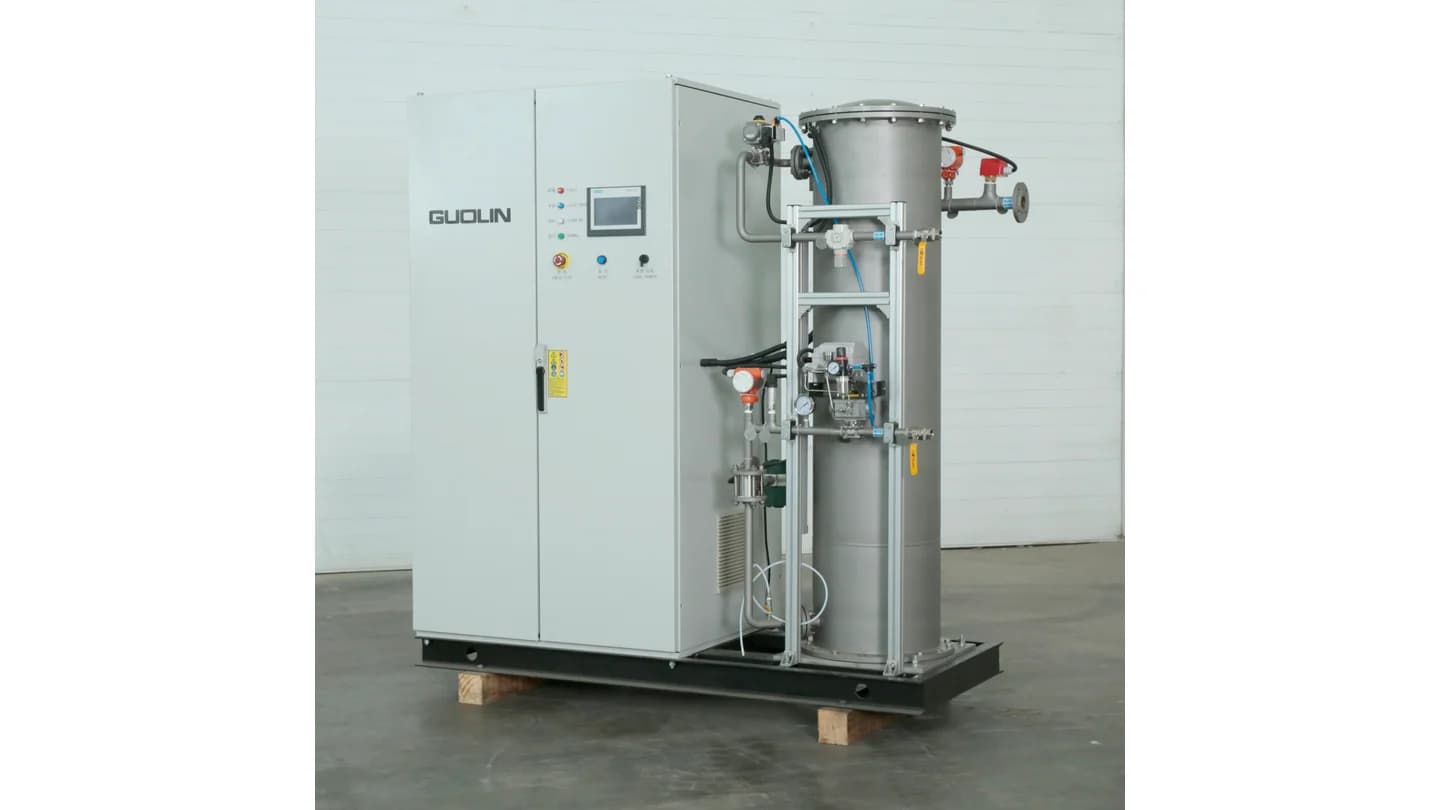
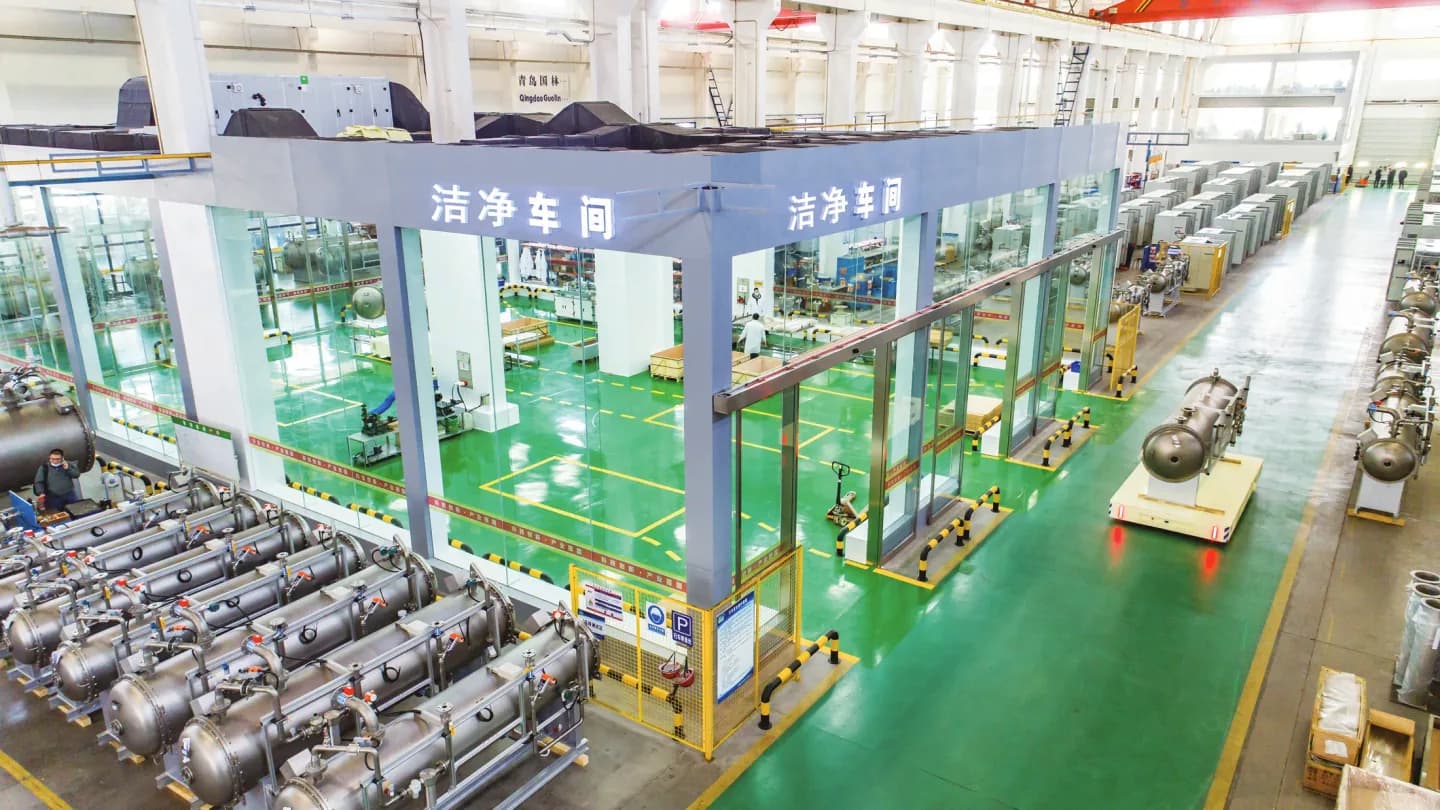
Use the complete-system guide to check what a supply package includes and the safety guide to identify the engineering questions around gas handling, detection and controls. The cover is a supplied GUOLIN equipment photograph, not a cooling-tower customer case or evidence of treatment performance.
Discuss your cooling-water project with GUOLIN. Send the information you have and identify the gaps. The useful next step is to define a system and evaluation plan around your tower—not to remove protections because a proposal says “chemical-free.”
Frequently asked questions
Can an ozone generator be sized from cooling-tower tonnage alone?
No. Tonnage describes a heat duty, not the ozone mass needed for an agreed treatment result. Water composition, circulation and inventory, ozone demand, contact and distribution, operating pattern and the approved control strategy must also be evaluated. Do not select a dose from a universal tonnage rule.
Is a generator cooling-water package the same as cooling-tower water treatment?
No. A generator cooling-water package serves the ozone equipment's heat-removal needs. Cooling-tower water treatment addresses the customer's circulating-water chemistry, deposits and microbiological control. One is not evidence that the other duty is included or suitable for the site.
Related articles
Buying Guide
Industrial Ozone System Cost: What Changes the Price?
Understand why industrial ozone system quotes differ, what a complete price includes, and how to compare equipment, installation and operating costs.
Technology
Industrial Ozone System Safety: A Practical Checklist
Review the safeguards an industrial ozone installation needs, from ventilation and leak detection to interlocks, oxygen supply and emergency planning.
Technology
Ozone Mass Transfer and Contact Time Explained
See how ozone reaches the water, compare injectors and diffusers, and understand how transfer efficiency, contact time and off-gas affect system design.
Buying Guide
What Is Included in a Complete Industrial Ozone System?
Compare the equipment included in an industrial ozone system, spot quotation exclusions, and decide what the supplier and your site need to provide.