
Ozone-BAC Drinking Water Treatment: Process, Monitoring and Limits
Learn how ozone and biologically activated carbon work together, how BAC differs from GAC, what changes performance, and what to monitor before specifying a drinking-water system.
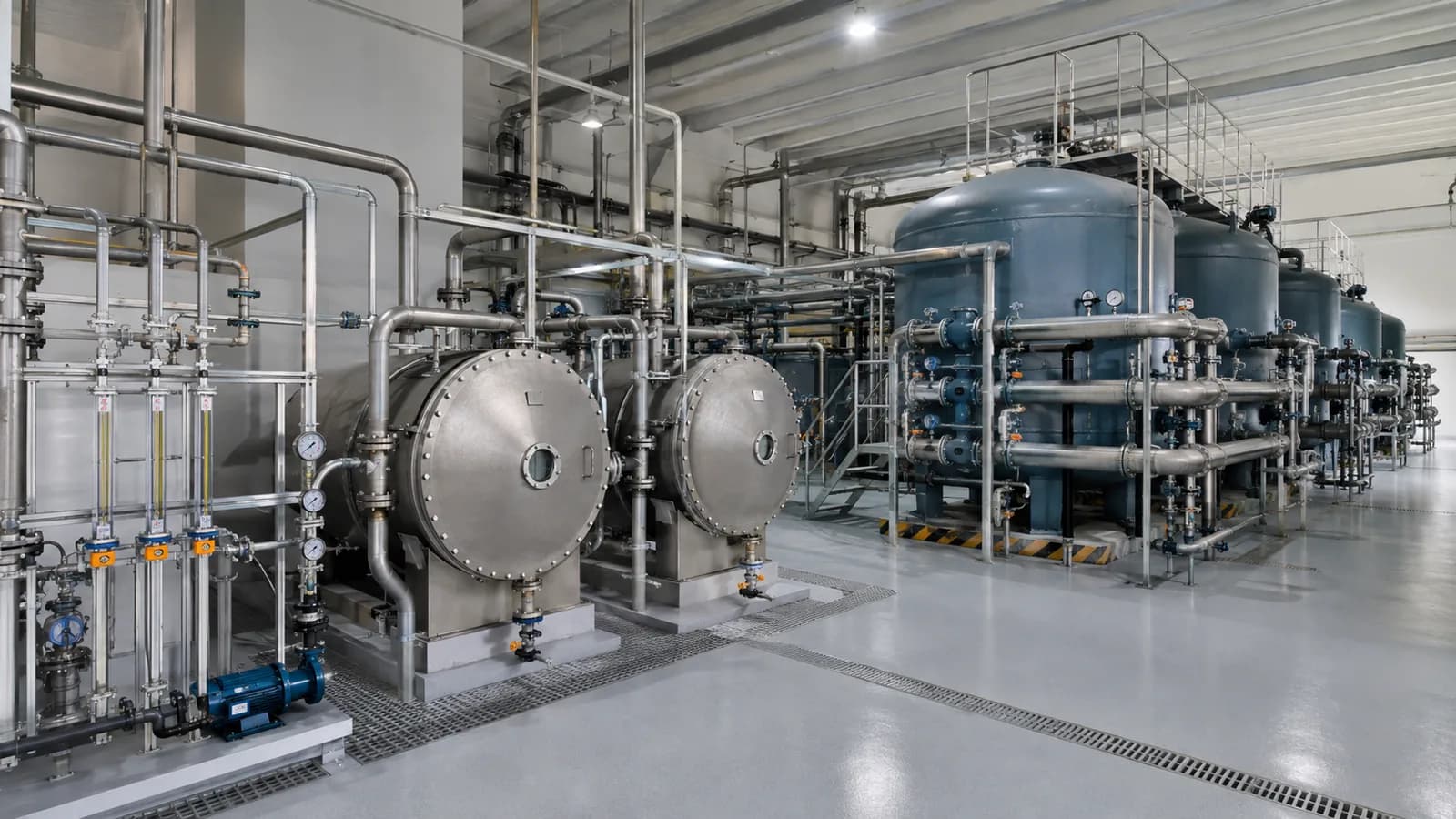
Short answer: ozone-BAC drinking water treatment is a coordinated process sequence, not one piece of equipment. Ozone reacts with selected compounds, can provide a designed primary-disinfection barrier and often converts part of the organic matter into more biodegradable fractions. The downstream biologically activated carbon filter combines adsorption with attached-biomass biodegradation. The train does not automatically remove every contaminant, prevent bromate or replace required final disinfection and distribution residual. Its design and acceptance must follow the actual source water, seasonal cases, treatment objectives, hydraulics, media and local requirements.
This guide is for utilities, EPC teams, consultants, process engineers, operators and procurement teams evaluating an Ozone-BAC or O3-BAC process for drinking water. It explains the boundaries that need to be compared before asking suppliers for a dose, carbon-bed size or performance guarantee.
The most useful starting rule is: assign a measurable job to each stage. Ozone may oxidize a target without removing its carbon from the water. A carbon bed may adsorb one compound while its biofilm degrades another. Finished-water stability and distribution protection remain downstream questions. Treating all of those outcomes as a single “removal efficiency” hides the engineering decisions that determine whether the system works.
How does the Ozone-BAC process work?
A common process concept places an ozone contact stage upstream of a granular activated carbon filter that is operated biologically. The exact location varies. In some plants, conventional coagulation, clarification and sand filtration remove particles and part of the natural organic matter before post-ozonation. In others, pre-ozonation has a separate purpose earlier in the train. The words “pre-ozone,” “intermediate ozone” and “post-ozone” only have meaning when the reference process is named.
The coordinated sequence has four different boundaries:
- Ozone generation and contact: conditioned feed gas becomes ozone, which is transferred into water and reacts within defined hydraulics.
- Water transformation: selected compounds are oxidized, microorganisms may be inactivated and part of the organic matter may become more assimilable or biodegradable.
- BAC filtration: activated-carbon media provides adsorption sites and a surface for attached microorganisms; water also passes through a granular filter bed.
- Finished-water protection: downstream filtration, final disinfection, residual maintenance, storage and distribution controls protect the water after BAC.
Four treatment boundaries
Ozone-BAC works as a chain of different jobs
A result at one stage does not prove the next. Assign a measurement and an owner to every boundary.
Ozone contact
Transfer O₃ into the defined water and hydraulic boundary
Verify: Applied mass, contact condition, residual and off-gas
Water changes
Oxidize selected targets and change some organic fractions
Verify: Target analysis plus AOC/BDOC or other relevant indicators
BAC filtration
Adsorption and attached-biomass biodegradation share the duty
Verify: Stage loading, activity, headloss and effluent quality
Downstream protection
Control particles, final disinfection, residual and distribution
Verify: Finished-water and representative network evidence
The process map matters because each boundary uses different evidence. Generated ozone output is not the same as applied ozone mass. Applied ozone is not the same as transferred ozone. An increase in biodegradability after ozone is not removal. A fall in DOC after BAC does not by itself separate adsorption from biodegradation. And a compliant BAC effluent at the plant does not by itself prove that the distribution system remains protected.
What does ozone do before BAC?
Ozone is a selective molecular oxidant and can also produce secondary radical reactions under some water conditions. It can attack double bonds, aromatic structures, taste-and-odour compounds, reduced inorganic species and selected micropollutants. The reaction pathway depends on ozone demand, organic matter, alkalinity, pH, temperature, scavengers and the compounds present. This is why a result from one lake, river or reuse water should not become a default for another.
Oxidation is not the same as mineralization
Ozonation often changes molecular structure without converting all organic carbon to carbon dioxide. A decrease in UV absorbance, colour or a named target compound can occur while bulk DOC changes little. The long-term pilot work summarized by AWWA Water Science is a useful illustration: stage-specific BDOC measurements revealed transformation that a bulk DOC value alone could not explain. That is a study result, not a universal performance promise, but the measurement lesson is broadly useful.
This distinction changes procurement language. “Remove organic matter with ozone” is too broad. A defensible schedule names the target—such as a taste-and-odour compound, colour, an oxidation state, microbial objective, precursor fraction or selected micropollutant—and names the analytical method and sampling points. If increased biodegradability is an intended intermediate result, the downstream BAC duty also has to be defined.
AOC and BDOC describe different test concepts
Assimilable organic carbon (AOC) estimates the fraction that selected microorganisms can use for growth under the test method. Biodegradable dissolved organic carbon (BDOC) estimates the dissolved organic carbon that a microbial inoculum can biodegrade over the specified test. They are related indicators of biological growth potential, but they are not interchangeable readings and should not be treated as the whole organic-carbon balance.
The WHO drinking-water treatment summary explains the central process reason for combining ozone with downstream biological treatment: ozonation can increase assimilable organic matter, so biological filtration or GAC may be needed before water enters distribution. The article does not copy WHO's example doses because project water and local rules control design.
Ozone still needs a complete gas-to-water system
The ozone stage normally includes feed-gas preparation, the generator, cooling, power electronics, dosing, a contactor, off-gas collection and destruction, instruments, controls and safety functions. The ozone mass-transfer, contact-time and off-gas guide shows why the generator nameplate alone cannot establish the liquid-side result. The proposed monitoring points must connect generated mass, applied mass, contact hydraulics, dissolved residual where relevant and the off-gas boundary.
What does BAC mean, and how is it different from GAC?
Granular activated carbon (GAC) names a porous carbon medium. Biologically activated carbon (BAC) describes a filter in which microbial activity on the media contributes materially to treatment. A BAC filter often uses GAC as the support medium, but calling a vessel “BAC” does not prove its biological state, removal mechanisms or performance.
Adsorption and biodegradation operate together
Fresh activated carbon commonly has substantial available adsorption capacity. As the bed treats water, natural organic matter and target compounds occupy sites, while a biofilm develops on media surfaces. Biological activity can degrade suitable substrates in the water and some material associated with the media. Adsorption does not suddenly stop when biological activity begins, and biodegradation does not create unlimited adsorption capacity.
For that reason, avoid the slogan that biology “continuously regenerates” the carbon. Biological activity can extend useful operation for some objectives and compounds, but carbon age, pore structure, competitive adsorption, influent loading and biodegradability still matter. Media replacement or reactivation remains a project and performance decision.
Overlapping mechanisms
GAC does not become BAC at one universal switch point
Adsorption and biodegradation change gradually and can coexist throughout the bed's operating life.
Fresh media
Adsorption: Often strong, with many available sites
Biology: Developing; not yet proven as a mature treatment mechanism
Operating decision: Do not call early adsorption a mature BAC result
Acclimation
Adsorption: Still active but increasingly influenced by loading
Biology: Biofilm develops according to water, temperature and operations
Operating decision: Trend stage-specific indicators and hydraulic behavior
Mature operation
Adsorption: Continues selectively; capacity and competition still matter
Biology: Can carry a larger share of suitable biodegradable load
Operating decision: Manage performance—not a calendar-based label
Aging / breakthrough
Adsorption: Target-specific breakthrough can emerge
Biology: May remain active but cannot replace every adsorptive job
Operating decision: Use target evidence to plan reactivation or replacement
There is no universal GAC-to-BAC switch date
Commissioning conditions, inoculation, temperature, disinfectant carryover, nutrients, organic loading, backwashing and media properties affect acclimation. Even a mature bed can show changing contributions from adsorption and biodegradation along its depth and across seasons. The right question is not “How many days until this becomes BAC?” but “Which indicators show that the bed is performing the biological and adsorptive jobs assigned to it?”
Useful evidence may include inlet/effluent AOC or BDOC where the methods are suitable, DOC/TOC and UV254, target compounds, oxygen utilization, carboxylic-acid removal, ATP or other biomass indicators, temperature, headloss, turbidity and particle release. Not every plant needs every measurement. The monitoring plan should select indicators that are sensitive to the plant's objectives and practical enough to trend.
Where should Ozone-BAC sit in a drinking-water train?
A widely used concept is conventional particle and precursor removal followed by ozone, BAC and final disinfection. Removing particles and part of the organic load upstream can protect the ozone duty and filter hydraulics. Ozone then performs its assigned oxidation/disinfection tasks and prepares part of the organic load for the biological filter. BAC manages part of the biodegradable and adsorbable fraction. A downstream barrier and residual strategy protect finished water.
This sequence is not universal. Source-water iron or manganese, algae, ammonia, bromide, turbidity, taste-and-odour events, existing basins, filtration layout and disinfection-credit rules can change the placement. A full-scale comparison of sand–ozone–BAC and ozone–BAC–sand found meaningful trade-offs between particle control and carbon performance at one plant. The lesson is not that one arrangement always wins; it is that relocating a filter changes the load and risk carried by the next unit.
Upstream interfaces
- Particle removal: turbidity and solids affect ozone demand, contact conditions, filter loading and backwash frequency.
- Organic-matter removal: coagulation and clarification can change the amount and character of organic matter reaching ozone and BAC.
- Oxidant carryover: a persistent disinfectant entering the BAC bed can suppress or change biological activity; dose points and residuals need coordination.
- Hydraulic equalization: minimum, normal, peak and transient flows determine contact and filter loading rather than one average design flow.
- Algae and cells: oxidation can lyse cells under some conditions; cell-bound and dissolved toxin pathways require a deliberate sequence and monitoring plan.
Downstream interfaces
- Particle and biomass control: the design must address media fines, sloughed biomass and turbidity after backwash or upset.
- Final disinfection: ozone decays and does not normally provide a persistent distribution residual; the accepted downstream barrier remains explicit.
- Distribution stability: biodegradable substrate, disinfectant demand, storage residence time, temperature and pipe conditions affect regrowth risk.
- Corrosion and chemistry: pH, alkalinity and final stabilization remain plant-wide responsibilities.
- Waste streams: backwash water, spent/reactivated carbon handling and any downstream treatment must be included in the battery limits.
The municipal drinking-water solution page owns the wider application train and compliance context. This guide owns the Ozone-BAC interface questions inside that train.
Which variables change Ozone-BAC performance?
Two systems with the same nominal water flow can behave differently because their water and operating cases differ. At minimum, the design basis should distinguish the variables below.
Source-water chemistry
- DOC/TOC and organic character: control ozone demand, competitive adsorption and the fraction that may become biodegradable.
- UV254 and specific UV absorbance: can help characterize aromatic organic matter and track oxidation, but do not replace target analysis.
- Bromide: creates a bromate-formation pathway during ozonation; concentration, sampling frequency and seasonal range matter.
- pH and alkalinity: influence ozone decomposition, radical chemistry and bromate pathways.
- Temperature: affects ozone persistence, reaction kinetics, microbial activity and seasonal filter performance.
- Ammonia, nitrite and reduced species: add oxidant demand and may influence biological activity or competing reactions.
- Micropollutants, algae and taste/odour compounds: each target has its own reaction, adsorption and biodegradation behavior.
Ozone operating conditions
Applied dose, gas concentration, transfer conditions, contact hydraulics, temperature, pressure, water depth, mixing, residual profile and control range determine the ozone boundary. The required operating point follows the treatment objectives and measured water demand; it is not selected from a generic mg/L table. Seasonal source-water changes may require a control strategy rather than one fixed setting.
BAC media and hydraulics
Carbon raw material, pore distribution, grain size, bed depth, support layers, empty-bed contact time (EBCT), hydraulic loading, flow distribution and bed expansion affect adsorption, biological contact and particle filtration. EBCT is a nominal volume-to-flow measure; it does not reveal short-circuiting, fouling, media loss or the condition of the biofilm by itself.
Biological operating conditions
Temperature, dissolved oxygen, biodegradable substrate, nitrogen and phosphorus availability, disinfectant carryover, startup history and microbial community can affect biological activity. Nutrient addition is not an automatic requirement. It changes water chemistry and operational risk and should be considered only through a controlled, project-specific process.
Backwashing and filter age
Backwashing restores hydraulic capacity and controls accumulated solids, but it can also scour biofilm, release particles and produce a short-term ripening period. Water-only versus air/water sequences, backwash-water disinfectant residual, bed expansion, duration and return-to-service criteria should follow media, filter and plant requirements. Carbon age also changes the relative importance of adsorption and biodegradation, so a stable pressure drop does not prove stable treatment performance.
Bromate and transformation products: control formation first
When bromide is present, ozonation can form bromate. Formation depends on source-water chemistry and process conditions, including bromide, ozone exposure, pH, temperature, alkalinity, ammonia and organic matter. Health Canada's bromate guidance emphasizes controlling the ozonation process because bromate is difficult to remove once formed. The applicable limit and compliance method come from the project's own authority.
Do not assume the BAC filter will rescue an ozone stage that forms too much bromate. Published GAC/BAC studies report different removal behavior with carbon type, age, contact time, dissolved oxygen, nitrate and organic matter. Some show declining performance or poor full-scale removal. A proposal should therefore define the bromate-prevention strategy, analytical method, sampling locations, seasonal cases, alarm/action levels and response before any downstream-removal credit is considered. The bromate formation, control and monitoring guide provides the dedicated decision framework.
Ozone can also create aldehydes, carboxylic acids and other transformation products from natural organic matter and target contaminants. BAC may biodegrade or adsorb some products, while others can persist. “Parent compound no longer detected” is not the same as complete mineralization or absence of risk. Where a target or by-product is consequential, the analytical plan must follow it through both stages.
How should Ozone-BAC be monitored?
A useful monitoring plan separates cause from effect. If only raw water and finished water are sampled, operators cannot tell whether a change began with ozone demand, contact hydraulics, biological activity, adsorption breakthrough, backwashing or downstream disinfection. Stage-specific samples and synchronized operating data make diagnosis possible.
Stage-specific monitoring
Measure cause and effect at four boundaries
Synchronized samples and operating records turn a finished-water change into a diagnosable process event.
Ozone contact
Inputs: Flow, temperature, demand, bromide, pH and targets
Operating evidence: Gas quality/flow, O₃ concentration, applied mass, hydraulics and off-gas
Outcomes: Residual/exposure evidence, target change, bromate and transformation indicators
BAC bed
Inputs: Post-ozone AOC/BDOC, DOC fractions, particles and target load
Operating evidence: Flow/EBCT basis, headloss, DO, temperature, media age, biomass and backwash
Outcomes: Bed profile, activity, hydraulic stability, media loss and recovery
BAC effluent
Inputs: Synchronized inlet sample and operating state
Operating evidence: Sample method, filter run time and post-backwash status
Outcomes: AOC/BDOC, DOC/UV254, targets/products, turbidity, particles and microbes
Finished water
Inputs: BAC effluent, final treatment and storage conditions
Operating evidence: Final disinfectant, residual, turnover and distribution conditions
Outcomes: Compliance analytes, biological stability and representative network evidence
At the ozone boundary
- water flow and minimum/normal/peak operating state;
- feed-gas quality, gas flow, ozone concentration and calculated output on declared bases;
- applied mass, contactor pressure/level and relevant hydraulic condition;
- dissolved ozone or another accepted exposure indicator at named locations;
- off-gas ozone and destructor/ventilation/ambient-safety status;
- source-water demand indicators and bromide/bromate where applicable; and
- the target-specific analytical result assigned to ozonation.
Across the BAC bed
- flow, EBCT basis, headloss, level and filter run time;
- temperature, dissolved oxygen and relevant nutrient conditions;
- backwash trigger, sequence, bed expansion and return-to-service criteria;
- media age, loss, condition and reactivation/replacement history;
- biomass or activity indicators where validated and useful; and
- intermediate depth samples when the design and diagnostic plan justify them.
At the BAC effluent and downstream
- AOC/BDOC, DOC/TOC, UV254 or selected organic fractions appropriate to the objective;
- target compounds and relevant ozone transformation products;
- turbidity, particles, carbon fines and microbial indicators;
- bromate and other applicable regulated by-products;
- final-disinfectant dose, demand and residual where used; and
- distribution-system stability indicators at representative locations.
Recent full-scale drinking-water research has evaluated organic carbon, carboxylic-acid removal and media ATP alongside hydraulics and seasonality. That does not create a universal dashboard. It shows why operators should select a small set of responsive indicators, establish a baseline through seasons and connect alarm/action limits to specific operating responses.
Common failure modes—and what the pattern may indicate
Ozone residual falls while generator output appears normal
Check whether water demand, gas concentration/flow basis, transfer conditions, diffuser or injector performance, contactor level, temperature or sample method changed. Do not immediately increase generator setpoint without reviewing bromate and by-product implications. The ozone concentration-versus-output guide explains why gas concentration and total output must be reconciled.
AOC or BDOC rises after ozone and remains high after BAC
The ozone stage may be creating a larger biodegradable load than the BAC bed can manage under current temperature, EBCT, biomass, nutrient, backwash or hydraulic conditions. Confirm methods and synchronized samples first. Then examine stage loading, filter activity and short-circuiting rather than assuming carbon replacement is the only answer.
Target compound breaks through but bulk DOC looks stable
Bulk organic-carbon metrics can mask a low-concentration target. Competitive adsorption, carbon age, changing ozone transformation or weak biodegradability may be involved. Continue target-specific analysis and review the mechanisms assigned to each stage.
Turbidity or particles increase after backwash
Review bed expansion, media loss, backwash intensity, rinse/ripening duration, return-to-service criteria and downstream particle control. Biological filters can release biomass or carbon fines; hydraulic recovery alone is not the full acceptance test.
Bromate approaches an action or compliance threshold
Use the plant's approved response plan. Review bromide and seasonal water quality, dose/exposure, pH and other process conditions while preserving the required microbial barrier. Do not rely on unverified downstream BAC removal or reduce disinfection effectiveness without authority and accountable engineering review.
Finished-water regrowth indicators increase
Check BAC effluent biodegradable substrate, particles and microbial indicators together with final-disinfectant dose/residual, storage turnover, temperature and distribution conditions. The cause may cross several boundaries; changing only the BAC bed may not solve a downstream residual or hydraulic problem. The ozone, chlorine and UV comparison explains why primary treatment and persistent protection are separate jobs.
How should startup and acceptance be planned?
A biological filter has a startup and acclimation period. Initial performance may be dominated by fresh-carbon adsorption, while biological indicators and removal patterns develop over time. Acceptance should therefore distinguish equipment completion, ozone-stage performance, hydraulic filter performance, early water quality and mature biological operation.
- Confirm mechanical and safety readiness: pressure/leak checks, ventilation, ozone detection, destructor operation, interlocks, filter internals and backwash functions.
- Commission the ozone mass boundary: verify feed gas, ozone concentration and flow, output, cooling, dosing, contact hydraulics, residual method and wet off-gas response.
- Establish the filter hydraulic baseline: flow distribution, clean-bed headloss, levels, bed expansion, media loss and rinse-to-waste/return criteria.
- Track acclimation: trend the agreed biological and water-quality indicators without interpreting fresh-carbon adsorption as mature BAC performance.
- Run agreed operating cases: include minimum/normal/peak and relevant seasonal water cases or define how later seasonal verification will occur.
- Close the downstream boundary: verify particles, final disinfection/residual, by-products and finished-water monitoring under the authority-approved method.
Equipment FAT can confirm manufactured scope and control logic, but it cannot reproduce site source water, BAC acclimation or distribution performance. The complete ozone-system guide helps separate packaged equipment from site process responsibilities, while the utility checklist closes feed gas, cooling, power and plant-interface data.
Copyable Ozone-BAC project-data block
Use this field set before requesting or comparing proposals. Unknown values can remain TBD, but each TBD needs an owner and closure method.
Plant and authority: [location, water-supply type, authority having jurisdiction, applicable standards]
Source water: [surface/ground/blend, intake and seasonal description]
Flow cases: [minimum / normal / peak / seasonal / future]
Existing train: [coagulation, clarification, filtration, pre-oxidation, final disinfection, storage and distribution]
Ozone objectives: [oxidation targets / taste and odour / colour / microorganisms / other, with methods]
Water matrix: [temperature, pH, alkalinity, turbidity, DOC/TOC, UV254, bromide, ammonia/nitrite, iron/manganese, algae and target compounds]
Ozone design evidence: [demand/decay tests, pilot data, required contact/validation method, bromate/by-product plan]
BAC objectives: [AOC/BDOC, DOC fractions, target compounds, DBP precursors, particle filtration or other]
BAC basis: [media, bed depth, EBCT/loading range, number of filters, backwash, acclimation and carbon-management plan]
Downstream boundary: [post-filtration, final disinfectant/residual, stabilization, storage and distribution]
Monitoring: [sample points, online instruments, laboratory methods, frequencies, alarms/actions and data historian]
Utilities and site: [power, feed gas, cooling, drains, ventilation, footprint, environment and access]
Operating philosophy: [turndown, redundancy, bypass, startup/shutdown, upset and maintenance]
Acceptance: [FAT, SAT, ozone-stage test, filter hydraulics, acclimation period, water-quality cases and responsible parties]
Scope split: [GUOLIN / EPC / civil / filter supplier / operator / laboratory / authority]
Use the ozone-system RFQ guide to turn these inputs into bidder schedules. If the ozone duty is not yet established, use the ozone-generator sizing guide. Product-family pages for ozone dosing, residual-gas destruction and the wider industrial ozone-system range are equipment starting points, not substitutes for the process basis.
The practical buying rule
Compare Ozone-BAC proposals only after every bidder receives the same source-water cases, treatment objectives, analytical methods, process sequence, downstream residual strategy and responsibility matrix. Ask the ozone supplier to close the gas-to-water mass and safety boundary. Ask the BAC designer to close media, hydraulics, biological operation, backwash and carbon-management boundaries. Then define who owns the combined water-quality guarantee and how it will be verified over time.
GUOLIN is China’s only publicly listed ozone-system manufacturer, with complete-system design, manufacturing and integration capabilities. For an Ozone-BAC project, GUOLIN can define the project-specific ozone-generation, cooling, dosing/contact, off-gas, monitoring and control scope and coordinate its interfaces with the upstream plant and downstream BAC stage. Send the water analysis, flow cases, process objectives, existing layout, BAC basis, bromate constraints, final residual strategy, utilities and responsibility boundary through the technical project-review form. Final dose, media, EBCT, treatment outcome and compliance remain subject to the approved project basis and accountable engineering review.
Frequently asked questions
What is ozone-BAC drinking water treatment?
It is a coordinated sequence in which ozone performs defined oxidation and/or primary-disinfection work and can increase the biodegradability of part of the organic matter. A downstream biologically activated carbon filter then combines adsorption, biodegradation and granular filtration. Final disinfection, residual and distribution protection remain separate project decisions.
What is the difference between BAC and GAC?
GAC names granular activated carbon as a porous adsorptive medium. BAC describes a filter where attached microorganisms contribute materially to treatment, commonly on GAC media. Adsorption and biodegradation overlap, and calling a bed BAC does not prove its biological activity or target-removal performance.
Why is ozone used before biological activated carbon?
Ozone can oxidize selected compounds and transform part of the organic matter into more biodegradable fractions. The following BAC stage can then biodegrade suitable substrates and adsorb other compounds. The benefit depends on the actual water, ozone conditions, media, hydraulics, temperature and treatment objectives.
Does ozone-BAC remove all organic contaminants?
No. Ozone reactivity, transformation, adsorption and biodegradation are compound- and matrix-specific. Bulk DOC, a parent compound and transformation products can follow different paths. Consequential targets require named analytical methods and samples before ozone, after ozone and after BAC.
Can BAC remove bromate formed during ozonation?
Some studies report bromate reduction under particular carbon, contact and biological conditions, while others report poor or declining removal. BAC should not be assumed to guarantee bromate removal. The primary strategy is to characterize bromide and control bromate formation at the ozone stage under the applicable authority's method.
How is a GAC filter converted to BAC?
Biological activity develops as microorganisms colonize the media under suitable water and operating conditions. There is no universal number of days or bed volumes. Temperature, disinfectant carryover, substrate, nutrients, backwashing, media and startup history affect acclimation, which should be confirmed with project-relevant performance indicators.
What should be monitored in an ozone-BAC system?
Monitor the water and ozone mass/contact boundary, relevant bromide/bromate and targets, BAC flow/headloss/backwash/media condition, temperature and biological indicators where useful, stage-specific organic-carbon indicators, particles and downstream final-disinfectant residual or biological-stability indicators. The exact list follows the plant objectives and local requirements.
What data does GUOLIN need for an Ozone-BAC proposal?
Provide the source-water analysis and seasonal range, minimum/normal/peak flow, existing treatment train, ozone and BAC objectives, bromide/by-product constraints, target analytical methods, downstream BAC design basis, final disinfection/residual strategy, utilities, footprint, redundancy, monitoring, acceptance plan and supplier/EPC responsibility split.
Related articles
Technology
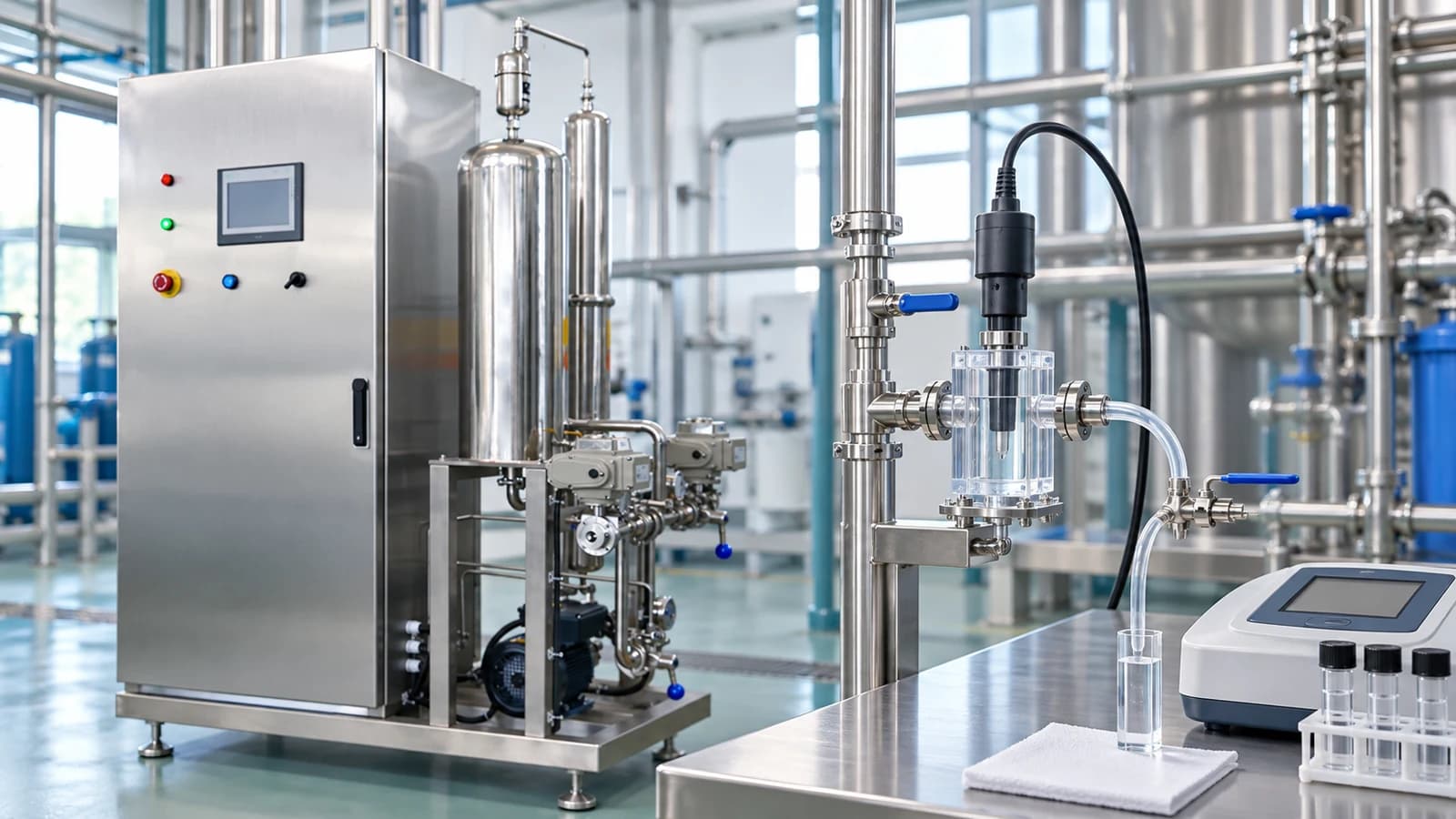
How to Measure Dissolved Ozone in Water: Methods, Sampling and Control
Compare indigo, membrane, UV, DPD, iodometric and ORP methods; then design sampling, verification and control for dissolved ozone in water.
Application Guide
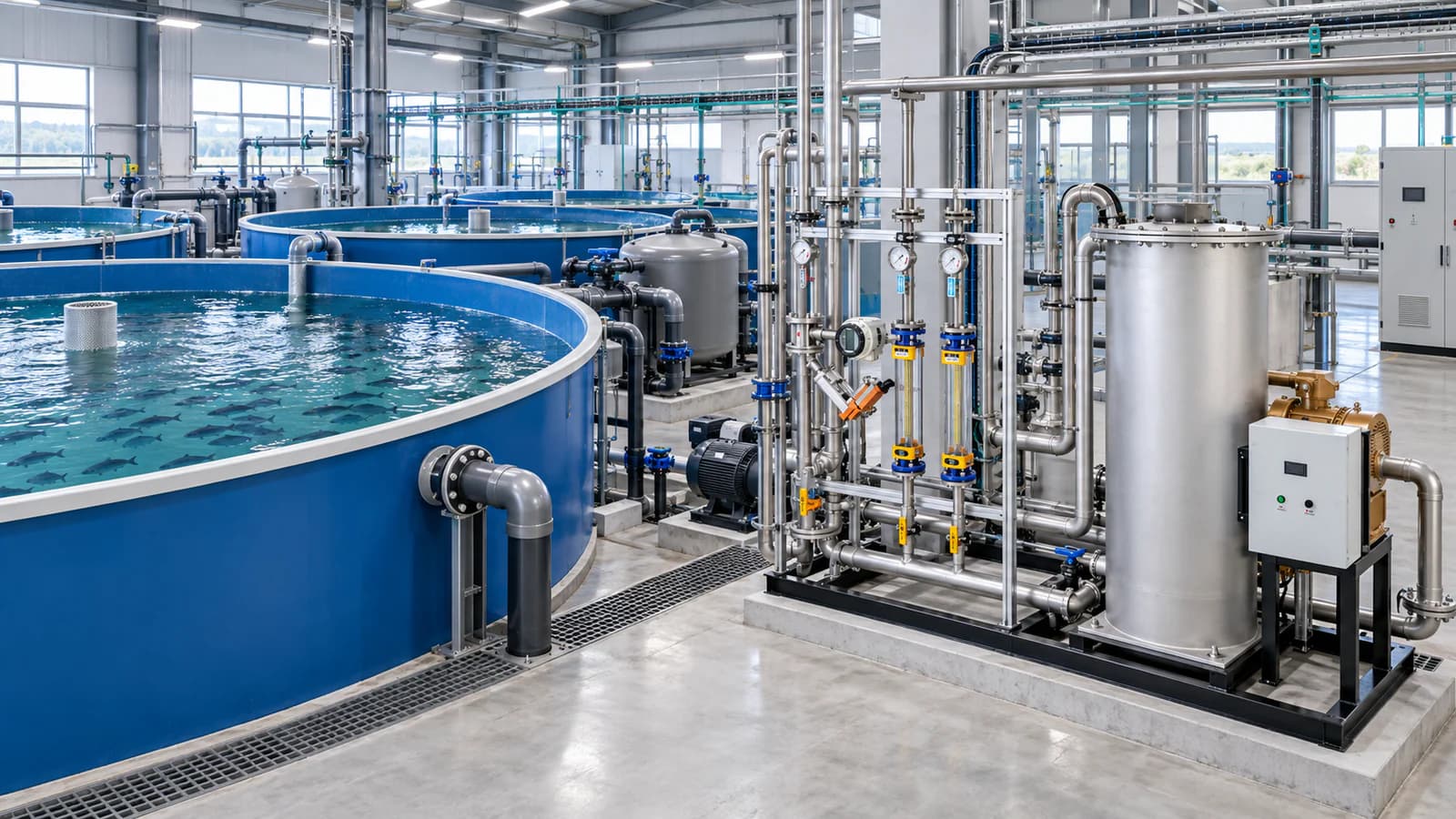
Ozone in Recirculating Aquaculture Systems: Side-Stream Design, ORP and Residual Control
Plan ozone in RAS: side-stream placement, ORP and residual monitoring, fish and biofilter protection, controls, commissioning and acceptance.
Application Guide
Ozonation for Micropollutant Removal in Municipal Wastewater: Design, Monitoring and Limits
Learn when municipal wastewater ozonation fits micropollutant removal, how to define dose and post-treatment, and what evidence is needed for control and acceptance.
Application Guide
Bromate Formation in Drinking-Water Ozonation: Risk Factors, Control and Monitoring
Understand how bromate forms during drinking-water ozonation, which source-water and process variables change risk, how control options trade off, and what to monitor before design and acceptance.
Technology
Ozone vs Chlorine vs UV for Water Disinfection: How to Choose
Compare ozone, chlorine and UV by treatment role, residual, water quality, by-products, validation and complete-system scope—not by a universal winner table.
Technology
Ozone Mass Transfer, Contact Time and Off-Gas Treatment: An Engineering Guide
Learn how to specify ozone transfer efficiency, contact time, dissolved residual, contactor hydraulics and off-gas treatment as one measurable process boundary.
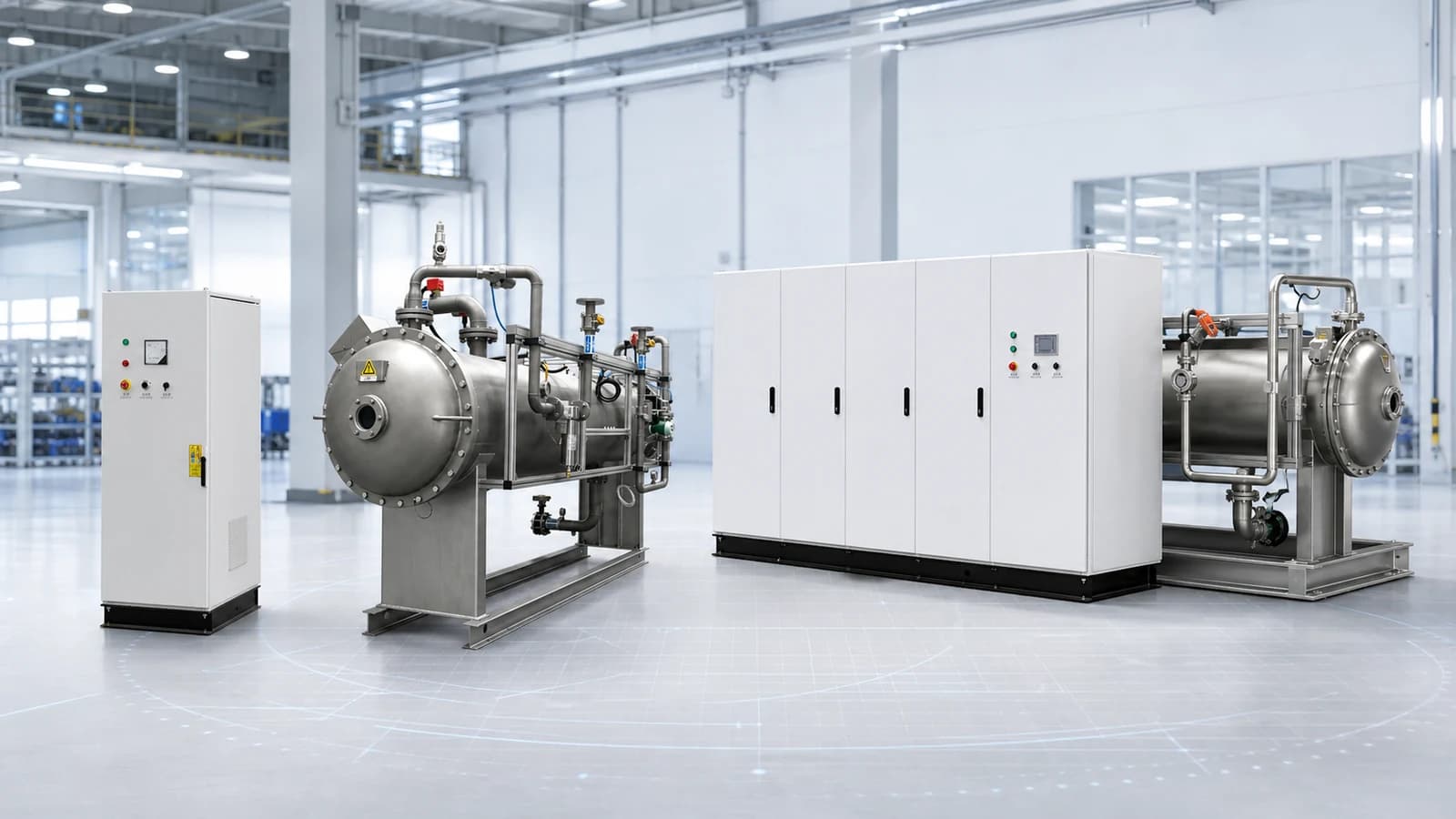
Buying Guide
Industrial Ozone Generator Sizing for Water Treatment: Inputs, Calculations, and Limits
Learn how to calculate industrial ozone-generator capacity from water flow, defined ozone dose and transfer efficiency—without confusing generated, transferred or residual ozone.
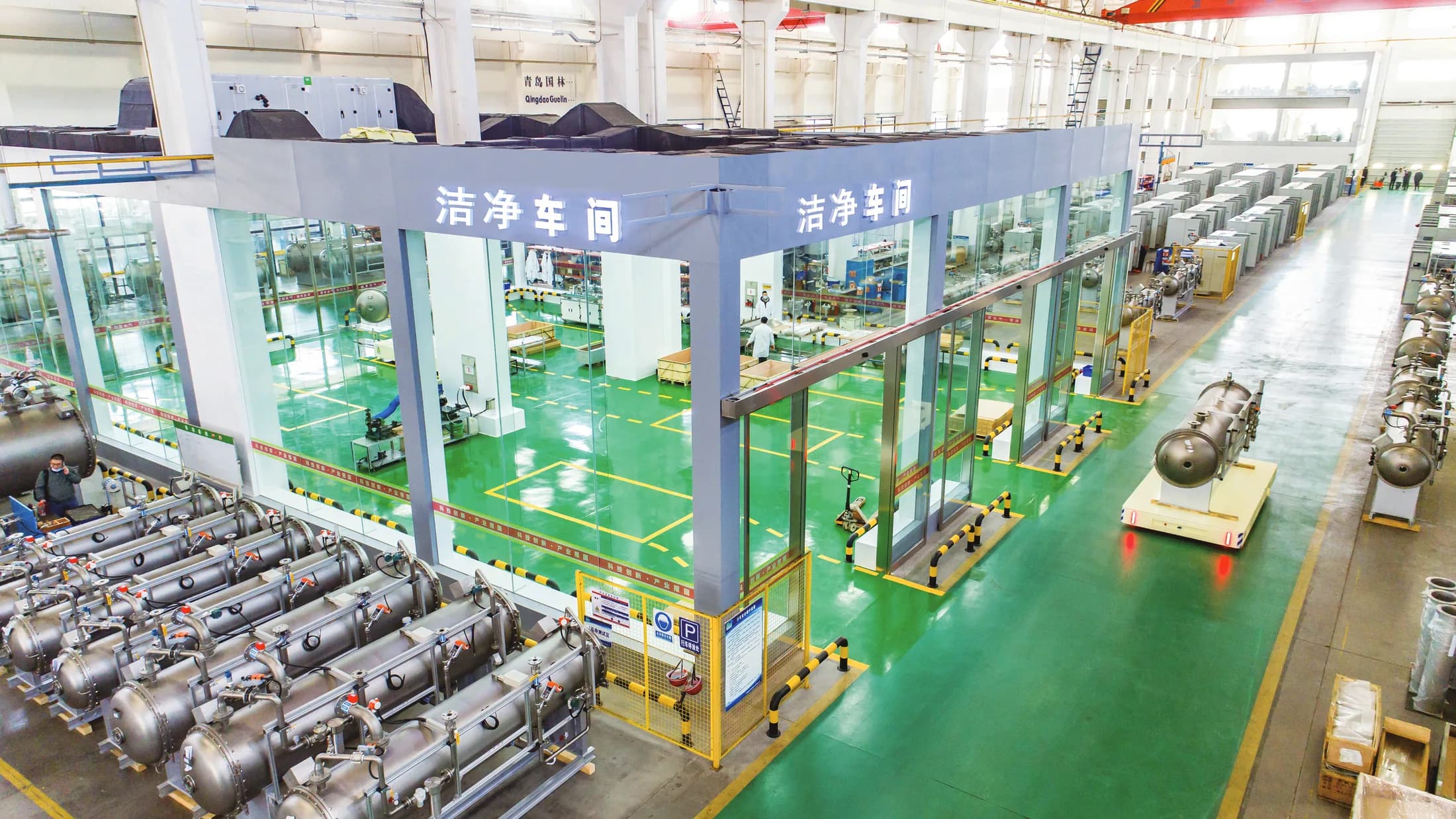
Buying Guide
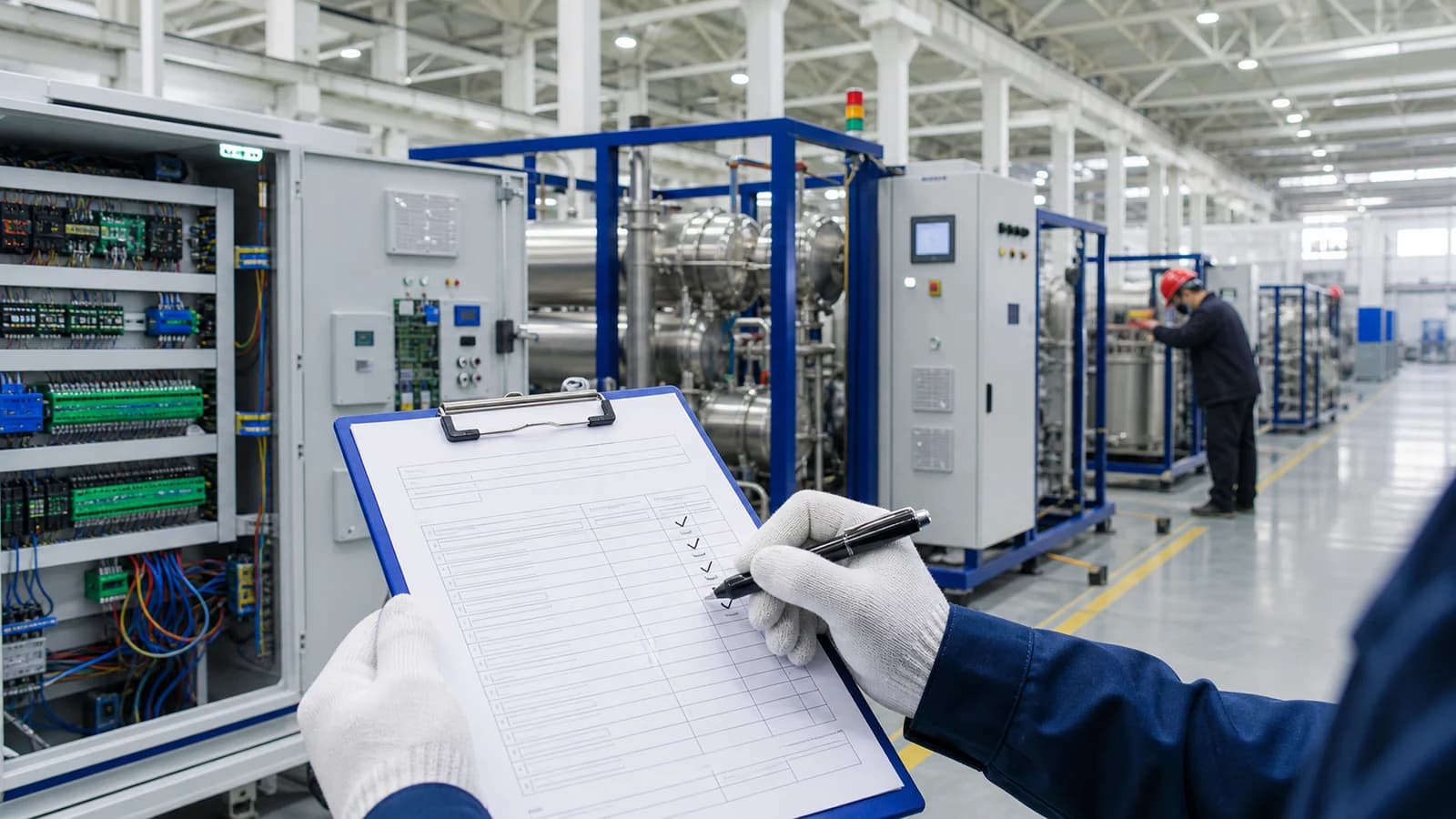
What Is Included in a Complete Industrial Ozone System?
See which equipment, controls, utilities and project interfaces may be included in a complete industrial ozone system—and what every proposal must define.
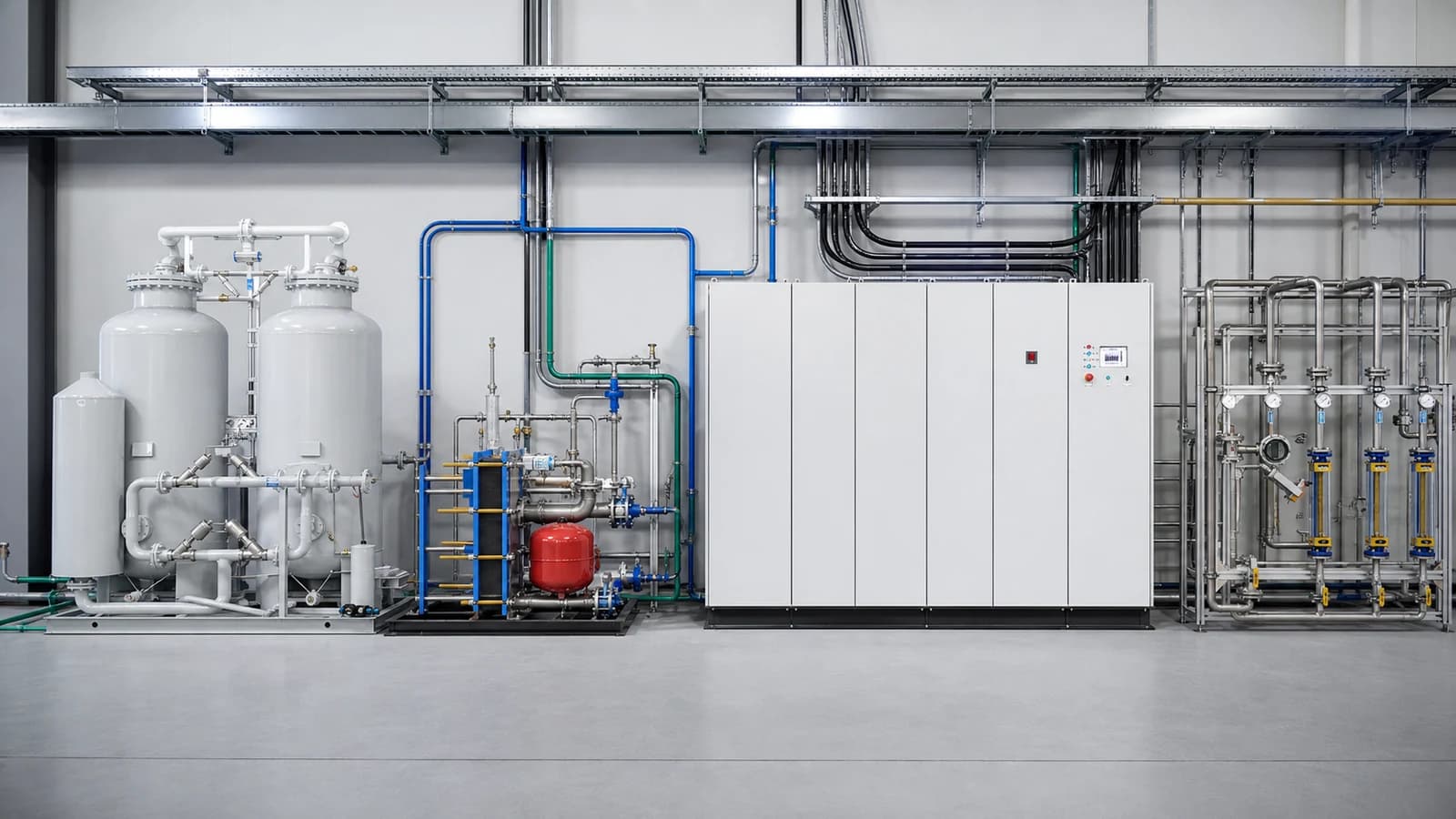
Buying Guide
How to Prepare an Industrial Ozone System RFQ: A Specification Checklist
Build a comparable industrial ozone system RFQ with a clear design basis, scope boundary, operating cases, bidder response schedule and acceptance requirements.
Buying Guide
Industrial Ozone System Utility Requirements: A Site-Preparation Checklist
Prepare power, feed gas, cooling, ventilation, drainage, layout and control interfaces for an industrial ozone system using a responsibility-based site checklist.
Technology
Ozone Concentration vs Ozone Output: g/Nm³, wt%, g/h and kg/h Explained
Learn how ozone concentration, product-gas flow and ozone output relate—and how to compare g/Nm³, wt%, g/h and kg/h without mixing measurement bases.
Buying Guide
Air-Fed vs Oxygen-Fed Industrial Ozone Generators: How to Choose the Feed-Gas Route
Compare air-fed and oxygen-fed industrial ozone generators by concentration, product-gas flow, utilities, oxygen supply, operating profile and complete-system cost.