
Ozone vs Chlorine vs UV for Water Disinfection: How to Choose
Compare ozone, chlorine and UV by treatment role, residual, water quality, by-products, validation and complete-system scope—not by a universal winner table.
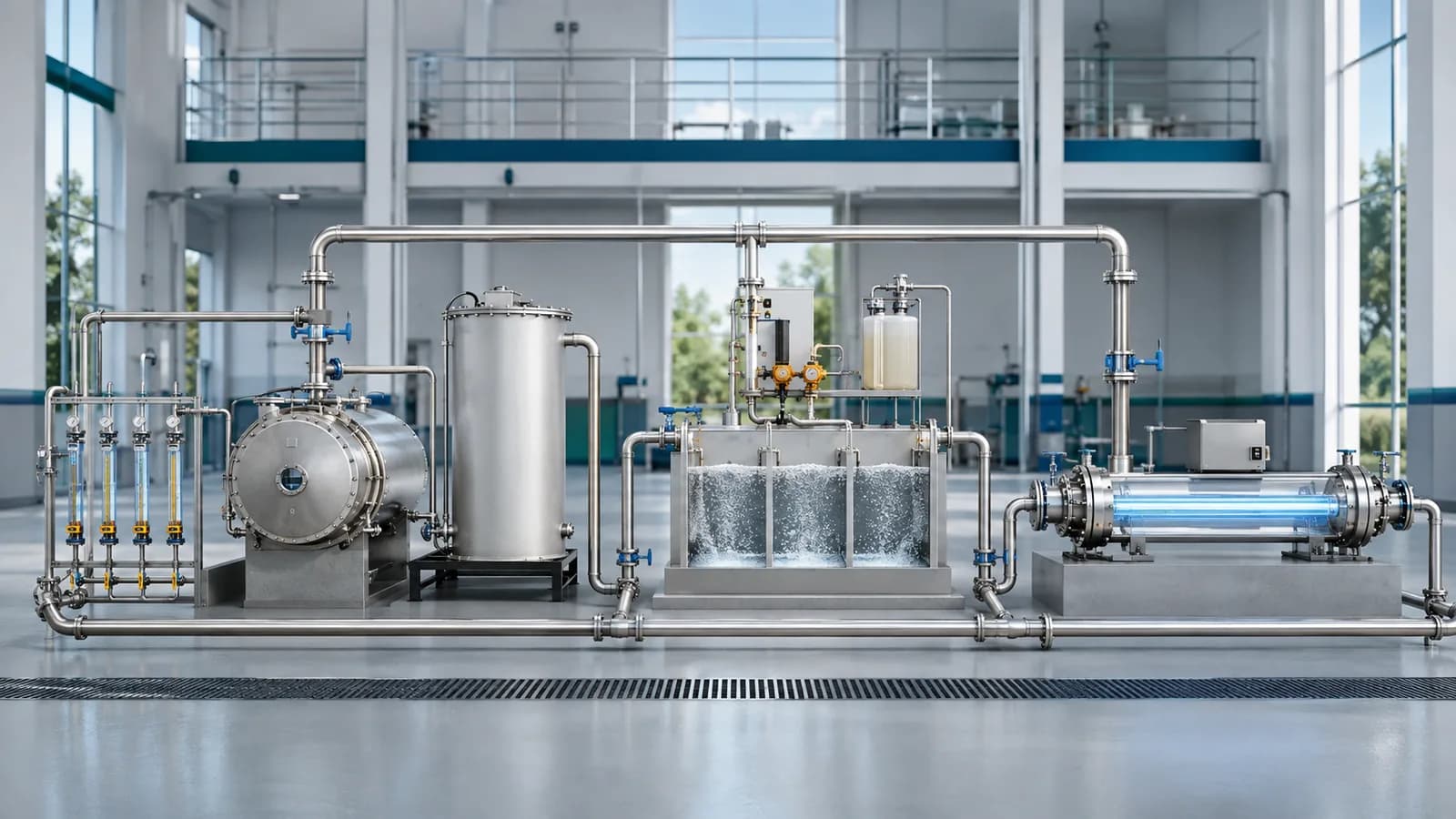
Short answer: there is no universal winner between ozone, chlorine and UV. Choose ozone when the treatment train needs onsite oxidation plus a measurable contact or primary-disinfection stage and can manage feed gas, mass transfer, off-gas and oxidation by-products. Choose chlorine when a persistent residual is required and chemical handling, chlorinated by-products and any downstream dechlorination are controlled. Choose UV when a validated physical inactivation barrier fits the target and the water remains inside the reactor's validated flow, UV-transmittance, intensity and lamp-condition envelope. Use a combination when oxidation, inactivation and downstream residual protection are separate jobs.
This guide is for municipal and industrial plant owners, EPC teams, consultants, operators and procurement teams comparing disinfection proposals. It does not provide a universal dose table. Instead, it shows how to assign each treatment stage a job, compare all three methods on the same criteria and ask for evidence that is appropriate to that method.
The central buying rule is simple: compare process roles before comparing equipment. A strong oxidant is not automatically the best distribution residual. A measurable residual is not automatically the best final-discharge condition. A lamp power reading is not automatically a validated UV dose. The right answer depends on what must happen before, inside and after the disinfection stage.
Why “Which disinfectant is strongest?” is the wrong first question
Ozone, chlorine and UV do not deliver the same kind of treatment. Ozone and chlorine are reactive chemicals in water. UV is electromagnetic radiation delivered inside a reactor. Ozone and chlorine exposure may be discussed through a concentration-and-time framework under a named method. UV treatment credit is tied to a validated reactor operating envelope and a delivered-dose method. Their dose units and proof systems are not interchangeable.
A useful comparison begins with four possible jobs:
- Oxidation: transform colour, taste-and-odour compounds, reduced inorganic species or selected organic contaminants.
- Primary inactivation: achieve the required microbial reduction at a defined treatment barrier.
- Polishing or supplementary inactivation: add another independent barrier after upstream removal or disinfection.
- Persistent protection: maintain a measurable disinfectant residual through storage, distribution or a recirculating loop.
No project should assume that one stage must perform all four. The WHO drinking-water framework and current public-water guidance emphasize risk management and multiple barriers from source to consumer. That is a better design starting point than a winner table based only on oxidation potential or one laboratory result.
Role-first architecture
Assign the job before choosing the technology
The same technology can be a good fit in one role and incomplete in another. A multi-barrier train is valid when every stage has a separate job and proof method.
Role 1
Oxidation & primary treatment
Must the stage also transform colour, odour or selected chemicals?
Ozone
Often a strong fit when oxidation and inactivation share one contact stage
Chlorine
Can oxidize selected compounds, but chemistry and DBPs set limits
UV
Disinfection reactor is not automatically an oxidation process
Role 2
Validated inactivation
How will the target organism and operating envelope be proven?
Ozone
Contact, residual profile, hydraulics and accepted CT/performance method
Chlorine
Dose, demand, residual, hydraulics and accepted CT/performance method
UV
Validated reactor, flow, UVT, intensity, lamp state and monitoring strategy
Role 3
Persistent downstream protection
Must protection continue through storage, distribution or a loop?
Ozone
No persistent distribution residual; define a separate downstream strategy
Chlorine
Can provide a measurable residual when the endpoint requires it
UV
No chemical residual after the reactor; define downstream protection separately
When does ozone fit best?
Ozone is generated onsite from conditioned air or oxygen and electricity. It is transferred from gas into water through a diffuser, injector or another contact arrangement. Inside the water it can react directly and through secondary radical chemistry, depending on the matrix and process conditions. This gives ozone a role beyond microbial inactivation: it can also support oxidation objectives that chlorine or a conventional UV-disinfection reactor may not address in the same way.
Ozone is a process stage, not just a generator
A complete ozone boundary normally includes feed-gas preparation, ozone generation, cooling, dosing or diffusion, a contactor, off-gas collection and destruction, monitoring, controls and plant interfaces. Generator nameplate output alone cannot establish applied dose, transferred ozone, dissolved exposure or treatment result. The ozone mass-transfer, contact-time and off-gas guide explains the measurement boundary in detail.
Ozone can be attractive when one stage must provide both oxidation and primary disinfection, or when upstream oxidation improves a later biological or adsorption stage. In drinking-water trains, WHO describes ozonation followed by biological filtration or granular activated carbon where biodegradable organic matter needs to be managed. That downstream step matters because oxidation can change organic matter rather than simply make it disappear.
Ozone does not provide a persistent distribution residual
Ozone decays and reacts; it is not normally relied on as a persistent disinfectant throughout a drinking-water distribution network. If water must remain protected through long storage or pipelines, the train may require a separate final chlorine or chloramine residual, depending on the applicable rules and utility strategy. This does not make the ozone stage redundant. It means oxidation/primary treatment and downstream protection are different jobs.
“No chlorinated DBPs” does not mean “no by-products”
Ozone does not follow the same trihalomethane and haloacetic-acid pathway as free chlorine, but it can form bromate when bromide is present and can produce other oxidation products. Health Canada's bromate guidance shows why source-water bromide, natural organic matter, pH, temperature, ozone dose and seasonal variation belong in the decision. The responsible response is source-water characterization, process optimization and bench or pilot testing where uncertainty is consequential—not the claim that ozone has no by-product boundary. Use the dedicated bromate-control guide to define risk factors, control trade-offs and monitoring.
Ozone's main specification questions
- What oxidation and microbial objectives are assigned to the ozone stage?
- What are minimum, normal, peak and seasonal flow and water-quality cases?
- What ozone demand, decay, transfer, contact hydraulics and residual profile must be demonstrated?
- What bromide and other by-product precursors require monitoring or testing?
- How are wet off-gas, condensate, destruction, ventilation and ambient safety controlled?
- Which downstream biological, adsorption, filtration or residual-disinfection stage follows?
When does chlorine fit best?
Chlorine can be supplied as gas, hypochlorite solution, solid hypochlorite or generated onsite, depending on the plant. In water, free chlorine speciation and disinfection performance depend on pH, temperature and water chemistry. In ammonia-bearing water, combined chlorine species and breakpoint behavior may become part of the design. “Chlorine” therefore needs a defined chemical form, dose point, contact condition and residual method.
A persistent residual can be the deciding function
Chlorine's most important difference in this comparison is its ability to leave a measurable residual after the initial contact stage. That can protect drinking water through storage and distribution or maintain control in an industrial loop. Where regulations or the plant's risk assessment require a persistent residual, ozone or UV alone cannot perform that same downstream function.
A residual is not evidence by itself that every part of the process received sufficient disinfection. The system still needs mixing, hydraulics, contact, demand control, monitoring and an accepted calculation or validation method. The residual target and sampling locations also depend on the application and authority.
Chlorine creates a chemical and by-product boundary
Chlorine can react with natural organic matter and other constituents to form chlorinated disinfection by-products, including regulated families such as trihalomethanes and haloacetic acids in drinking-water systems. Formation depends on precursor concentration and character, disinfectant dose and type, pH, temperature, contact and treatment sequence. A blanket statement that chlorine always fails a by-product requirement is no more defensible than saying chlorination has no by-product risk.
The chlorine boundary also includes delivery or onsite generation, storage, dosing equipment, secondary containment, ventilation where applicable, operator exposure controls, chemical aging/quality, residual analyzers and emergency response. These functions belong in lifecycle and responsibility comparisons, not only the chemical purchase price.
Wastewater may need dechlorination
For wastewater discharge, the residual that is helpful during contact can become harmful to aquatic life downstream. The US EPA dechlorination fact sheet documents why some permits require residual removal before discharge. A chlorine proposal may therefore need a complete chlorination–contact–dechlorination system, chemical storage for both stages, monitoring and a low-residual control strategy. This is a different endpoint from maintaining a residual in drinking-water distribution.
Chlorine's main specification questions
- Which chlorine form and dosing strategy are proposed, and why?
- What pH, temperature, ammonia, nitrite, organic matter and solids cases control demand and speciation?
- What mixing, hydraulic-contact and residual profile must be demonstrated?
- Which chlorinated by-products and precursor controls apply?
- Is persistent residual required downstream, or must the effluent be dechlorinated?
- What chemical logistics, containment, ventilation, PPE, analyzers and emergency systems are included?
When does UV fit best?
UV disinfection is a physical inactivation process. Water passes through a reactor where microorganisms receive germicidal radiation. It does not require a chemical disinfectant to create the treatment exposure, and it does not provide a persistent chemical residual after the reactor. Its proof boundary is therefore fundamentally different from a chlorine-residual measurement or an ozone contactor mass balance.
UV performance belongs to a validated reactor envelope
A UV reactor should not be selected from lamp wattage alone. The US EPA UV Disinfection Guidance Manual ties validated performance to variables including flow rate, UV intensity, UV transmittance, lamp status, fouling and aging, sensor uncertainty, dose distribution and inlet/outlet hydraulics. A validated dose-monitoring strategy uses the operating parameters demonstrated during reactor testing.
This matters in real plants. Lower UV transmittance reduces light penetration. Suspended or colloidal material can shield organisms. Fouling changes output reaching the water. Flow and reactor hydraulics change the paths and doses received by different particles. A reactor can have functioning lamps and still be outside its validated treatment envelope.
No residual means another downstream question remains
UV can provide a strong independent inactivation barrier without leaving a chemical disinfectant residual. That can be valuable for final wastewater discharge or a point-of-treatment barrier. Where water enters storage, distribution or a recirculating system that requires continuing protection, the process still needs a residual or another accepted control strategy.
UV disinfection is not the same as UV advanced oxidation
A UV reactor designed and validated for microbial inactivation should not automatically be credited with oxidation of trace organics. UV advanced oxidation adds another chemical and photochemical boundary—commonly a peroxide or another oxidant, a defined UV spectrum/dose and target-specific validation. Keep “UV disinfection” and “UV-based advanced oxidation” as separate project claims unless the proposed system and evidence explicitly cover both.
UV's main specification questions
- Which organisms and required inactivation credits or performance criteria apply?
- What minimum UV transmittance and maximum flow/solids cases define design?
- Which reactor validation protocol and validated operating range are accepted?
- How are intensity, UVT where required, flow, lamp status, fouling and sensor calibration monitored?
- What cleaning, sleeve, lamp, ballast, spare and bypass strategy is included?
- Does the downstream process require a separate persistent residual?
Ozone vs chlorine vs UV: compare the same criteria
A credible comparison keeps the rows constant while allowing the proof metric to differ. Do not convert ozone or chlorine concentration into UV fluence, or infer microbial credit from equipment power. Ask each supplier to show how its proposed boundary proves the project objective.
Same criteria, different proof
Compare complete treatment boundaries—not isolated devices
No cell is a universal winner. The downstream endpoint determines whether each characteristic is an advantage, limitation or required interface.
Main proof boundary
Ozone: Applied mass, transfer, hydraulics, dissolved profile and outcome
Chlorine: Dose/demand, contact hydraulics, residual and outcome
UV: Validated reactor conditions and dose-monitoring strategy
Water-matrix drivers
Ozone: Demand, bromide, NOM, pH, temperature and scavengers
Chlorine: pH, temperature, ammonia/nitrite, organics and solids
UV: UVT, particles, absorbing species, fouling and flow
Persistent residual
Ozone: No; downstream protection is a separate decision
Chlorine: Yes, when designed and maintained for the endpoint
UV: No; reactor operation proves treatment at the stage
By-product/control focus
Ozone: Bromate and oxidation products; downstream biodegradability
Chlorine: THMs/HAAs and other applicable DBPs; chemical quality
UV: Spectrum/water-specific photochemistry; keep AOP claims separate
Core plant boundary
Ozone: Feed gas, generator, cooling, contact, off-gas and controls
Chlorine: Supply/generation, storage, dosing, contact, residual and safety
UV: Reactor, lamps, sleeves, power, sensors, cleaning and controls
Critical failure question
Ozone: Demand/transfer/off-gas or by-product case outside design
Chlorine: Demand/residual/DBP or chemical-control case outside design
UV: Flow/UVT/intensity/lamp/fouling outside validated range
The matrix deliberately does not mark a winner. For example, “no persistent residual” can be an advantage before a sensitive discharge and a disadvantage before a long distribution network. “Persistent residual” can be essential for downstream protection and a liability where dechlorination is required. The project endpoint determines the direction of the trade-off.
How the answer changes by application
Municipal drinking water
Drinking-water design must protect consumers from the source through distribution. A treatment plant may use ozone for oxidation and primary disinfection, then biological activated carbon or another downstream process to manage biodegradable organics, followed by a final disinfectant residual. Another plant may use filtration and validated UV for a specific inactivation barrier, followed by chlorine or chloramine for distribution protection. A third may use chlorine for both primary and secondary roles while controlling precursors and DBPs.
The decision therefore includes raw-water pathogens, turbidity, organic matter, bromide, pH, temperature, seasonal variation, distribution residence time, DBP rules, residual strategy and corrosion-control interactions. The municipal drinking-water solution page owns that application train; this comparison supplies the technology-selection questions.
Municipal wastewater and reuse
For treated effluent, the downstream endpoint may be discharge, irrigation, industrial reuse or further potable-reuse treatment. Chlorine may be familiar and controllable but can require dechlorination. UV avoids a chemical residual but depends on filtration/solids, UVT, reactor validation and maintenance. Ozone can provide oxidation and disinfection together, but it adds feed gas, generation, transfer, contact and off-gas equipment and must be evaluated for the actual wastewater matrix and transformation products.
Reuse adds exposure and downstream-storage questions that may require another residual or barrier. The municipal wastewater solution page keeps disinfection, tertiary oxidation, micropollutant, colour/odour and reuse objectives separate rather than treating one ozone dose as the answer to all of them.
Industrial wastewater
Industrial wastewater can contain scavengers, colour bodies, surfactants, solvents, high COD, suspended solids, halides, metals or process-specific compounds that change each method's behavior. The project may be primarily an oxidation problem with disinfection as a secondary benefit—or the reverse. Bench or pilot testing is especially important when matrix-specific reaction pathways and by-products determine success.
Use the industrial wastewater solution page to define the process objective and sampling plan. Do not transfer a municipal dose, a vendor case or a laboratory removal percentage into a different industrial matrix.
Industrial loops and process water
Closed or recirculating systems introduce residence time, biofilm, materials, heat load, product-contact and intermittent-contamination questions. A persistent residual may be valuable across a large loop. A point-of-use ozone or UV barrier may be preferable where downstream chemical residual is undesirable. Some systems use a residual technology in the loop and ozone or UV for a separate side-stream or polishing role.
The correct design follows the process hazard analysis, product-quality requirements, applicable food/pharma/industrial rules and material compatibility. For recirculating aquatic facilities, the swimming-pool ozone solution shows why side-stream treatment, air safety, materials and the primary residual strategy remain separate responsibilities. A general water-treatment comparison cannot replace those application controls.
By-products: compare pathways, not slogans
“Leaves no chlorine” and “uses no treatment chemicals” are not complete by-product assessments. A useful review asks what enters each stage, what reactions occur, which products are regulated or operationally important, how the stage changes downstream chemistry and what monitoring verifies control.
- Ozone: review bromide and bromate potential, oxidation products, biodegradable organic matter, downstream biological/adsorption needs and the interaction with any later disinfectant.
- Chlorine: review natural-organic-matter and other precursors, THM/HAA and other applicable DBP pathways, ammonia/nitrite demand, chemical quality and downstream residual or dechlorination.
- UV: review UVT, absorbing species, particles, lamp spectrum and any photochemical products relevant to the actual water and reactor; keep disinfection and AOP claims separate.
The US EPA Surface Water Treatment Rules overview illustrates the governing principle: microbial protection and DBP risk have to be managed together. Project teams should use the limits and approved methods of their own authority having jurisdiction rather than copy one country's values into an international RFQ.
When is a multi-barrier combination the better answer?
A combination is justified when each stage has a distinct job and measurable acceptance boundary. Adding technologies without assigning roles only increases cost and control complexity. Useful sequence concepts include:
- Ozone → biological filtration/GAC → final residual: ozone handles oxidation/primary treatment; downstream media manages biodegradable products; a final disinfectant protects distribution. The Ozone-BAC drinking-water guide explains this process boundary in detail.
- Filtration → validated UV → final residual: filtration protects UVT and particle conditions; UV supplies a validated inactivation barrier; a chemical residual protects storage/distribution where required.
- Tertiary filtration → UV → discharge or reuse storage: UV supplies final inactivation without a chlorine residual, while the downstream endpoint determines whether another barrier is needed.
- Tertiary treatment → ozone/contact → off-gas control → downstream verification: ozone provides oxidation and/or disinfection, with product- and matrix-specific validation and no assumption of persistent residual.
- Ozone or UV as a supplementary barrier: an existing chlorine system retains the residual job while another stage addresses a specific organism, oxidation target or by-product strategy.
These are architecture patterns, not recommended designs. The accepted train must close hydraulics, bypass behavior, minimum/peak operation, instrument failure, redundancy, startup/shutdown, alarm response and responsibility at every stage.
A five-gate selection workflow
Five-gate selection workflow
A technology advances only when the project evidence closes
Run every option through the same gates. A missing input remains TBD; it does not become a vendor assumption hidden inside the quote.
Define the job
Organisms, oxidation targets, residual or discharge endpoint
Gate evidence: Accepted performance and compliance method
Characterize water
Flow range, temperature, pH, solids, UVT, organics, ammonia, bromide
Gate evidence: Seasonal and upset design cases
Map downstream
Distribution, storage, loop, reuse, discharge or product contact
Gate evidence: Residual required, separate or removed
Set proof & control
Method-specific exposure, monitoring, by-products and failure response
Gate evidence: Instruments, validation and cause/effect
Normalize system
Same life, hours, availability, interfaces and local inputs
Gate evidence: Complete CAPEX/OPEX and responsibility matrix
Gate 1 — define the job. Name the organisms, oxidation targets, required downstream residual or discharge condition, and how success will be measured. Separate mandatory compliance from optional water-quality improvements.
Gate 2 — characterize the water. Record minimum/normal/peak flow, temperature, pH, turbidity, suspended solids, UVT, organic matter, ammonia/nitrite, bromide, alkalinity and application-specific constituents. Add seasonal and upset cases.
Gate 3 — map the downstream endpoint. Decide whether water enters distribution, storage, a product-contact step, a recirculating loop, reuse or a receiving environment. State whether a residual is required, prohibited, neutralized or separately provided.
Gate 4 — define proof and control. For ozone, close applied mass, transfer, hydraulic exposure, residual/by-products and off-gas. For chlorine, close dose, demand/speciation, contact, residual, DBPs and dechlorination where applicable. For UV, close reactor validation, flow, UVT, intensity, lamp status, fouling and calibration.
Gate 5 — normalize the complete system. Compare the same lifetime, operating hours, water cases, availability, redundancy and battery limits. Include generation or chemicals, contactor/reactor, monitoring, safety, maintenance, consumables, waste/dechlorination, downstream stages and local utility/commercial inputs.
Copyable disinfection comparison data block
Use this field set before requesting or comparing proposals. Unknown values can remain TBD, but every TBD needs an owner and closure method.
Application and endpoint: [drinking water / wastewater discharge / reuse / industrial process or loop]
Treatment jobs: [oxidation targets / organisms / primary inactivation / polishing / persistent residual]
Water flow: [minimum / normal / peak / seasonal / upset]
Water matrix: [temperature, pH, turbidity, TSS, UVT, organic matter, ammonia/nitrite, bromide and application-specific constituents]
Upstream process: [coagulation, filtration, biological treatment, membranes or other]
Downstream process: [BAC/GAC, storage, distribution, reuse, loop, discharge or product-contact step]
Residual requirement: [required value/method/location or no persistent residual; authority/source]
By-product boundary: [regulated/monitored species, precursors, sampling and control method]
Ozone evidence if proposed: [generated/applied mass, transfer, contact hydraulics, dissolved profile, off-gas and bromate plan]
Chlorine evidence if proposed: [chemical form, dose/demand, pH/speciation, contact, residual, DBP and dechlorination plan]
UV evidence if proposed: [accepted validation, target, flow, UVT, intensity, lamp status, fouling and calibration]
Operating philosophy: [turndown, redundancy, bypass, startup/shutdown, alarms and failure response]
Commercial basis: [scope, local utilities/chemicals, operating hours, maintenance, consumables, service and lifecycle period]
Responsibilities: [supplier / customer / EPC / operator / authority at every interface]
Use the industrial ozone-system RFQ guide to place the ozone-specific fields into a comparable bidder schedule. If the required ozone duty remains unknown, use the ozone-generator sizing guide. If the complete package boundary is unclear, start with what is included in a complete industrial ozone system.
The practical buying rule
Do not ask three suppliers to quote “the same disinfection capacity” when one is offering a chlorine residual, another an ozone mass/contact boundary and another a validated UV reactor. First define the job, endpoint and evidence. Then compare complete systems that solve the same problem.
GUOLIN is China’s only publicly listed ozone-system manufacturer, with complete-system design, manufacturing and integration capabilities. GUOLIN's scope is the project-specific ozone stage and its interfaces—not an unverified claim to supply every chlorine or UV package. Send the water matrix, operating cases, treatment objectives, existing process train, residual/by-product constraints and accepted validation requirements through the technical project-review form. GUOLIN can then define the appropriate ozone-generation, dosing/contact, off-gas treatment, monitoring and control boundary within the wider plant. The industrial ozone-system product hub provides the equipment-family starting point.
Frequently asked questions
Is ozone better than chlorine for water treatment?
Not universally. Ozone is a strong onsite oxidation and primary-treatment tool but does not normally provide a persistent distribution residual. Chlorine can provide that residual but creates chemical-handling, chlorinated-by-product and sometimes dechlorination responsibilities. The water matrix, target, endpoint and accepted validation method determine the fit.
Can ozone completely replace chlorine disinfection?
It can replace chlorine in a defined treatment stage when the ozone process is designed and validated for that job. It cannot replace a persistent downstream residual where distribution, storage, a recirculating loop or local rules require one. Many drinking-water trains use ozone for oxidation or primary disinfection and a separate final residual.
Which of ozone, chlorine and UV leaves a residual?
Chlorine can leave a measurable persistent chemical residual. Ozone reacts and decays and is not normally used as a lasting distribution residual. UV is radiation delivered inside a reactor and leaves no chemical disinfectant residual; its performance is demonstrated through validated reactor operation.
Does ozone form fewer disinfection by-products than chlorine?
Ozone avoids the same THM and HAA formation pathway as free chlorine, but it is not by-product-free. Bromate can form in bromide-bearing water, and other oxidation products may affect downstream treatment. Compare the applicable by-product pathways, precursors and monitoring plan rather than counting one generic DBP total.
Is ozone or UV better for water disinfection?
They provide different boundaries. Ozone transfers a reactive gas into water and can combine oxidation with disinfection; UV provides a physical inactivation barrier within a validated reactor envelope. Ozone needs feed gas, contact and off-gas control; UV needs adequate UVT, validated hydraulics, lamp/intensity monitoring and fouling control. Neither provides a persistent residual.
Can ozone, chlorine and UV be used together?
Yes, when each stage has a distinct job and acceptance method. Examples include ozone followed by biological filtration and a final residual, or filtration followed by validated UV and a downstream residual. A combination is not automatically better; it must close interactions, controls, by-products, failure cases and lifecycle scope.
What data are needed before selecting a disinfection process?
Provide the application, target organisms and oxidation objectives, minimum/normal/peak flow, temperature, pH, turbidity, TSS, UVT, organic matter, ammonia/nitrite, bromide, upstream treatment, downstream endpoint, residual requirement, by-product constraints, local validation rules, utilities, footprint, redundancy and responsibility boundary.
How should ozone, chlorine and UV lifecycle costs be compared?
Normalize the same treatment job, operating cases, lifetime, availability and battery limits. Include chemicals or feed gas and electricity, generation/dosing/reactor equipment, contact, monitoring, safety, maintenance, consumables, spares, dechlorination or downstream residual, waste, operator requirements and local prices. There is no universal cost winner.
Related articles
Technology
How to Measure Dissolved Ozone in Water: Methods, Sampling and Control
Compare indigo, membrane, UV, DPD, iodometric and ORP methods; then design sampling, verification and control for dissolved ozone in water.
Application Guide
Ozone in Recirculating Aquaculture Systems: Side-Stream Design, ORP and Residual Control
Plan ozone in RAS: side-stream placement, ORP and residual monitoring, fish and biofilter protection, controls, commissioning and acceptance.
Application Guide
Ozonation for Micropollutant Removal in Municipal Wastewater: Design, Monitoring and Limits
Learn when municipal wastewater ozonation fits micropollutant removal, how to define dose and post-treatment, and what evidence is needed for control and acceptance.
Application Guide
Bromate Formation in Drinking-Water Ozonation: Risk Factors, Control and Monitoring
Understand how bromate forms during drinking-water ozonation, which source-water and process variables change risk, how control options trade off, and what to monitor before design and acceptance.
Application Guide
Ozone-BAC Drinking Water Treatment: Process, Monitoring and Limits
Learn how ozone and biologically activated carbon work together, how BAC differs from GAC, what changes performance, and what to monitor before specifying a drinking-water system.
Technology
Ozone Mass Transfer, Contact Time and Off-Gas Treatment: An Engineering Guide
Learn how to specify ozone transfer efficiency, contact time, dissolved residual, contactor hydraulics and off-gas treatment as one measurable process boundary.
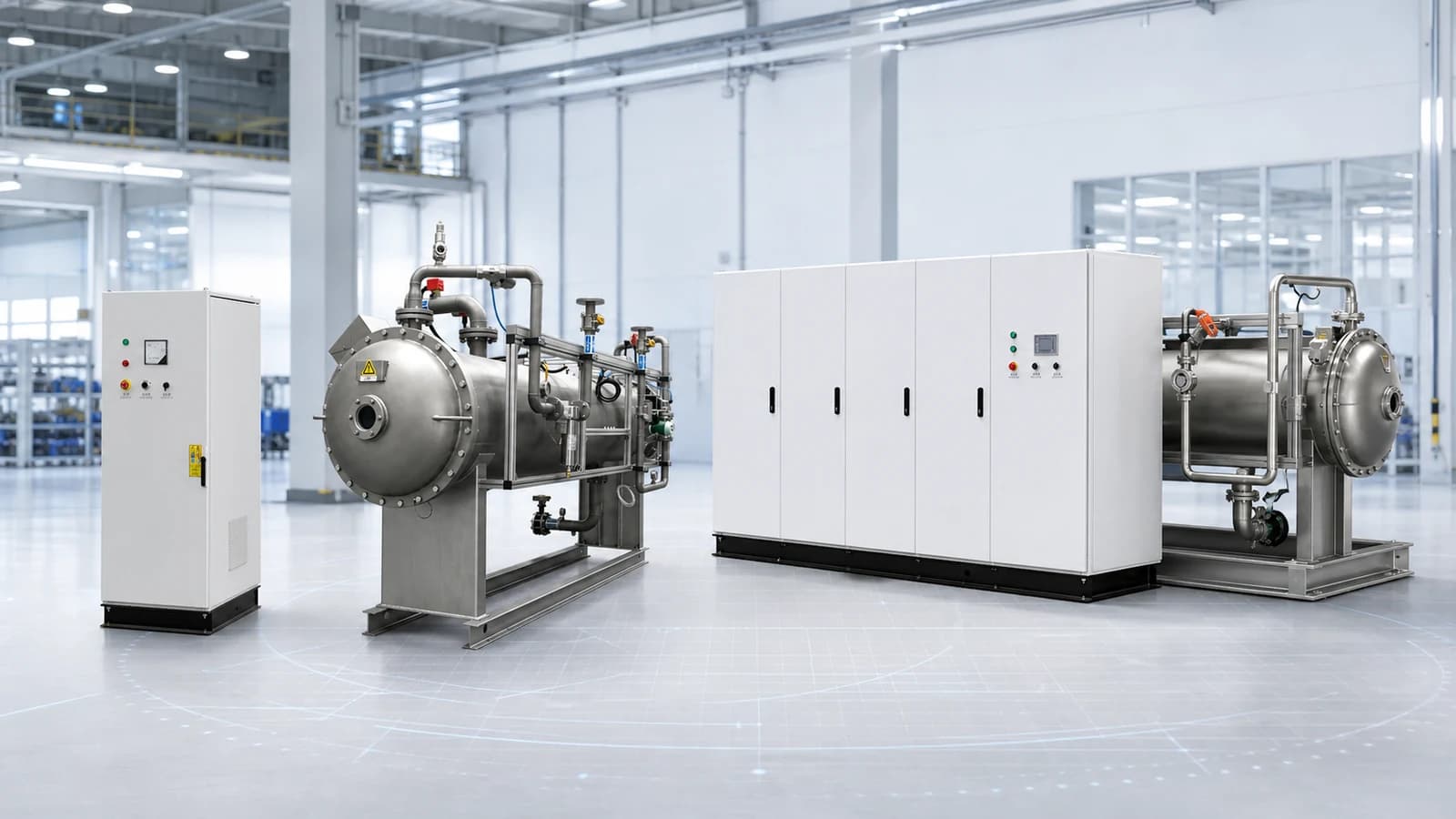
Buying Guide
Industrial Ozone Generator Sizing for Water Treatment: Inputs, Calculations, and Limits
Learn how to calculate industrial ozone-generator capacity from water flow, defined ozone dose and transfer efficiency—without confusing generated, transferred or residual ozone.
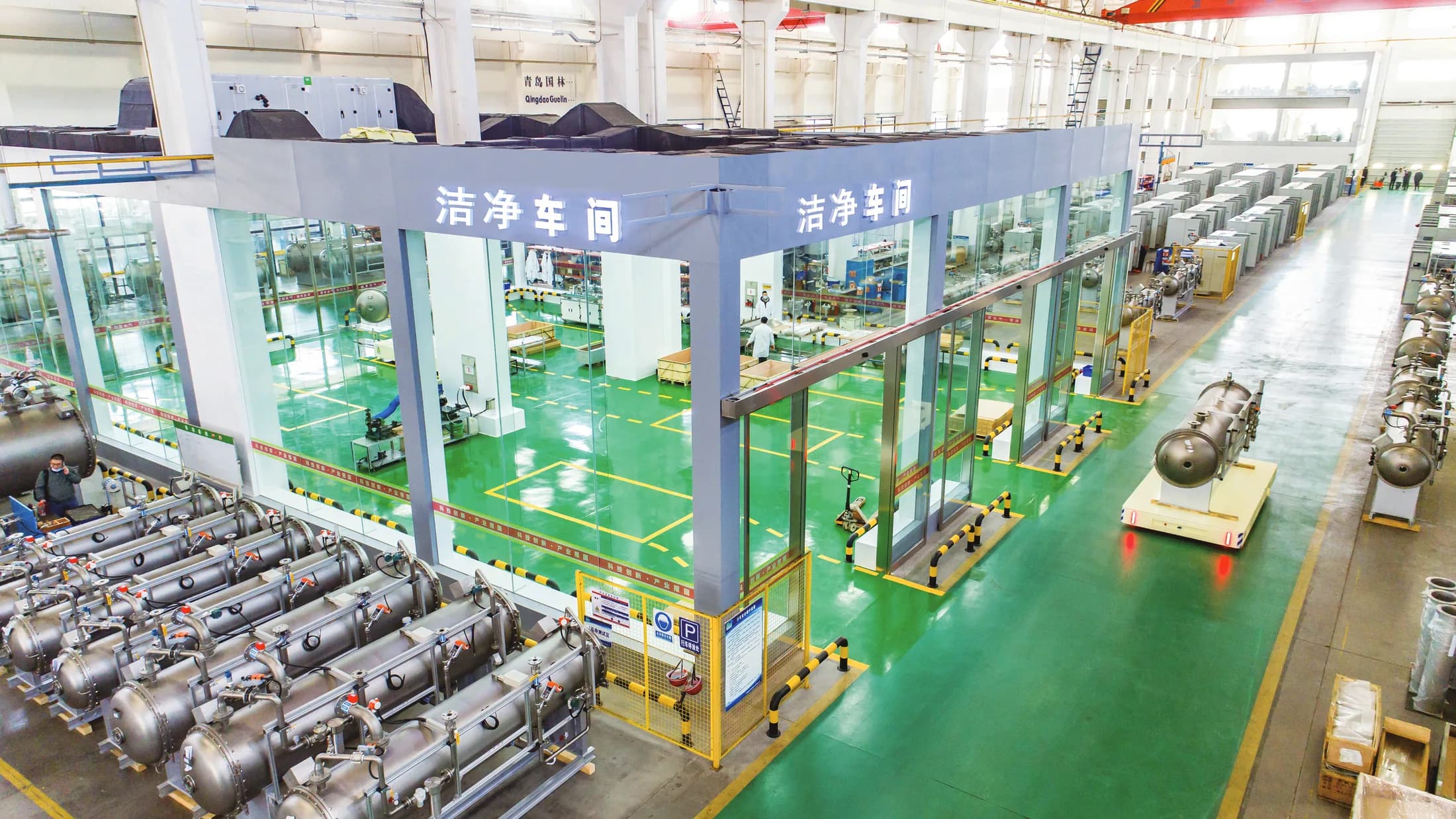
Buying Guide
What Is Included in a Complete Industrial Ozone System?
See which equipment, controls, utilities and project interfaces may be included in a complete industrial ozone system—and what every proposal must define.

Buying Guide
How to Prepare an Industrial Ozone System RFQ: A Specification Checklist
Build a comparable industrial ozone system RFQ with a clear design basis, scope boundary, operating cases, bidder response schedule and acceptance requirements.
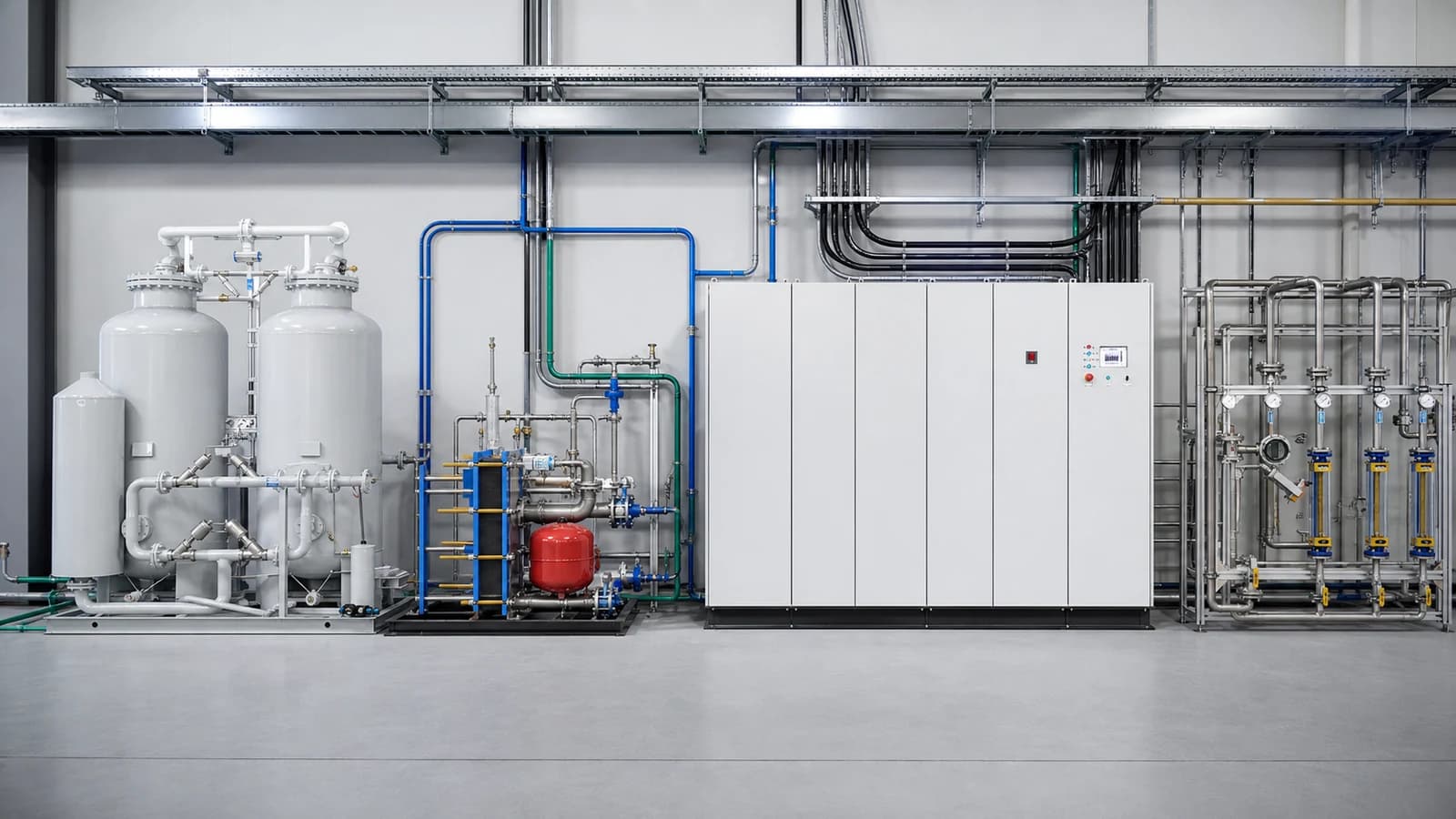
Buying Guide
Industrial Ozone System Utility Requirements: A Site-Preparation Checklist
Prepare power, feed gas, cooling, ventilation, drainage, layout and control interfaces for an industrial ozone system using a responsibility-based site checklist.
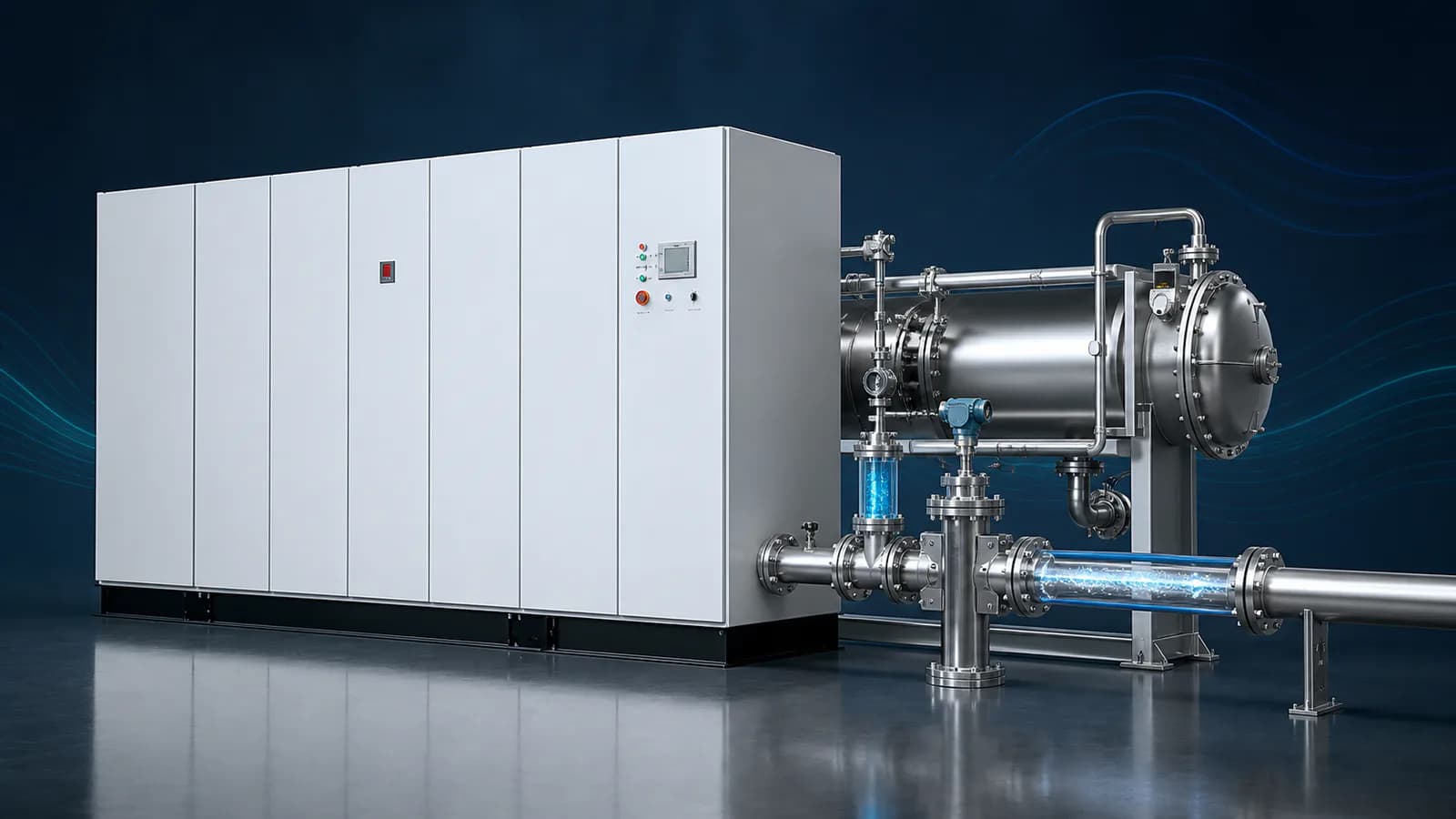
Technology
Ozone Concentration vs Ozone Output: g/Nm³, wt%, g/h and kg/h Explained
Learn how ozone concentration, product-gas flow and ozone output relate—and how to compare g/Nm³, wt%, g/h and kg/h without mixing measurement bases.
Buying Guide
Air-Fed vs Oxygen-Fed Industrial Ozone Generators: How to Choose the Feed-Gas Route
Compare air-fed and oxygen-fed industrial ozone generators by concentration, product-gas flow, utilities, oxygen supply, operating profile and complete-system cost.