
Can Ozone Reduce COD in Industrial Wastewater?
Find out when ozone can help reduce wastewater COD, why colour removal is not the same result, and what to verify before buying an ozone system.
A wastewater sample can lose much of its colour after ozone treatment and still fail the plant's COD target. The water looks different, but the treatment job is not necessarily finished. That is why a clear sample should start a discussion about results, not end it.
Yes, ozone can reduce chemical oxygen demand (COD) in industrial wastewater. How much it reduces depends on what is in the water and how the treatment is arranged. In some projects, ozone's more useful role is to make difficult organic compounds easier for a later biological stage to treat. Neither a clearer sample nor a large generator proves that the final effluent will meet its target.
Before asking for an ozone capacity, decide what you need to buy: lower COD immediately after ozonation, better performance from the complete treatment train, colour removal, or a combination. Those goals require different evidence.
What does a COD result actually tell you?
A COD test reports how much oxidizing power a wastewater sample consumes, expressed as an equivalent amount of oxygen. It is useful for tracking the oxidizable load in wastewater, but it is not a list of the substances present. Two samples with the same COD can contain different chemicals and respond differently to ozone.
Nor is COD a direct measurement of how much organic carbon remains. Oxidation can change a compound's structure and oxygen demand without converting all its carbon to carbon dioxide. If substantial mineralization is part of your objective, discuss an appropriate carbon measurement, such as total organic carbon (TOC), alongside COD.
For a buying decision, write the requirement as an inlet condition, an outlet target and a sampling point. Specify whether the laboratory reports total or filtered COD. A result from a filtered sample should not be compared casually with an unfiltered result: they include different material.
Why can colour disappear before COD falls enough?
Colour can come from particular structures within dissolved molecules. Ozone may attack those structures while leaving smaller, less-coloured organic compounds in the water. The visible change can therefore be much greater than the change in COD or organic carbon.
Think of a textile effluent with a colour requirement and a COD limit. If an ozone trial solves the colour problem but leaves too much COD, it has demonstrated one benefit—not both. The next question is what remains in the water and which treatment step can deal with it. Increasing ozone exposure is one option to investigate, not an automatic solution.
Read the result correctly
Three questions, not one success signal
01
Colour
Has the visible colour changed?
Colour measurement at a defined method and sample point
Not proof of COD compliance
02
COD
Has the measured oxygen demand fallen?
Comparable inlet and outlet laboratory results
Not proof of complete mineralization
03
Biological response
Can the next treatment stage do more?
Biological treatment comparison and inhibition checks
Not established by a ratio alone
The same distinction applies beyond dyeing. A decline in a selected pollutant, a change in UV absorbance, less odour and a lower COD result each describe something different. None should silently stand in for the endpoint written into the purchase specification.
Can ozone help biology even when its own COD removal is modest?
It can. Some compounds resist biological treatment in their original form. Partial oxidation may turn them into substances that microorganisms can use more readily, allowing a following biological stage to remove more of the remaining load.
That possibility needs to be tested on the complete proposed sequence. Measuring only the sample immediately after ozone may miss a downstream benefit; measuring only the final sample may wrongly credit ozone for removal actually achieved by the biological stage.
Ask for results at three points: before ozone, after ozone, and after the proposed biological treatment. Include a comparable biological-only test where practical. Then you can distinguish the contribution of oxidation from the benefit of the combination.
Biochemical oxygen demand (BOD) concerns microbial oxygen use under defined test conditions; the USGS explanation of BOD is a useful introduction. An increased BOD-to-COD ratio can support a biodegradability assessment, but the ratio alone does not establish how your operating biological reactor will perform. Check the actual biological response and whether the treated water inhibits it. Improvement is possible, not inevitable.
Where might an ozone stage belong?
There are two different questions to explore. Before biology: can a limited oxidation step make a troublesome stream more treatable? After biology: can ozone address a remaining colour, refractory-organic or other defined polishing duty? A trial should compare plausible locations rather than assume that ozone must go first or last.
If much of the load can already be removed through a suitable physical or biological process, check those opportunities before budgeting to oxidize it all. That does not make ozone unsuitable; it may give the ozone stage a smaller and more valuable job. Existing solids separation, equalization and upstream plant performance belong in that review.
The industrial wastewater solution page outlines the wider application. For a specific dyeing process, discuss the printing and dyeing wastewater application with the actual stream analysis and downstream requirements.
How should you interpret an ozone trial?
A useful trial leads to a decision, not just an attractive percentage. Start with the result you needed, then use the pattern of measurements to decide what to do next.
From observation to decision
What should happen after the trial?
Use the pattern of results to choose the next investigation.
One objective is met, but the required load reduction is not demonstrated.
Next: Identify the remaining load and compare the next treatment step.
The value may lie in the treatment sequence, not oxidation alone.
Next: Verify the biological contribution, stability and full-system cost.
More generator capacity may not solve the limiting problem.
Next: Review contact, water chemistry and alternative or combined processes.
A lower bulk measurement has not established a safe or workable result.
Next: Investigate the changed mixture before accepting the process.
These are decision prompts, not a diagnosis of an untested plant. Keep the wastewater source, production conditions and sampling method with every result. A clean synthetic dye solution can answer a chemistry question, but it cannot establish the duty for your factory's mixed effluent.
For a defensible comparison, use representative normal and difficult operating samples, keep sample handling consistent, and test the treatment sequence you are considering. The ozone treatability-testing guide explains how to develop that evidence without turning a bench result into a plant guarantee.
What makes a COD-removal claim useful?
A removal percentage needs its starting and finishing concentrations. A large percentage reduction from a very high inlet value may still leave an unacceptable effluent. A smaller reduction may be sufficient for a polishing duty. Ask whether the final concentration meets the agreed target, not just whether the percentage sounds impressive.
- Same water: identify the production stream, upstream treatment and relevant variability.
- Same boundary: distinguish ozone-only results from catalytic ozonation, ozone with another oxidant, or a complete combined process.
- Same measurement: keep total versus filtered COD, sample points and laboratory methods consistent.
- Known ozone input: distinguish the mass generated from the amount delivered or transferred into the test water.
- Useful observation window: include changes in wastewater and operating conditions, not only the best bottle or one short run.
- Other requirements checked: keep toxicity, by-products, biological compatibility and the intended discharge or reuse requirements in view.
Lower COD is not proof that every harmful substance has been removed. Toxicity asks a separate question about biological effects; the EPA overview of whole-effluent toxicity explains that distinction. Its regulatory setting is US-specific, so use the methods and acceptance requirements applicable to your project rather than adopting a foreign permit rule.
Does a larger ozone generator mean a better COD result?
No. Generator capacity tells you how much ozone can be produced under specified conditions. The process still has to transfer it into the water and use it on the intended treatment task. Different compounds react differently, and contact performance, wastewater composition and the chosen process all affect the outcome.
If a trial stops delivering useful improvement, review the chemistry, contact arrangement and downstream options before specifying more capacity. The ozone transfer and off-gas guide helps separate gas production from water-side treatment. Use the generator-sizing guide only after the process duty has a supported basis.
Compare running costs for the complete proposed system, including feed gas, cooling, contact equipment and any additional treatment. For COD reduction, consider the cost of reaching the required final result under representative operation—not simply the purchase price per kilogram of ozone capacity. The system cost guide shows which supply and operating costs to include.
What should you send GUOLIN before discussing equipment?
Send your industry and wastewater source, project country, flow range, current treatment layout, inlet and target COD, and any colour or reuse requirement. Include the laboratory method and whether COD was measured on a filtered sample. If trials already exist, share the ozone input basis and results before and after every treatment stage—not just the final percentage.
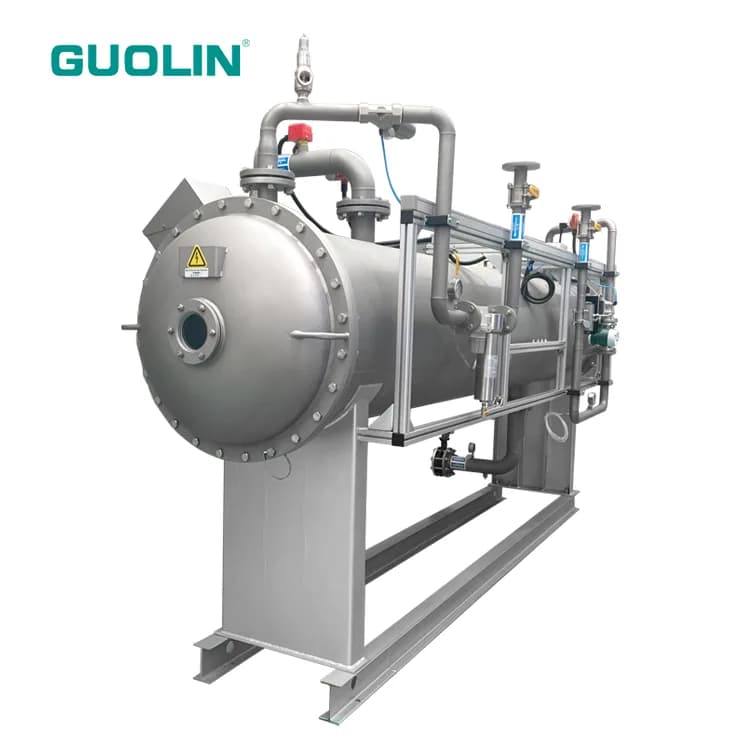
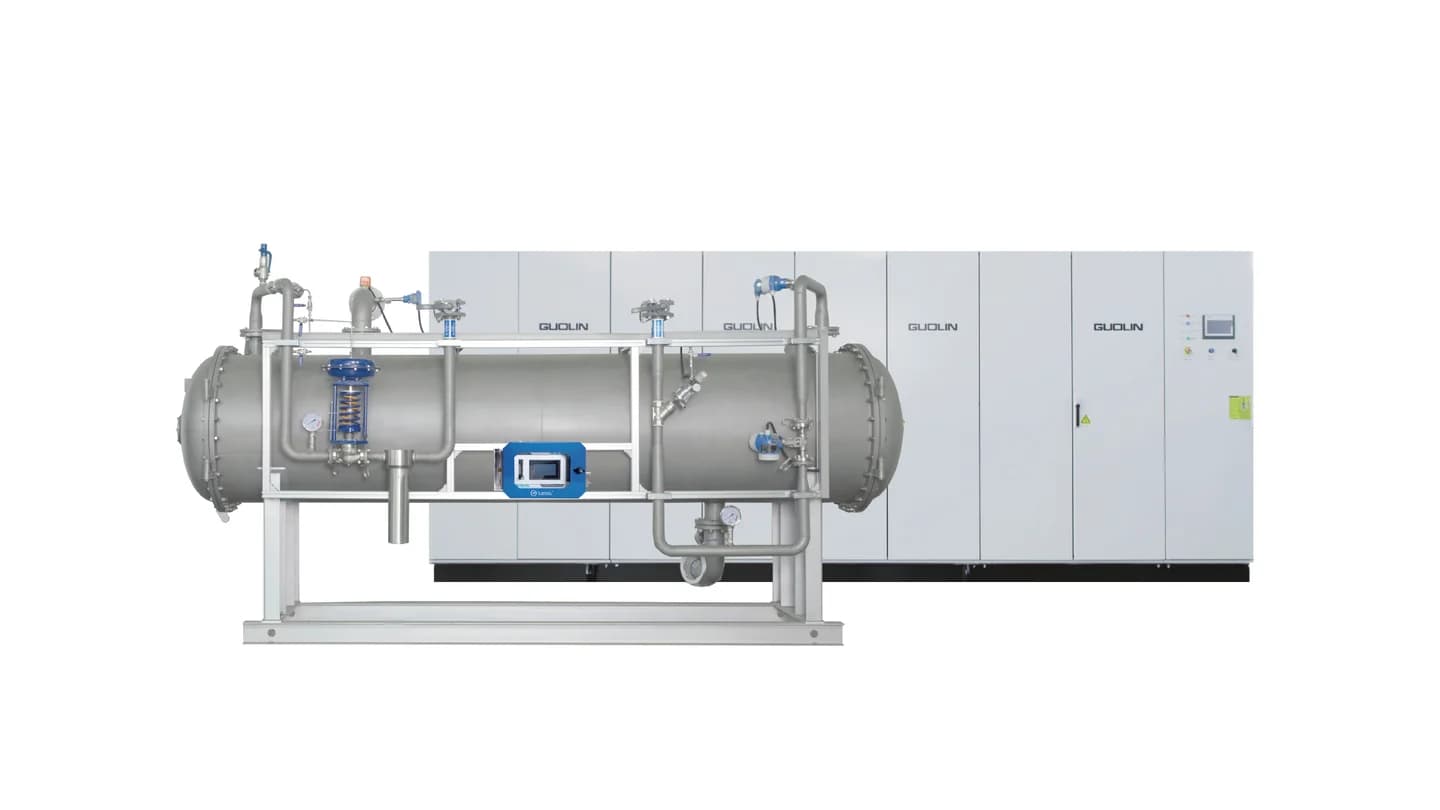
GUOLIN's equipment options include industrial ozone generators, dosing and contact equipment, and off-gas treatment. The right discussion is which equipment supports the proven process duty and what remains outside the supply scope. The product photograph on this page shows equipment, not evidence of a particular COD-removal result.
Do not wait for a perfect data sheet to start. Use the project enquiry form to describe the problem and mark unknowns clearly. A useful first step is to separate what the available water tests already demonstrate from what still needs to be checked before a firm equipment proposal.
Frequently asked questions
Can ozone remove all COD from industrial wastewater?
No universal complete-removal claim is justified. The response depends on the wastewater composition, pretreatment, ozone transfer and treatment sequence. Test a defined final COD target on representative water rather than selecting a generator from a generic removal percentage.
Why does colour disappear while COD remains high?
Ozone can change colour-producing parts of molecules while leaving oxidizable compounds in the water. Measure colour and COD separately; a visible improvement does not establish COD compliance or complete mineralization.
Is a higher BOD-to-COD ratio after ozone a good result?
It can indicate a more biologically treatable mixture, but it is not sufficient by itself. Check the absolute values, biological inhibition and the performance of the intended downstream treatment, using comparable samples and methods.
Can catalytic ozonation results be used to size an ozone-only system?
Not directly. Catalyst properties, additional reagents, contact arrangements and wastewater conditions change the process. Establish the duty for the configuration actually offered rather than transferring a different process's published removal rate.
What data are needed to evaluate ozone for COD reduction?
Provide the wastewater source, existing treatment, flow variation, inlet and target COD, total or filtered measurement basis, colour and reuse needs, and representative trial results. State the ozone dose basis and sample point for each result.
Related articles
Technology
Ozone Treatability Testing: Will It Work for Your Wastewater?
Find out what an ozone test should prove before you invest in an industrial wastewater system, from representative samples to pilot-scale verification.
Buying Guide
Industrial Ozone System Cost: What Changes the Price?
Understand why industrial ozone system quotes differ, what a complete price includes, and how to compare equipment, installation and operating costs.
Technology
Ozone Mass Transfer and Contact Time Explained
See how ozone reaches the water, compare injectors and diffusers, and understand how transfer efficiency, contact time and off-gas affect system design.
Buying Guide
How to Size an Ozone Generator for Water Treatment
Work out the ozone output your water-treatment project needs using flow, dose and a worked example, then check the inputs required for equipment selection.