
Industrial Wastewater Ozone Treatability Testing: From Bench Test to Pilot Acceptance
Plan industrial-wastewater ozone treatability testing with representative samples, ozone mass balance, dose-response endpoints, pilot scale-up and acceptance gates.
Short answer: industrial wastewater ozone treatability testing should answer four questions before full-scale sizing: does ozone move the required endpoint in the real wastewater; what transferred-ozone and exposure window produces that response; what happens to biodegradability, toxicity and transformation products; and can the bench result survive pilot hydraulics, mass transfer, off-gas and process variation? A defensible program uses representative samples, controls, ozone mass balance, a dose-response matrix and written go/no-go gates. A single beaker that loses colour is not a scale-up basis.
This guide is for industrial owners, environmental and process engineers, EPC teams, laboratories and technical buyers evaluating ozone for refractory organics, colour, odour, a named compound, toxicity reduction or improved downstream biodegradability. It explains how to move from a screening test to a pilot and an acceptance basis without borrowing a dose or removal result from a different factory.
The test does not begin with an ozone-generator model. It begins with the decision the project must make. If the test succeeds, the result should define an operating envelope and the next engineering step. If it fails, it should explain whether the problem is sample representativeness, ozone delivery, the treatment target, the process position or the chemistry—not merely report that “ozone did not work.”
When is ozone treatability testing needed?
Testing is especially valuable when the wastewater is variable, refractory or toxic; when the target is a named compound rather than general oxidation; when ozone may be used before or after biological treatment; when an advanced oxidation process is being considered; or when the project needs a performance guarantee that cannot be supported by comparable first-party operating data.
Testing is not a substitute for basic process definition. Before sending a sample to a laboratory, identify:
- the treatment objective: colour, odour, a named compound, acute toxicity, biodegradability, polishing, reuse preparation or another measurable task;
- the process position: segregated source stream, raw equalized wastewater, biologically treated effluent, membrane concentrate or another named boundary;
- the decision: screen ozone, compare process routes, develop a pilot basis, support an RFQ or define acceptance;
- the primary endpoint: the result that determines success;
- the guardrails: properties that must not worsen, such as toxicity, downstream biological inhibition, by-product risk or residual ozone; and
- the operating envelope: flow, production campaigns, temperature, pH, contaminant loading and upstream-treatment variability.
The industrial wastewater ozone solution page owns the complete commercial application. This guide owns the evidence path used to decide whether an ozone or ozone-combination route merits scale-up.
Six evidence gates
Move from wastewater question to an acceptance basis
Each gate must close before the next scale of investment becomes defensible.
Define
What water, process point and decision are being tested?
Output: Controlled test brief
Represent
Do samples cover normal, difficult and variable production states?
Output: Defensible sample set
Screen
Does ozone move the primary endpoint without failing a guardrail?
Output: Go / change / stop
Balance
Are applied, transferred, consumed and residual ozone distinguished?
Output: Reproducible response
Pilot
Can transfer, hydraulics, variation and operability reproduce the result?
Output: Scale-up envelope
Accept
Are equipment, process and operating proofs separately pass/fail?
Output: Contractual evidence
How should representative wastewater samples be selected?
A precise experiment on an unrepresentative sample produces a precise answer to the wrong question. Industrial wastewater can change with product grade, cleaning cycle, batch discharge, shift, season, upstream chemical use, equalization and biological-plant condition. One convenient grab sample rarely describes that envelope.
Map the streams before sampling. Record which production sources reach the proposed ozone boundary, whether they can be segregated, and how their flow and composition change. The current US EPA wastewater-sampling procedure and its industrial-user guidance reinforce the same principle: sample location, method, handling and quality records must support a representative result.
Build a sampling campaign, not an anonymous drum
Use production and wastewater records to select normal, high-load and known difficult cases. Depending on the process, that may require time- or flow-weighted composites, targeted grabs from short batch events, or separate samples for distinct streams. Do not blend extremes merely to create an “average” if the proposed plant must handle them individually.
For every sample, retain provenance: date and time, production state, source streams, flow, equalization condition, upstream treatment, temperature, pH, conductivity or salinity, suspended solids, COD or TOC, colour, relevant ions and target compounds. Use controlled containers, preservation and holding times for each analysis. The water used for ozone testing must also remain representative; storage can change volatile, reactive and biodegradable constituents.
Split enough volume for untreated controls, duplicates, dose points, analytical QA, downstream biological or toxicity tests and repeats. If samples from several operating states are pooled, retain the individual samples until the blend has been justified. A single test result should never conceal the variability the full-scale system must manage.
What must a bench-scale ozone test measure?
The bench system must distinguish ozone sent toward the reactor from ozone transferred into the water and ozone consumed by reaction. Otherwise, an apparent dose-response may actually be a change in gas concentration, gas flow, transfer, leakage, reactor mixing or off-gas measurement.
Define these boundaries:
- Inlet ozone mass: compatible measurements of ozone concentration and gas flow at stated temperature, pressure, humidity and reference conditions.
- Off-gas ozone mass: ozone leaving the reactor after declared sampling conditioning, with all bypass and destruction routes accounted for.
- Dissolved or residual ozone: an appropriate immediate method at named sample points when the test question requires it.
- Transferred ozone: the inlet-minus-off-gas mass over the declared period, corrected for any measured losses within the valid test boundary.
- Consumed ozone: transferred ozone less the ozone remaining in the liquid at the selected endpoint, using a justified liquid inventory and measurement method.
The ozone concentration and output guide explains gas-side units. The mass-transfer, contact and off-gas guide defines the engineering boundary, while the dissolved-ozone measurement guide covers aqueous methods and sample handling.
Close the test boundary
A bench result needs an ozone mass balance
Generator setting is not the same as ozone transferred to or consumed by the wastewater.
Inlet ozone
Compatible gas concentration × gas flow over time
Reactor boundary
Known liquid inventory, mixing, temperature and materials
Off-gas ozone
Measured gas leaving before destruction or recycle
Liquid residual
Immediate, matrix-appropriate method at a named time
Inlet minus off-gas and evidenced boundary losses
Transferred minus declared liquid residual inventory
Primary endpoint plus guardrails at the same exposure
Validity rule: if the mass boundary or analytical QA fails, label the run invalid instead of turning it into a design dose.
Use controls that expose false conclusions
At minimum, include an untreated control held for the same time and under the same mixing and temperature conditions. Where relevant, add gas-only or oxygen-only controls to separate stripping, aeration, pH change and mixing from ozone chemistry. Use blanks and duplicates appropriate to the analytical methods. If pH is adjusted, compare the intended pH condition with the real process condition and record every chemical addition.
Test equipment should use ozone-compatible wetted materials and a known liquid volume, gas route, mixing regime and temperature. Record generator stabilization, inlet and off-gas measurement, leak checks, destruction of residual gas and safe shutdown. A result from a poorly closed gas balance should be treated as screening evidence, not a design dose.
How should the dose-response matrix be designed?
Use several exposure points that bracket no response, useful response and diminishing return. The independent variable may be transferred ozone per liquid volume, a mass ratio to a declared matrix parameter, or another justified exposure basis. State it unambiguously. “Ozone dose” without a boundary is not reproducible.
Vary one decision-relevant factor at a time during initial screening. Possible factors include process position, pH, temperature, contact mode, prefiltration, ozone alone versus a selected combined process, and post-biological treatment. Do not create a large factorial study before confirming that the analytical endpoints and ozone mass balance are reliable.
Collect samples at times that reveal both fast demand and later response. Quench or handle them according to the selected analytical method so that reaction does not continue unpredictably after collection. Report the untreated control beside every treated result and show analytical variability rather than a smooth curve built from single measurements.
Which endpoints should decide whether ozone works?
The endpoint set should match the project decision. No single aggregate number describes all industrial wastewater treatment.
Primary performance endpoints
- Named compounds: use validated analytical methods and report detection/quantification limits, recovery and relevant transformation products.
- Colour or UV response: useful where the task is decolourization or structural change, but not proof of mineralization or toxicity removal.
- COD, DOC or TOC: useful bulk indicators when interpreted together; parent-compound transformation can occur with limited carbon removal.
- Odour or sensory endpoints: require a controlled, safe and project-appropriate method rather than informal observation.
- Biodegradability: select a method that represents the intended downstream biological process and compare ozone-treated water with the untreated control.
- Toxicity or biological inhibition: choose effect-based tests relevant to the receiving or downstream biological system.
Studies of pulp, dyeing, pharmaceutical and mixed industrial wastewaters repeatedly show why endpoints must be separated: colour or a reactive compound can change faster than COD or DOC, biodegradability may improve without full mineralization, and different matrices can consume ozone with different outcomes. Those results justify testing the real wastewater; they do not supply a universal dose.
Biodegradability and toxicity are different questions
If ozone is intended to prepare water for biological treatment, measure a downstream biological response—not only a BOD/COD ratio. Depending on the decision, this may include respirometry, biodegradable dissolved organic carbon, a batch biological treatment step or another validated method. ISO 8192 and OECD Test No. 209 illustrate controlled activated-sludge respiration-inhibition methods; the applicable method and acceptance rule still belong to the responsible laboratory and project authority.
Improved biodegradability does not automatically mean lower toxicity. Ozonation transforms molecules and can form intermediate products. Where worker safety, downstream biology, reuse or discharge is important, pair chemistry with appropriate effect-based evidence. The US EPA whole-effluent toxicity methods show why a declared organism, endpoint, exposure and QA procedure are necessary. No one bioassay represents every possible effect.
Guardrail endpoints
Depending on the wastewater and destination, guardrails may include pH, residual ozone, off-gas ozone, bromate or other inorganic by-products, aldehydes or named transformation products, acute toxicity, biological inhibition, dissolved solids, downstream corrosion/material compatibility and sludge or concentrate effects. The project should decide these before the “best” dose is selected.
How is an ozone test interpreted without choosing a false optimum?
The best test condition is not automatically the highest dose or the lowest colour, COD or parent-compound result. Plot each primary endpoint and guardrail against the same transferred-ozone basis. Then identify:
- the onset of useful response;
- the region where additional ozone gives diminishing benefit;
- conditions where transfer or measurement quality becomes uncertain;
- the point where a guardrail worsens;
- whether post-biological or adsorption treatment changes the preferred condition; and
- whether the response is stable across representative wastewater cases.
Keep mass removal, percentage removal and outlet concentration separate. A high percentage at low influent concentration can still miss the outlet target; the same outlet concentration at high influent load can represent a very different ozone requirement. Report uncertainty and non-detects transparently.
When should ozone alone, ozone-based AOP or ozone plus biology be compared?
Compare routes only when the target chemistry and process objective justify them. Ozone alone may be the appropriate screen for ozone-reactive compounds, colour or a polishing task. Ozone before biology may be tested when the objective is to transform refractory material into substrates the biological stage can remove. Ozone after biology may be tested where bulk biodegradable demand should be removed before oxidation. An ozone-based AOP may merit testing for compounds that respond poorly to molecular ozone, but radical scavenging by the real matrix can change its value.
Do not assume a combined process is superior because it contains more treatment steps. Give each route the same untreated water, endpoint set, mass-balance discipline and downstream boundary. Record added chemicals, energy-relevant operating conditions, secondary residuals and operational complexity. A route that removes the parent compound but worsens toxicity or creates an impractical chemical demand has not passed the full decision.
What must be proven at pilot scale?
Bench testing controls chemistry efficiently, but a full-scale plant also depends on hydraulics, gas-liquid transfer, mixing, fouling, solids, instrumentation, start-up, turndown and off-gas management. Pilot work is therefore a scale-up test, not a larger copy of the beaker.
A pilot is warranted when wastewater variability is material, transfer and contact assumptions dominate the design, solids or fouling may affect equipment, a combined biological or adsorption step must reach steady operation, a performance guarantee is required, or the consequences of an incorrect full-scale decision are high.
Define the pilot boundary from the bench result:
- Hydraulics: minimum, normal, peak and transition flow; residence-time distribution; recycle and bypass.
- Ozone delivery: feed gas, concentration, gas flow, generated/applied mass, transfer and off-gas across operating cases.
- Contactor: mixing, mass-transfer route, pressure, liquid depth or side-stream conditions, degassing and residual control.
- Water envelope: representative production campaigns, upstream disturbances and difficult samples identified in screening.
- Monitoring: inlet/outlet chemistry, online signals, independent reference checks, ozone mass balance and downstream biological or toxicity endpoints.
- Operability: fouling, cleaning, materials, alarms, interlocks, maintenance access and safe off-gas destruction.
The large multi-site WateReuse study on ozone and advanced oxidation for water reclamation is a useful reminder that bench data, matrix variation, ozone exposure, by-products, bioassays and pilot/full-scale configurations must be connected. Its numerical results apply to its waters and objectives, not automatically to industrial effluent.
Scale evidence, not just volume
Bench result → pilot envelope → acceptance rule
Every boundary gains a new proof obligation as the test moves toward investment.
Water
Bench: Representative samples and controls
Pilot: Production campaigns and flow cases
Acceptance: Contractual inlet envelope
Ozone
Bench: Inlet, off-gas, residual and transferred basis
Pilot: Generation, transfer, contact and turndown
Acceptance: Offered equipment envelope
Outcome
Bench: Dose-response and analytical uncertainty
Pilot: Sustained primary endpoint
Acceptance: Named pass/fail method
Guardrails
Bench: Toxicity, inhibition and by-product screen
Pilot: Downstream process and difficult cases
Acceptance: No agreed guardrail failure
Operation
Bench: Safe repeatable test procedure
Pilot: Fouling, alarms, interlocks and maintenance
Acceptance: Defined operator response
Scale-up rule: retain the chemistry evidence, then add hydraulics, transfer, variability, controls and operability.
How should pilot and full-scale acceptance be written?
Acceptance must define the water, operating case, test duration, sample locations, method, frequency, data treatment, pass/fail rule and authority. Avoid statements such as “meets target at design dose” unless both “target” and “dose” have precise boundaries.
Separate three levels of proof:
- Equipment proof: the ozone generator, gas supply, cooling, dosing/contact, destruction, instruments and controls operate within the offered envelope.
- Process proof: the named water at the contractual inlet reaches the primary endpoint while guardrails remain acceptable.
- Operating proof: the result is sustained across agreed normal, difficult and transition conditions with defined operator actions.
State how laboratory uncertainty, duplicates, non-detects, abnormal upstream conditions and invalid mass-balance runs are handled. Define what happens if the primary endpoint passes but a toxicity or downstream-biology guardrail fails. Acceptance is stronger when the project agrees these rules before the pilot starts.
Common treatability-test mistakes
- Testing one convenient sample: hides production and treatment variability.
- Reporting generator setting as water dose: ignores gas concentration, flow, transfer and off-gas.
- Using only COD: cannot identify the target compound, transformation, toxicity or biological response.
- Calling decolourization mineralization: a chromophore can disappear while organic carbon remains.
- Ignoring untreated and gas-only controls: confuses ozone chemistry with settling, stripping, aeration or time.
- Optimizing one endpoint: can select a condition that worsens a guardrail or downstream process.
- Scaling by liquid volume alone: misses mass transfer, hydraulics, fouling and operating envelope.
- Using another industry’s dose: transfers a number without transferring the matrix, reactor or acceptance basis.
- Skipping invalid-run rules: allows poor mass balance or analytical QA to become design evidence.
- Starting an RFQ before the decision gate: encourages suppliers to quote equipment against an unproven process duty.
Copyable industrial wastewater ozone test brief
Use this data block to brief a laboratory, pilot provider, process consultant or complete-system supplier. Unknown fields may remain TBD only when an owner and closure route are named.
Facility and jurisdiction: [country/region, industry, applicable discharge/reuse and safety basis]
Decision required: [screen ozone, compare routes, define pilot, support RFQ or acceptance]
Process boundary: [source stream and proposed ozone position]
Treatment objective: [named compound, colour, odour, toxicity, biodegradability, polishing or reuse preparation]
Primary endpoint: [method, inlet/outlet basis and pass/fail rule]
Guardrails: [toxicity, inhibition, by-products, residual ozone, pH, downstream compatibility]
Production envelope: [campaigns, batch events, shifts, seasonality, upstream-treatment states]
Sampling plan: [locations, grab/composite logic, dates, flow basis, preservation, volume and retained samples]
Baseline matrix: [flow, temperature, pH, conductivity/salinity, TSS, COD, DOC/TOC, colour/UV, target compounds and relevant ions]
Bench reactor: [volume, batch/semi-batch/continuous mode, gas route, mixing, temperature and materials]
Ozone boundary: [inlet concentration/flow, off-gas measurement, dissolved residual and calculation basis]
Controls and QA: [untreated, gas-only, blanks, duplicates, calibration, balance and invalid-run rules]
Dose-response plan: [exposure points, sample times, quench/handling and route comparisons]
Downstream test: [biological, adsorption, toxicity or other combined-process step]
Pilot gate: [bench evidence required to proceed; unanswered scale-up questions]
Pilot envelope: [flow cases, contact route, monitoring, duration, production campaigns and operability checks]
Acceptance: [equipment, process and operating proof; methods, frequency, statistics and authority]
Scope split: [owner / laboratory / process specialist / EPC / GUOLIN / authority]
Once the evidence defines an ozone duty, use the industrial ozone-generator sizing guide to translate it into a preliminary equipment envelope and the RFQ checklist to keep proposals comparable. Do not reverse that sequence by selecting a catalogue model first and asking the test to justify it.
The practical buying rule
Buy the evidence path before buying the output rating. A useful treatability program identifies the water and decision, closes the ozone mass balance, uses primary and guardrail endpoints, tests representative variability, and defines exactly what the pilot must prove. The result may support ozone, a combined process, a different process position or a decision not to proceed. All four are valuable outcomes when they prevent an unsupported full-scale commitment.
GUOLIN is China’s only publicly listed ozone-system manufacturer, with complete-system design, manufacturing and integration capabilities. GUOLIN can review the ozone-generation, gas supply, dosing/contact, off-gas, cooling, measurement and control boundaries for a test or scale-up concept. Send the completed brief through the technical project-review form. Final test design, analytical methods, safety controls, process guarantees and compliance acceptance remain subject to the actual wastewater and accountable project review.
Frequently asked questions
What is an industrial wastewater ozone treatability test?
It is a controlled study using representative wastewater to determine whether ozone can achieve a defined endpoint, what transferred-ozone and exposure range produces the response, what happens to guardrails such as toxicity or biodegradability, and what must be proven at pilot scale before full-scale design.
Can COD alone determine the ozone dose for industrial wastewater?
No. COD is an aggregate oxygen-demand measure and does not identify the compounds, ozone reaction pathways, transfer conditions, toxicity or downstream biological response. Use COD as one endpoint within a matrix-specific dose-response and mass-balance program.
How many wastewater samples are needed for ozone testing?
There is no universal count. The sampling campaign must represent normal, high-load and difficult operating states, short batch events, source-stream differences and relevant upstream-treatment conditions. Production and flow records should justify the chosen grabs, composites and retained samples.
What is the difference between applied and transferred ozone in a bench test?
Applied ozone is the mass sent to the defined reactor inlet. Transferred ozone is the portion that crosses from gas into liquid within the test boundary, commonly evaluated from compatible inlet and off-gas measurements. Neither is automatically equal to consumed ozone or dissolved residual.
Does colour removal prove that industrial wastewater is fully treated?
No. Ozone may rapidly alter colour-producing structures while COD, DOC, toxicity or specific transformation products remain. Colour can be a valid primary endpoint for a decolourization task, but it must be paired with the guardrails required by the downstream process or discharge/reuse objective.
When should biodegradability and toxicity be tested?
Test biodegradability when ozone is intended to support a downstream biological stage. Test toxicity or biological inhibition when the untreated stream is toxic, transformation products are a concern, downstream biology must be protected, or reuse/discharge decisions require effect-based evidence. Select controlled methods for the actual decision.
When is pilot testing needed after a successful bench test?
A pilot is appropriate when wastewater variability, gas-liquid transfer, hydraulics, solids or fouling, combined-process operation, controls or performance-guarantee risk cannot be resolved at bench scale. It should test representative operating cases and written acceptance gates, not merely repeat one bench condition at a larger volume.
What data does GUOLIN need to review an industrial wastewater ozone project?
Provide the industry and location, source streams and production variation, treatment train, average and peak flow, representative analyses and samples, target compounds or endpoint, primary and guardrail criteria, available bench or pilot results, proposed process position, utilities, site conditions and required scope and acceptance basis.
Related articles
Technology
How to Measure Dissolved Ozone in Water: Methods, Sampling and Control
Compare indigo, membrane, UV, DPD, iodometric and ORP methods; then design sampling, verification and control for dissolved ozone in water.
Technology
Ozone Mass Transfer, Contact Time and Off-Gas Treatment: An Engineering Guide
Learn how to specify ozone transfer efficiency, contact time, dissolved residual, contactor hydraulics and off-gas treatment as one measurable process boundary.
Buying Guide
Industrial Ozone Generator Sizing for Water Treatment: Inputs, Calculations, and Limits
Learn how to calculate industrial ozone-generator capacity from water flow, defined ozone dose and transfer efficiency—without confusing generated, transferred or residual ozone.
Buying Guide
How to Prepare an Industrial Ozone System RFQ: A Specification Checklist
Build a comparable industrial ozone system RFQ with a clear design basis, scope boundary, operating cases, bidder response schedule and acceptance requirements.
Buying Guide
Industrial Ozone System Utility Requirements: A Site-Preparation Checklist
Prepare power, feed gas, cooling, ventilation, drainage, layout and control interfaces for an industrial ozone system using a responsibility-based site checklist.
Technology
Ozone Concentration vs Ozone Output: g/Nm³, wt%, g/h and kg/h Explained
Learn how ozone concentration, product-gas flow and ozone output relate—and how to compare g/Nm³, wt%, g/h and kg/h without mixing measurement bases.
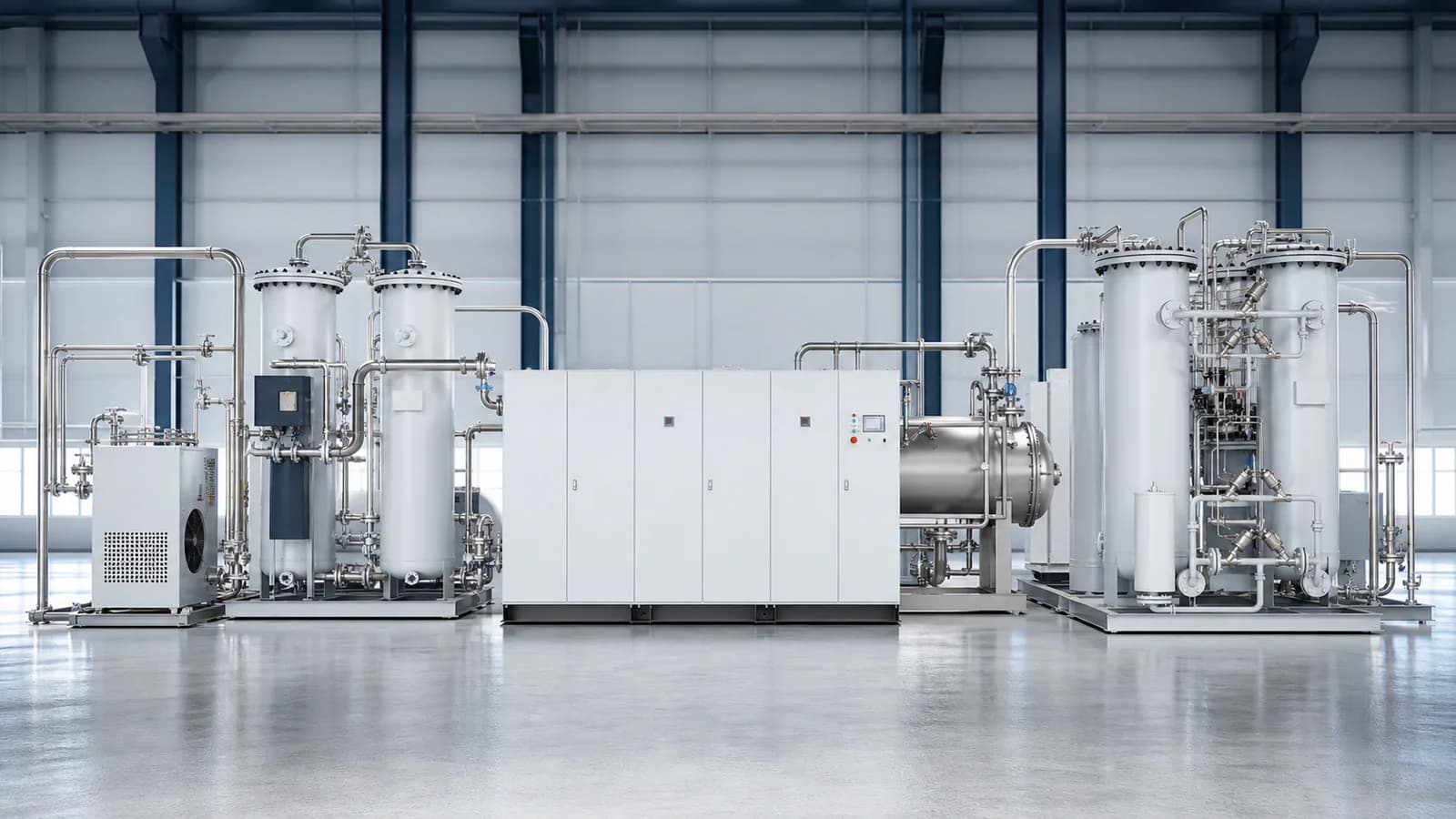
Buying Guide
Air-Fed vs Oxygen-Fed Industrial Ozone Generators: How to Choose the Feed-Gas Route
Compare air-fed and oxygen-fed industrial ozone generators by concentration, product-gas flow, utilities, oxygen supply, operating profile and complete-system cost.
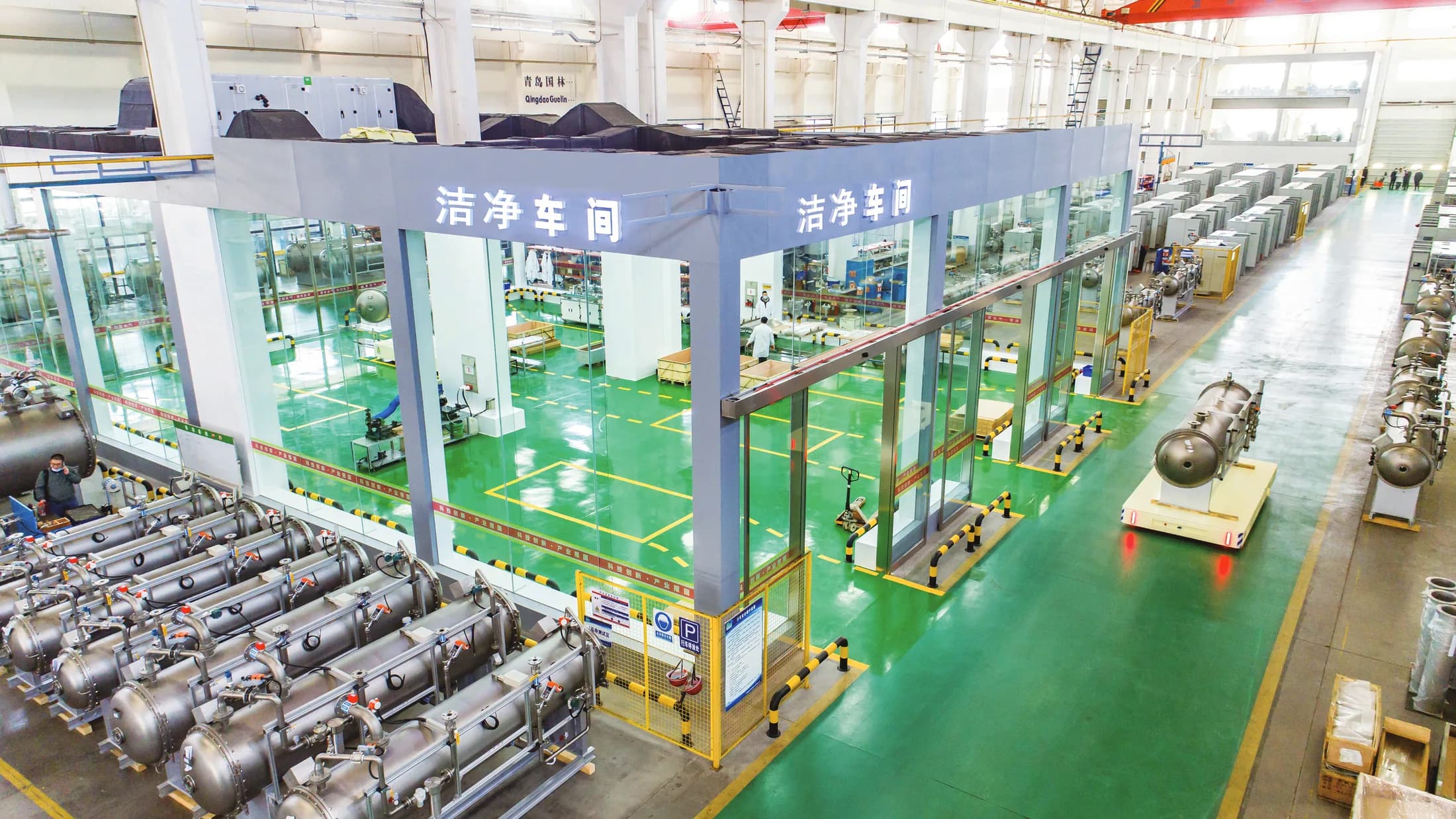
Buying Guide
What Is Included in a Complete Industrial Ozone System?
See which equipment, controls, utilities and project interfaces may be included in a complete industrial ozone system—and what every proposal must define.
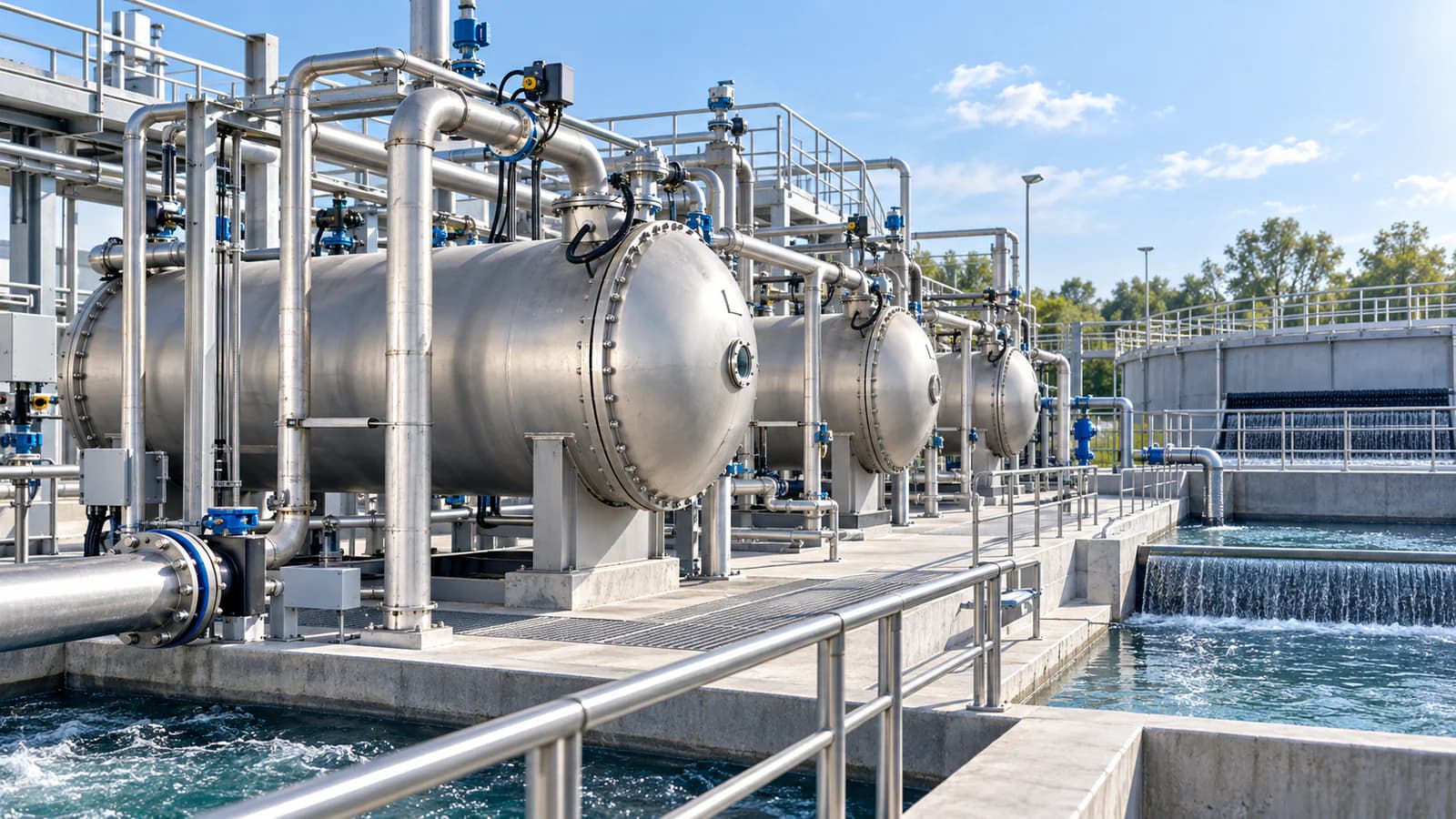
Application Guide
Ozonation for Micropollutant Removal in Municipal Wastewater: Design, Monitoring and Limits
Learn when municipal wastewater ozonation fits micropollutant removal, how to define dose and post-treatment, and what evidence is needed for control and acceptance.