
Do Ozone Pool Systems Still Need Chlorine?
Understand why commercial ozone pools still need an approved disinfectant residual, what ozone can add, and which claims to check before buying a system.
For a conventional commercial pool, plan to keep chlorine—or another primary disinfectant accepted for that venue—even when you add ozone. Ozone pool systems can add useful treatment in the circulation plant, but they do not give you permission to remove the protection required in the occupied pool.
That does not make ozone redundant. It means the buying question is not simply “ozone or chlorine?” It is “what useful job will ozone do alongside the pool's existing safeguards?” For a hotel, leisure centre or public pool, answering that question is more valuable than a chlorine-free label.
Why does an ozone pool still use chlorine?
Ozone acts on water that reaches the treatment equipment. Swimmers keep introducing contamination inside the pool, away from that equipment. A disinfectant residual is the amount of active disinfectant deliberately maintained in the pool water between treatment passes. It is a different requirement from demonstrating good performance inside an ozone contact stage.
Ozone is reactive and does not provide the lasting in-pool residual on which a conventional commercial-pool programme relies. The design must also control ozone remaining in the treated water and any ozone-bearing gas, rather than exposing swimmers or staff to it.
For a concrete example, Queensland's public aquatic-facility guidance keeps the chlorine requirements in place when ozone is used and addresses ozone removal before water returns to bathers. That is a local example, not a worldwide operating specification. Confirm the accepted treatment arrangement and water-quality requirements for your venue before changing the programme.
Follow the water, separate the evidence
Three locations, three different checks
Ozone treatment and the pool's primary disinfectant are complementary duties, not one interchangeable measurement.
In the treatment stage
Is the intended ozone treatment delivered?
Performance evidence at the stated water conditions, flow and contact duty
Generator rating alone is not a treatment result.
Before water returns
Are ozone and gas risks controlled?
The approved residual-control, off-gas and failure-response arrangements
Good contact-stage performance does not prove safe return water.
In the occupied pool
Is the required disinfectant protection maintained?
Venue-approved residual checks, water-quality monitoring and operating records
The treatment-stage reading does not replace the in-pool checks.
These locations explain an apparent contradiction: a system can need ozone where treatment takes place, need ozone removal before the water returns, and still need chlorine in the pool. A strong reading at one location does not answer the questions at the other two.
Where can ozone earn its place?
Helping manage chloramines
Chloramines form when chlorine reacts with nitrogen-containing contamination, including material introduced by swimmers. They contribute to the familiar irritating pool smell. The smell is not a reliable measure of the free chlorine available to disinfect the water.
Ozone can be evaluated for chloramine management. A worthwhile proposal should identify the current problem, how it will be measured and what improvement the treatment stage is expected to deliver. “Better water” is too vague to compare with an equipment price, and a reduction in one measured by-product is not proof that all by-products have disappeared.
For an indoor pool, keep air handling in the discussion. Treating the water does not establish that the room is adequately ventilated. The CDC's chloramine guidance explains the connection between pool water, contaminants in the air and ventilation. If odour is the main reason for buying, have the operating team review water chemistry, swimmer hygiene and ventilation as well as the proposed ozone stage.
Adding a validated microbial treatment stage
Secondary treatment can provide additional control of selected organisms that tolerate normal chlorination, including Cryptosporidium. If a proposal promises control of Cryptosporidium, ask for evidence that applies to the offered equipment and its intended operating conditions. The word “ozone” on a quotation is not that evidence.
Ask which flow, water conditions, contact arrangement and operating limits the performance evidence covers. Then ask how much of the actual circulation is treated. A result across the treatment equipment is not the same as an immediate result throughout the pool. A test on another device is not validation of the package you are buying.
The approved incident-response procedure also remains necessary. Adding ozone does not, by itself, authorize a pool to stay open after contamination or allow an operator to bypass the required response.
Can chlorine consumption fall without lowering the residual?
Yes, those are different things. Consumption is how much chlorine the plant uses over a period; the residual is the concentration that must be maintained in the water. If treatment reduces some of the material consuming chlorine, the amount dosed may change while the required residual stays the same. That is a possibility to measure, not a guaranteed saving.
A proposal promising reduced consumption should explain its starting conditions. Compare representative bather loads, opening hours, water replacement, outdoor exposure where relevant, and acceptable water quality. Record changes in filtration, cleaning and ventilation too. Otherwise, a quieter operating period or a broader refurbishment can look like an ozone benefit.
Consider a hypothetical indoor leisure pool and an outdoor hotel pool. One may be investigating persistent combined chlorine and air complaints; the other may mainly want less purchased disinfectant. They do not have the same buying problem. Neither should use a saving claimed for the other as its budget assumption.
Include gas preparation, ozone generation, transfer, residual and off-gas management, monitoring, site work and maintenance in the comparison. Retained disinfectant dosing and testing still have costs. The ozone-system cost guide helps separate a generator price from a complete installed scope.
What about saltwater, bromine and UV?
A salt chlorinator is still a chlorine system
A salt chlorinator makes chlorine electrically from salt-containing water. It changes the way chlorine is supplied; it does not make the pool chlorine-free. Adding ozone still requires a review of the disinfectant strategy, water chemistry, materials and equipment interfaces.
Do not treat a seawater pool, a salt-chlorinated pool and a bromine-treated pool as interchangeable. Bromide and the chemicals already used can change oxidation chemistry and by-product risks, including bromate. Give the designer the actual water analysis and product list. An ozone package should not be assumed compatible with every bromine product or saltwater arrangement.
UV is another treatment option, not a reason to remove the residual
UV treats water passing through its reactor; ozone requires generation, transfer and contact, together with appropriate residual and gas controls. Both need performance evidence and operating limits for the intended duty. Their equipment, maintenance and site requirements differ.
Compare them against the same problem: the microbial target, chloramine-management task, actual flow, available space, safeguards and whole-system running costs. Do not assume every UV unit controls chloramines equally, or that combining UV and ozone is automatically better. The ozone, chlorine and UV comparison provides the broader technology background.
What should a commercial-pool proposal prove?
Before ordering, ask for answers to these questions in one coordinated proposal:
- What improves? Name the intended outcome and the measurement that will decide whether the added treatment is worthwhile. Keep the required pool-water conditions separate from the hoped-for benefit.
- What flow is actually treated? Show the connection to the existing circulation system, the contact duty and the operating conditions covered by the performance evidence. Pool volume alone does not define that duty.
- How is return water protected? Identify ozone removal or residual control, off-gas handling, monitoring, loss-of-flow response and the interface with the primary disinfectant. Ask who checks these functions during commissioning.
- What happens when treatment is unavailable? Agree the operating response, alarms, staff responsibilities, service access and necessary spares. Whether a venue may remain open depends on its approved programme and local requirements, not a supplier's informal assurance.
Generator output, dissolved ozone in a treatment stage, a return-water safeguard and free chlorine in the pool are different measurements. The dissolved-ozone measurement guide and transfer and off-gas guide explain why they cannot stand in for one another. Use the system safety guide for the wider gas-handling and control questions.
Start with the pool you actually operate
For an initial discussion with GUOLIN, send the venue type and location, pool and balance-tank information, circulation arrangement, current treatment products, available water results and the problem you want to improve. Include the operating pattern and any limits on plant-room space. If some information is missing, identify the gap rather than guessing an ozone dose.
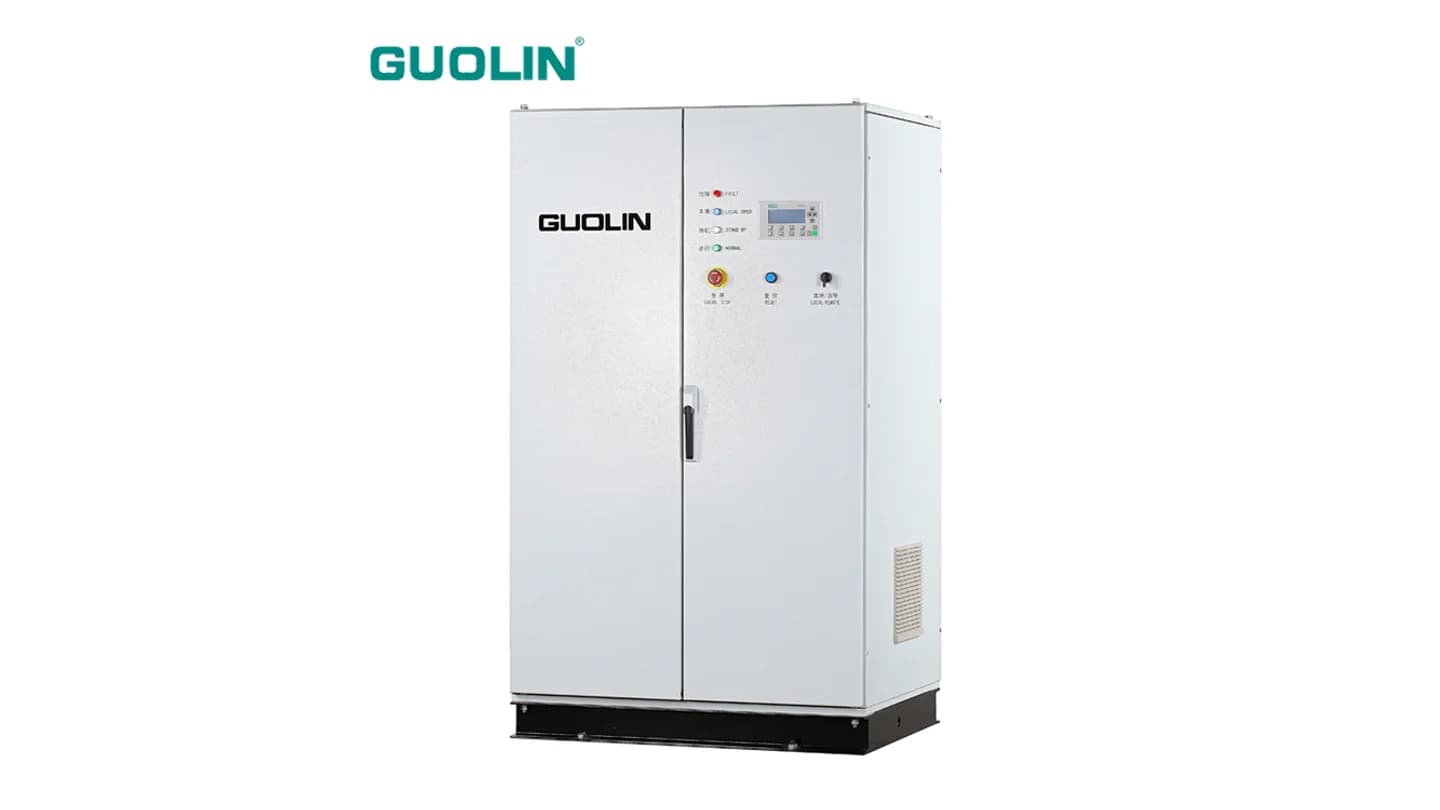
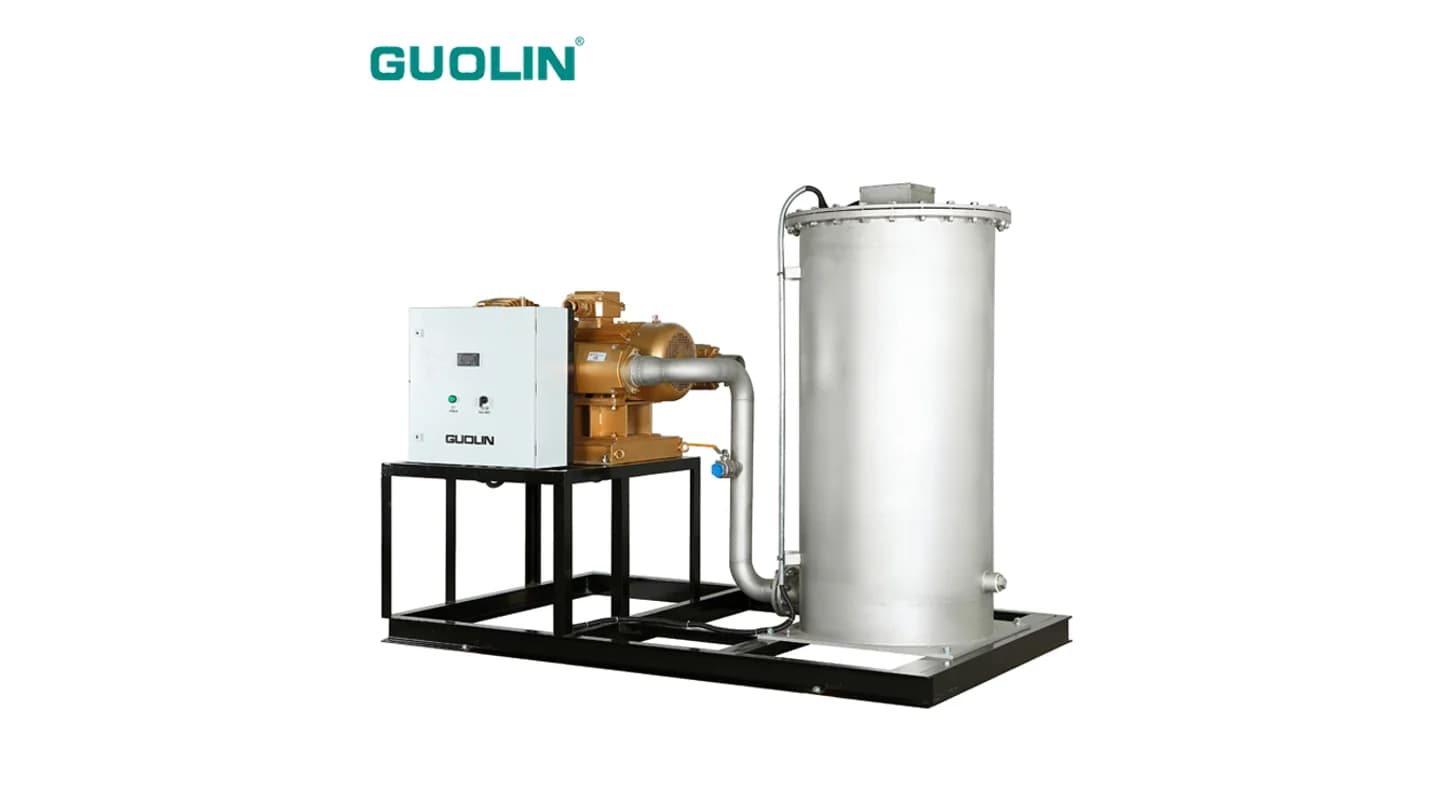
GUOLIN's negative-pressure pool ozone equipment is a starting point for that system discussion. The actual cabinet is shown in the cover; it is not a photograph of a customer pool or proof of a treatment result. The pool-treatment solution outlines the wider integration questions.
Discuss your pool project with GUOLIN. Bring the intended improvement and the existing safeguards together. A useful offer should make both clear—not sell the absence of chlorine as the result.
Frequently asked questions
Can an ozone system be added to an existing commercial pool?
Potentially, but a retrofit needs a review of the actual circulation and available flow, contact and residual-control equipment, plant-room space, electrical and gas interfaces, monitoring and the retained disinfectant system. Installation downtime, commissioning and the authority's acceptance requirements also need planning; a spare pipe connection alone is not a suitability check.
Does one ORP reading prove that an ozone pool is protected?
No. ORP is an oxidation-reduction signal affected by water chemistry and the measurement location. It does not independently establish dissolved-ozone concentration, required chlorine or bromine residual, microbial treatment performance and safe return water. Agree suitable measurements and verification for each duty rather than treating one controller value as proof of all of them.
Related articles
Technology
Ozone vs Chlorine vs UV for Water Disinfection: How to Choose
Compare ozone, chlorine and UV by treatment purpose, residual protection, water quality and by-products, then decide which option or combination to evaluate.
Technology
Ozone Mass Transfer and Contact Time Explained
See how ozone reaches the water, compare injectors and diffusers, and understand how transfer efficiency, contact time and off-gas affect system design.
Buying Guide
Industrial Ozone System Cost: What Changes the Price?
Understand why industrial ozone system quotes differ, what a complete price includes, and how to compare equipment, installation and operating costs.
Technology
Industrial Ozone System Safety: A Practical Checklist
Review the safeguards an industrial ozone installation needs, from ventilation and leak detection to interlocks, oxygen supply and emergency planning.