
Ozone for Fruit and Vegetable Washing: Is It a Good Fit?
Assess ozone for a produce washing line: separate wash-water control from product results, compare treatment options, and know what to verify before buying.
Ozonated water can be an option for fruit and vegetable washing, but the job it is expected to do needs to be clear. Controlling microorganisms in shared wash water is different from reducing them on an apple, leaf or cut surface. Neither result, on its own, establishes that a water-reuse arrangement is suitable for food processing.
Start with the reason you want to change the line: cross-contamination, water consumption, an existing sanitizer, or product quality. A useful proposal should connect the equipment to that problem and explain what a trial must demonstrate. This guide is for commercial packing and processing operations, not household produce cleaning.
What do you want ozone to achieve?
There are three buying conversations that are easily mixed together. You may want to keep the washing water from spreading contamination between batches. You may want an additional effect on the produce itself. Or you may be investigating whether treated water can be used again. Write down which outcome matters before comparing machines.
For example, a processor considering water reuse needs to assess the returning water and the products washed in it over a production run. A supplier's demonstration in a clean container does not answer that question. A packhouse evaluating a surface treatment needs evidence on its own commodity, not just a test showing rapid inactivation in water.
The food and beverage application page describes the broader equipment opportunity. For a produce line, the treatment step, product and intended food use need a more specific review.
Why is cleaner wash water not the same as disinfected produce?
Water can carry microorganisms away from one item and bring them into contact with another. Managing that water can therefore be valuable even when the treatment does not deliver the same reduction on the product surface.
On produce, organisms can be harder to reach. Surface texture, folds, cut tissue and attachment conditions change the contact available to the treatment. Results from one fruit, vegetable or microorganism cannot simply be transferred to another. Whole and fresh-cut products should not be treated as interchangeable test samples.
Ask for separate results for the water and the produce. If shelf life is part of the proposal, ask for a storage study as well: a lower count immediately after washing does not establish saleable quality later. Colour, texture, odour and the actual packaging and cold-chain conditions belong in that comparison.
Why can a clean-water test look better than your production run?
Soil, plant fragments and material released from cut produce change the water as the line operates. These materials can consume ozone. The concentration available at the washing point may therefore behave differently at startup and after sustained production.
Temperature, water chemistry, contact arrangement and the way ozone enters the water also matter. Pre-ozonated water, continuous injection and a spray application are not equivalent treatments merely because an initial concentration is similar.
A trial should include the conditions that are difficult for your line, not only a fresh-water demonstration. Record the product throughput, water condition, sampling location and treatment conditions with the results. A concentration measured at the preparation skid does not necessarily describe the water reaching the product.
Can ozone replace chlorine in produce washing?
It is a process-change question, not a like-for-like chemical swap. Compare the present treatment and the proposed ozone arrangement against the same water-control objective, product requirements, operating conditions and applicable food rules. Include other permitted options where they fit the task; ozone is not automatically the best choice.
Ozone is generated on site and must be transferred into water. The proposal may need changes to contact equipment, monitoring, ventilation and residual-gas handling. Those changes belong in the cost comparison alongside power, feed gas, maintenance and any continuing water-replacement or filtration requirements.
Do not assume that an existing food-safety plan remains valid after changing the sanitizer or the water circuit. The responsible food-safety team should establish the validation and approval requirements before the change is adopted. Our ozone, chlorine and UV comparison explains the general treatment differences; it is not a produce-specific approval.
Should the system treat fresh water or a reuse loop?
Begin with a simple drawing of where the product and water go. Identify the water source, washing point, return flow, solids handling, treatment points, water replacement and discharge. The right arrangement depends on that circuit; a generator catalogue cannot select it by itself.
Draw both paths
Where does the product go—and where does the water go?
A shared washing point connects two different verification tasks.
Product journey
- 1Incoming produce
Commodity, condition and incoming contamination
- 2Washing step
The product meets the actual process water
- 3Product checks
Microbiology and saleable quality assessed separately
Water circuit
- 1Water entering the wash
Known source, quality and treatment conditions
- 2Water leaving the wash
Added soil, plant material and microorganisms
- 3Return or discharge decision
Solids management, treatment and replenishment as validated
Plan water replacement and solids handling alongside ozone treatment. Agree how returning water will be assessed, what fresh-water supply is needed and what triggers a change in operation. The whole loop needs an operating plan and verified acceptance conditions.
EFSA's process-water management guidance for fresh-cut produce is a useful reference for separating validation, routine monitoring and verification. It is a food-process management framework, not an approval of a particular ozone machine or a universal legal rule for every market.
What should a trial prove before you buy?
Agree on the buying decision before the trial starts. If the objective is wash-water control, measure that outcome through representative production conditions. If a product or shelf-life benefit is claimed, give it its own test and acceptance criteria. Use a suitable comparison, such as the existing wash process or a water-only control, so the contribution of the proposed treatment is identifiable.
Match the evidence to the purchase
Four goals that need different evidence
Evidence: Water results through a representative production run
Boundary: Does not establish the same effect on produce
Evidence: A suitable comparison on the actual commodity
Boundary: Do not transfer findings from water alone or another crop
Evidence: Whole-loop microbiological and chemical assessment
Boundary: Include water replacement, solids and abnormal conditions
Evidence: Storage assessment with the intended packaging and cold chain
Boundary: Check quality, not only the count immediately after washing
Keep continuous operating checks separate from periodic laboratory verification. A dissolved-ozone reading can help track treatment conditions; it is not a microbiological result. The dissolved-ozone measurement guide explains why sampling location and method matter, and why ORP should not be treated as a direct ozone concentration.
Use a qualified laboratory and the responsible food-safety specialists to design any microbiological validation. Do not introduce pathogens into an operating food line to test a supplier's claim. Agree in advance what happens if the treatment moves outside its validated conditions, including responsibility for affected product and water.
Which supplier claims need closer checking?
“The generator makes enough ozone.” Output in g/h describes gas production. A produce-washing proposal must also address water-side delivery, demand, contact and the result at the intended process point.
“It leaves no residue, so there is nothing else to assess.” Ozone breaks down, but that does not settle the safety of substances formed when it reacts with the water or food matrix. Consider chemical suitability as well as microorganisms. A RIVM assessment of recycled produce-process water illustrates why proposed reuse conditions need a chemical-risk assessment; its findings are specific to the conditions assessed, not a blanket judgment on every ozone application.
“It removes pesticides and extends shelf life.” Those are separate claims requiring evidence for the relevant compounds, crop, treatment and storage conditions. A microbial result does not prove either claim. If neither is your objective, do not let them distract from the water-control requirement.
“It is approved for food use.” Ask what is approved, where, and under which conditions. Equipment availability or a food-use statement from another country does not establish permission for your product, process or sales claim. Confirm the production and destination-market requirements with the responsible specialists.
What should you send for a useful equipment discussion?
You do not need a finished specification to begin. Send the product type and whether it is whole or cut, intended food use, project country, line throughput, water source and analysis, and a sketch of the current washing circuit. Add the existing sanitizer, operating problem, proposed reuse goal and any water or product test results.
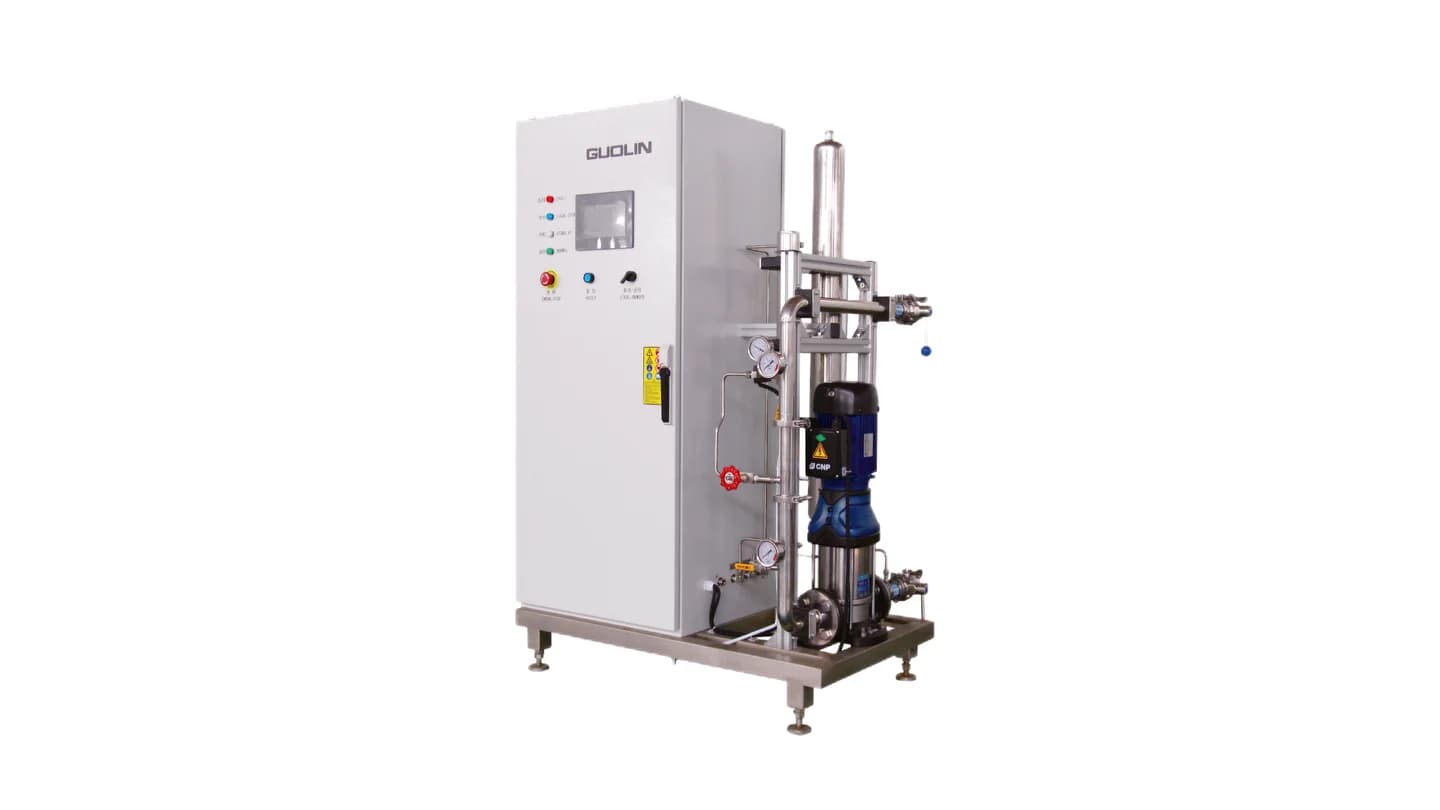
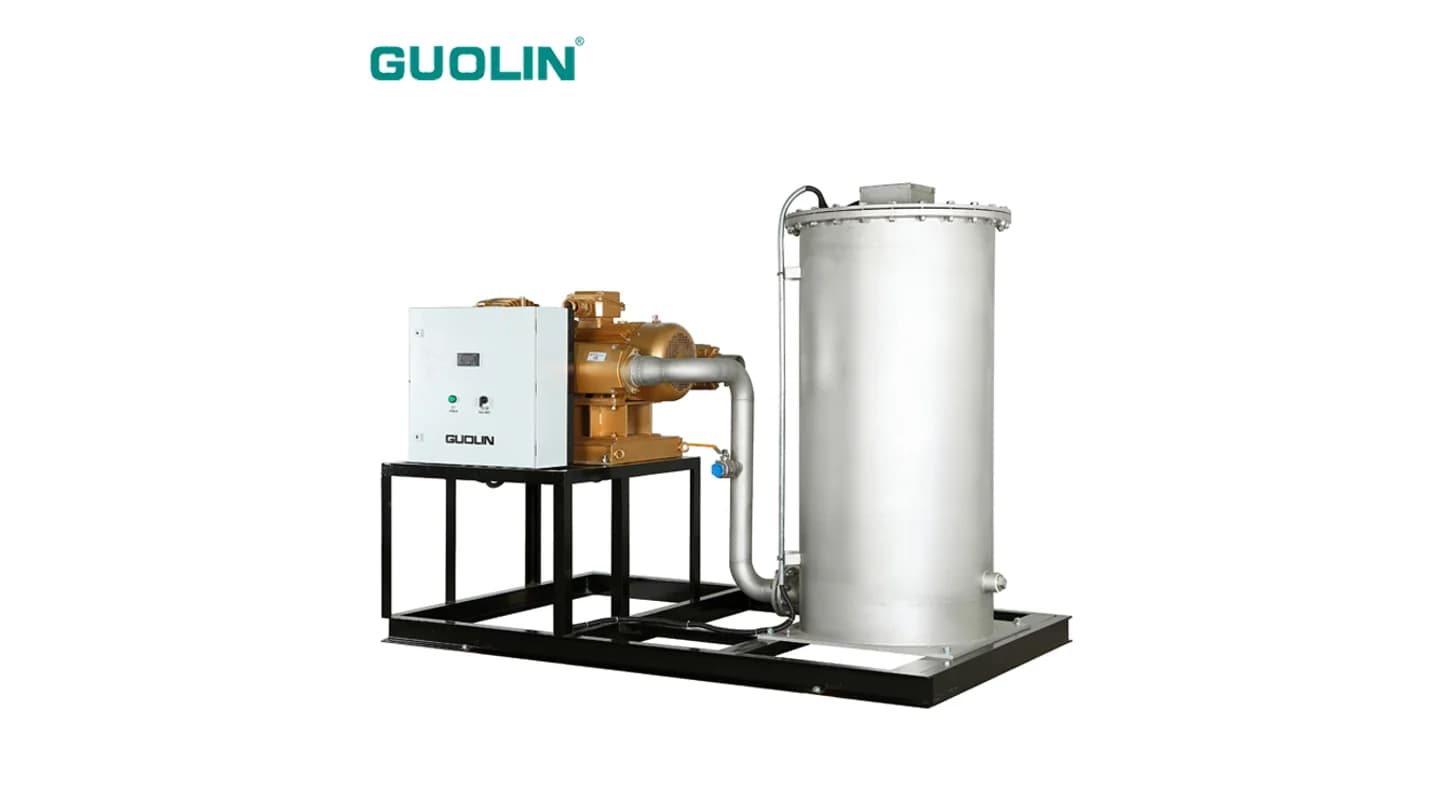
GUOLIN's ozonated-water equipment and gas-to-water transfer equipment are starting points for discussing the supply arrangement. Final capacity, monitoring, food-contact materials and interfaces must follow the agreed process duty. The equipment photograph shows a GUOLIN ozonated-water unit, not a supplied produce line or a validated layout.
Include off-gas and worker-exposure controls from the start; dissolved ozone does not remove the need to manage gas released around the equipment. The industrial ozone safety guide outlines those wider safeguards. Use the cost guide to compare the full proposed supply rather than a generator price alone.
Tell us which result would make the project worthwhile through the project enquiry page. A sketch of the line and a clear problem are enough for an initial discussion. Identify missing measurements rather than guessing them, so the agreed validation work can inform the equipment proposal.
Frequently asked questions
Can the same ozone setting be used for all fruits and vegetables?
No universal setting is established. The commodity, whole or cut condition, organisms of concern, water quality, application method and product-quality requirements affect the assessment. Validate the actual proposed process instead of transferring a setting from another crop.
Does ozone treatment mean produce wash water never needs replacing?
No. A reuse loop still needs a validated water-management plan covering accumulating material, treatment performance, replenishment, discharge, monitoring and verification. Ozone generation alone does not establish acceptable reuse conditions.
Can ORP prove that the wash water is adequately treated?
Not by itself. ORP is influenced by the water mixture and is not a direct dissolved-ozone measurement or a microbial test. Choose operating measurements and verification methods that have been validated for the line.
Does buying a food-use ozone machine approve the washing process?
No. The responsible food-safety and regulatory specialists must confirm the permitted use and validation requirements for the product, production location and destination market. A machine specification is not process approval.
Related articles
Technology
How to Measure Dissolved Ozone in Water
Compare dissolved-ozone tests and online sensors, understand when ORP is useful, and avoid sampling errors that can mislead water-treatment decisions.
Technology
Ozone vs Chlorine vs UV for Water Disinfection: How to Choose
Compare ozone, chlorine and UV by treatment purpose, residual protection, water quality and by-products, then decide which option or combination to evaluate.
Buying Guide
Industrial Ozone System Cost: What Changes the Price?
Understand why industrial ozone system quotes differ, what a complete price includes, and how to compare equipment, installation and operating costs.
Technology
Industrial Ozone System Safety: A Practical Checklist
Review the safeguards an industrial ozone installation needs, from ventilation and leak detection to interlocks, oxygen supply and emergency planning.