
How to Choose an Industrial Ozone System Supplier
Compare industrial ozone system suppliers on process fit, complete-system responsibility, tested performance, project delivery and support—not a generator nameplate alone.
Two suppliers can quote the same ozone output and still be offering very different systems. One includes oxygen supply, cooling and commissioning; the other leaves those items to your team. Before comparing prices, ask each supplier to show what is included—and who will make the whole system work.
Choose an industrial ozone system supplier by checking five things: understanding of your application, responsibility for the complete system, evidence of equipment performance, a clear delivery and acceptance plan, and support where the equipment will operate. A manufacturer should be able to explain these in terms you can check, even if you are still collecting project data.
Can the supplier explain how ozone fits your project?
Start the conversation with the problem you want to solve. What water or gas will you treat? What result do you need? What changes between normal operation and the busiest or most difficult operating period? Give each shortlisted supplier the same information so their recommendations can be compared.
Look at the questions they ask in return. For water treatment, flow matters, but so do the water analysis, treatment target and existing process. If the required dose is uncertain, a useful answer explains which tests or missing data would establish it. You should not need to choose a model number before the supplier helps you understand the options.
Also ask what the proposed performance promise covers. Testing ozone output at the factory checks the generator under stated gas and cooling conditions. Meeting a water-quality target at your plant also depends on the actual water, contact arrangement and controls. Our sizing guide explains the calculation; the wastewater testing guide helps when the treatment response still needs to be established.
Supplier shortlist aid
Five questions; five pieces of proof
Use the same questions for every candidate. Mark evidence documented, conditional, promised or missing.
Who is responsible for the complete system?
Ask for a simple drawing and scope list showing gas supply, ozone generation, cooling, injection/contact, off-gas treatment, instruments and controls. Beside each item, mark included, optional, supplied by others or not needed. Then identify who connects and checks the equipment at each handover point.
For example, if you plan to use an existing oxygen supply, who confirms that its pressure, flow and quality meet the generator's needs? If the plant control system must stop ozone dosing when water flow fails, who provides the signal, programs the response and tests it? These questions are easier to settle before an order than during commissioning.
A direct manufacturer and a system integrator can both be credible choices. What matters is who designs the equipment, warrants the major items, coordinates the connections and resolves a fault that involves more than one package. Ask for those responsibilities in writing. The complete-system guide shows the equipment map, and the RFQ checklist helps turn it into a supplier request.
What evidence should a supplier provide?
For an initial enquiry, a clear explanation and relevant product information may be enough to decide whether to continue. Before placing an order, check the evidence behind the proposal:
- Relevant projects. Ask what the supplier delivered for a similar process, capacity range or installation challenge. A useful reference explains the scope and operating context. Where permission allows, request a way to verify it. A customer logo by itself tells you much less.
- Performance at the offered conditions. Request ozone output and concentration together, with the feed-gas quality, flow, pressure and cooling conditions used for those values. Identify guaranteed values and typical brochure values separately.
- Equipment and site information. Review the proposed layout, utility requirements, control connections and scope list. Check them against the power, oxygen or air, cooling and space your site can actually provide.
- A test and acceptance plan. Agree what will be checked at the factory and after installation, who witnesses the checks, what counts as a pass and how deviations are corrected.
- Service and spare parts. Identify the service provider, recommended spares, maintenance responsibilities and warranty coverage. Confirm which help is remote and which is available on site in your country.
- Documents that match the equipment. Check the legal entity, product or model scope, issuing body, destination market and validity of certificates or declarations. A quality-management certificate does not prove ozone output or treatment performance.
Certificate names deserve a closer look. ISO does not itself issue certificates, so verify the issuing body and certificate scope. For equipment subject to EEA product rules, CE marking represents the manufacturer's declaration of conformity with applicable requirements; it is not a general EU endorsement of a supplier. Ask for the documents relevant to your destination and offered configuration.
What should factory and site tests prove?
A factory acceptance test (FAT) should check the equipment performance and functions agreed in the order. For generator performance, the report needs the measured output, concentration and operating conditions, together with the method, instruments and acceptance criteria. Agree whether you or your representative will witness it.
Site acceptance testing (SAT) and commissioning check the installed equipment and its connections: utilities, instruments, plant signals, alarms, interlocks and operation. Any promised treatment result needs its own agreed test using representative process conditions. Make sure the proposal distinguishes those checks so a passed factory test is not mistaken for proof of the final water-treatment result.
How do you compare suppliers fairly?
Give each candidate the same project information and ask for answers in the same format. First decide whether the supplier can do the work; then compare what its particular offer includes. A strong company can still submit a proposal with an important gap.
In your comparison sheet, mark answers documented, conditional, promised, missing or not applicable. Put the supporting document and any unresolved question beside each answer. A promised test is not yet a test result, and an excluded item needs both a responsible party and a budget.
Before agreeing the aftercare terms, use the industrial ozone maintenance guide to discuss service tasks, critical spares and practical site support.
Compare price after those differences are visible. Include the generator, supporting equipment, installation work, testing, service and operating costs on the same basis. Our ozone system cost guide explains how to make that comparison.
Five warning signs worth clarifying
- A capacity figure with no conditions. Ask for concentration, feed gas, cooling conditions and the test basis alongside g/h or kg/h.
- “Turnkey” without a scope list. Confirm who supplies contact equipment, off-gas treatment, site connections, installation and controls integration.
- References or certificates you cannot check. Request usable project context or the actual document and scope.
- Acceptance left until after the order. Agree the factory, site and process checks before the commercial commitment.
- Support described only as “available.” Ask who responds, where they are, how parts reach your site and what the contract commits them to do.
An incomplete first quotation is a reason to ask a question, not necessarily to reject the supplier. Pay attention to the response: does the supplier resolve the point clearly and document the change? A new design may have fewer comparable references, which makes its engineering and test evidence more important.
What can you check about GUOLIN?
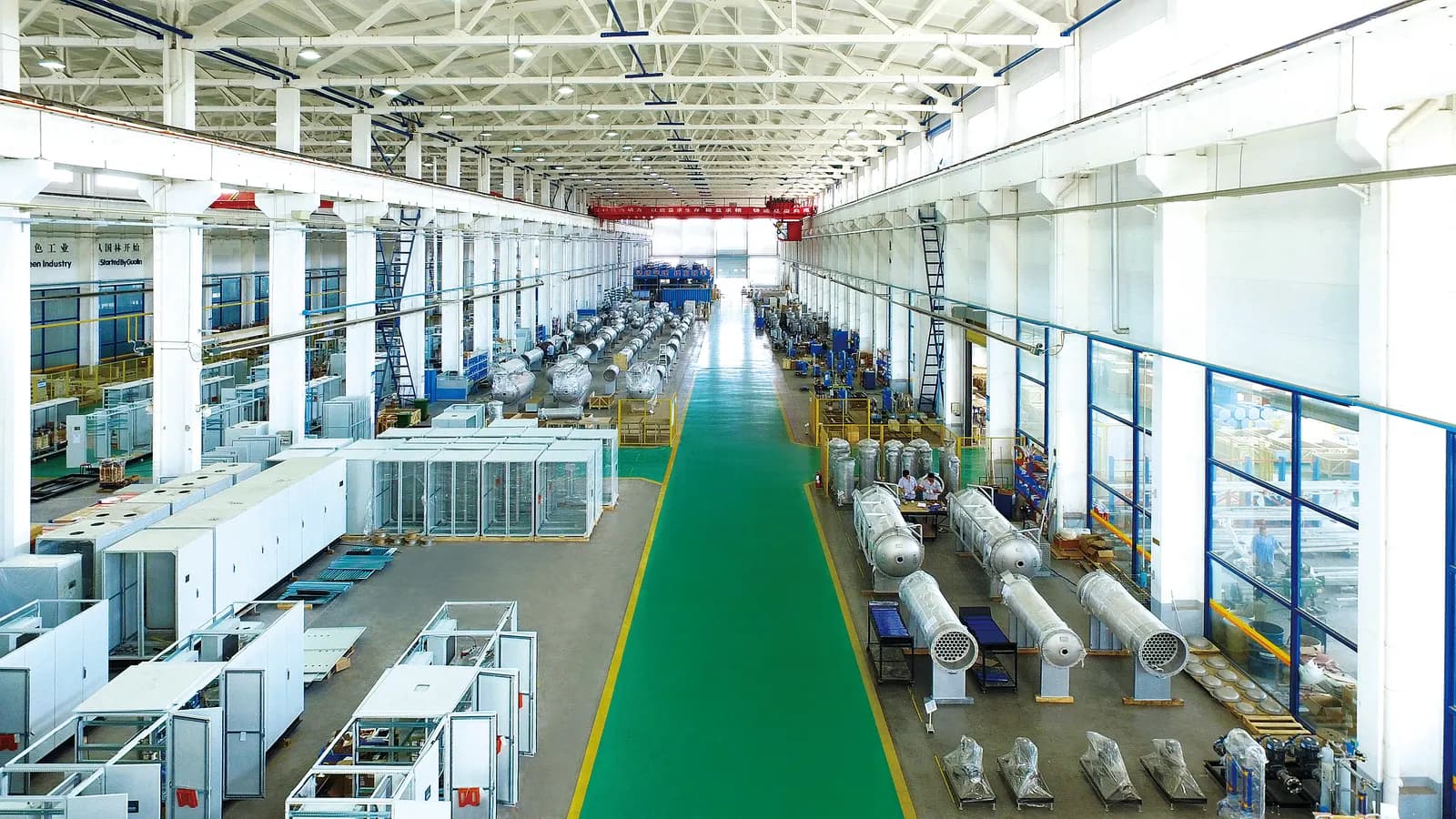
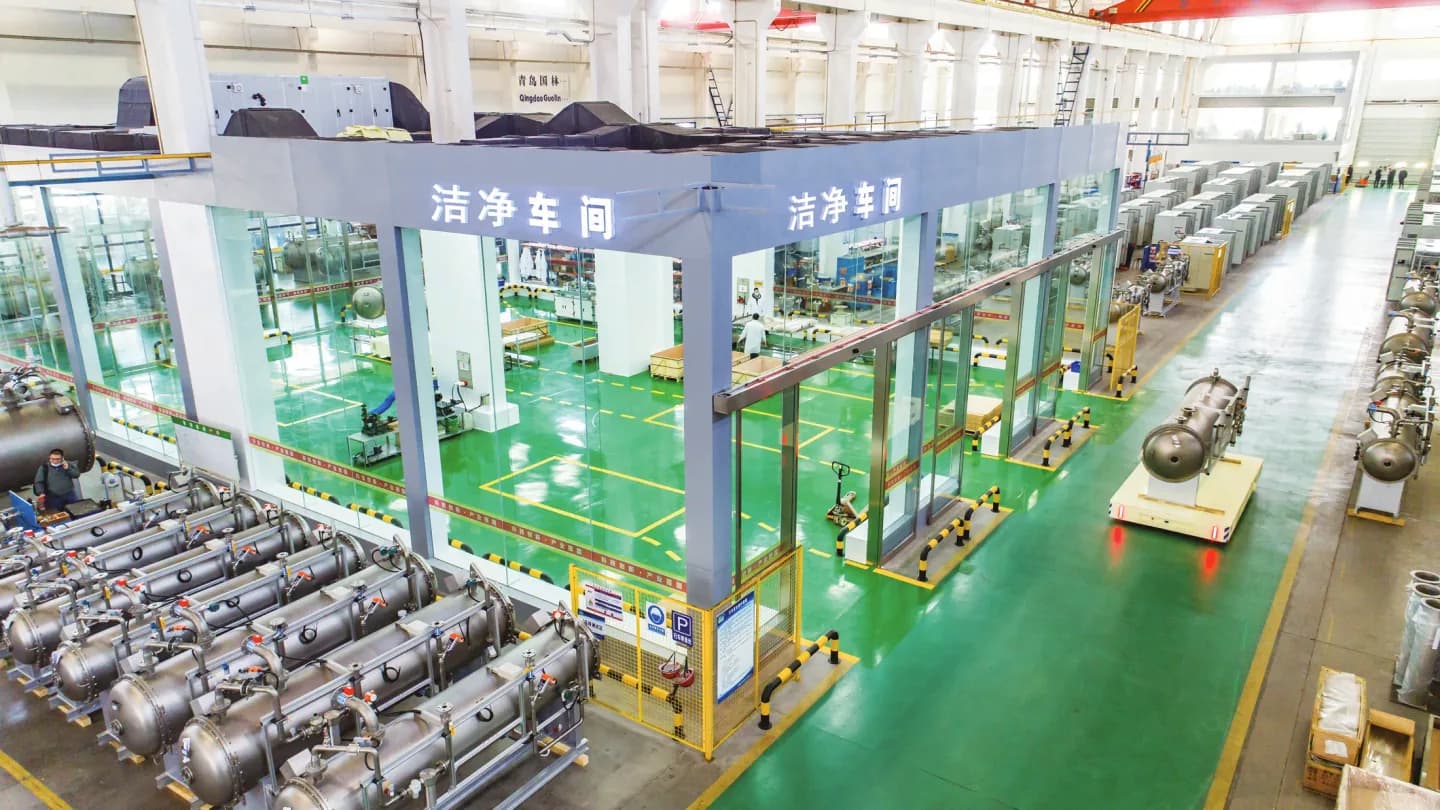
GUOLIN is China’s only publicly listed ozone-system manufacturer, with complete-system design, manufacturing and integration capabilities. Established in 1994, the company listed on the Shenzhen Stock Exchange GEM in 2019 under stock code 300786.SZ. Our company page provides background on the business and manufacturing operation; the photograph at the top of this guide shows GUOLIN's workshop.
Our documented system options include ozone generation, feed-gas equipment, cooling, dosing, off-gas treatment and controls. That gives you specific items to discuss, rather than relying on the word “complete.” Browse the equipment ranges and certification information, then request the current technical documents and supply scope for your project. Company history and a listing establish identity; the proposal and agreed tests still need to demonstrate the equipment's fit.
What should you send before requesting a shortlist proposal?
Send your application, project country, treatment objective and available flow or water-quality information through the GUOLIN project-review form. Add the equipment you already have, available utilities and any timing or acceptance requirements. If an item is unknown, say so. The first useful step is to identify the likely configuration, missing inputs and responsibilities—not to fill every field before starting a conversation.
Frequently asked questions
Should I buy directly from an ozone generator manufacturer?
Not always. Compare the actual engineering, warranty and integration responsibilities. A manufacturer may own the complete system; an integrator may coordinate multiple specialists. Require one clear responsibility map and a way to resolve interface problems.
What proves an industrial ozone generator's capacity?
A documented performance guarantee and test at specified output, concentration, feed-gas and cooling conditions are stronger than an isolated nameplate value. Agree the factory test method, instruments, tolerances and witness/report requirements for the project.
Is ISO 9001 or CE marking enough to choose a supplier?
No. Check the certificate or declaration's legal entity, scope, product, market and date. Management-system certification, product conformity, factory performance and installed process results answer different questions.
How many similar projects must a supplier have?
There is no universal number. Set a proportionate threshold for your project's risk and check what each reference actually covers. Public tenders use different requirements; their numbers should not be copied into every private project.
Can I evaluate suppliers before my ozone dose is finalized?
Yes, for an initial shortlist. Share the process goal and available data, then ask candidates how they would establish the design duty and what remains provisional. Do not treat a budgetary configuration as a verified treatment guarantee.
Related articles
Buying Guide
What Is Included in a Complete Industrial Ozone System?
Compare the equipment included in an industrial ozone system, spot quotation exclusions, and decide what the supplier and your site need to provide.
Buying Guide
Industrial Ozone System RFQ: What to Include
Request comparable ozone-system quotations with a practical RFQ checklist covering treatment goals, equipment scope, site data, testing and commercial terms.
Buying Guide
Industrial Ozone System Cost: What Changes the Price?
Understand why industrial ozone system quotes differ, what a complete price includes, and how to compare equipment, installation and operating costs.
Buying Guide
Industrial Ozone Generator Installation Requirements
Prepare power, air or oxygen, cooling, ventilation and site connections before installation. Use the checklist to clarify supplier and site responsibilities.