
Ozone for Textile Wastewater: Color Removal and Reuse
Can ozone remove color from textile wastewater? Learn where it fits, why color is not COD or salt removal, and what to check before reusing the water.
Yes, ozone can remove colour from textile wastewater—but a clear-looking sample is not a reuse specification. Ozone can alter the parts of dye molecules responsible for colour. The treated water may still contain organic material, dissolved salts and substances that matter to discharge quality or the next dyeing batch.
If residual colour is your plant's main problem, ozone is worth evaluating as a targeted treatment step. If the aim is water reuse, start by naming where the water will return: a wash stage, a particular dye bath or another operation. The right question is not simply “Can we make it colourless?” It is “Will this water do the next job without creating a new problem?”
What can ozone remove—and what needs a separate check?
Colour removal, organic removal and acceptable production water are related, but they are not interchangeable. Separate them when writing the target and when reading a supplier's test report.
Separate the acceptance questions
Colour is only one of four checks
Colour
Is the measured colour acceptable?
A photograph is not the agreed analytical result.
Organic load
Are COD, TOC or target compounds acceptable?
Colour loss is not complete organic removal.
Salts and chemistry
Does the composition suit the destination?
Ozone is not a desalination step.
Production and risk
Does the water work without unwanted consequences?
Verify quality, residuals and relevant chemical/biological risks.
Colour is one measurement, not the whole water quality
A visible colour change can happen without a matching reduction in COD or total organic carbon, or TOC. COD indicates the overall oxygen-demand equivalent measured by the method; TOC measures organic carbon. Breaking a colour-producing structure does not necessarily remove all of that material from the water.
Ask the laboratory to use a defined colour method and consistent sample preparation. Suspended material, pH and measurement conditions can affect the comparison. Keep the inlet and final values, rather than recording only a removal percentage or a photograph of two bottles.
Salt and reuse quality do not follow the colour
Do not specify ozone as a desalination stage. Dissolved salts need their own assessment and, where required, a separate separation or recovery process. Conductivity is a useful indicator to track, but it does not identify every dissolved constituent that could matter to the next production step.
Even when salt is useful in a selected dyeing recipe, uncontrolled accumulation can change the loop. Draw where water enters, returns and leaves the plant, and check which dissolved constituents can build up. Product quality, residual oxidants, relevant by-products and biological risks also need their own acceptance checks—not an assumption based on colour.
Where should ozone sit in a textile treatment plant?
Put it where it has a supported job. There is no single sequence for every dyehouse. Review the existing plant and the stream that still needs improvement before deciding whether to treat raw wastewater, a segregated stream or a biologically treated effluent.
After biological treatment: ozone may be evaluated for residual colour or difficult organic material left after the main load has been treated. Confirm that upstream solids separation and plant operation are performing as intended. An oxidation package should not be used to hide a problem that can be corrected earlier.
Before biological treatment: the purpose may be to make selected material more amenable to biological treatment. Measure what happens through the downstream biological stage, including inhibition or other unwanted effects. A change in the bottle immediately after ozonation does not establish the combined plant result.
On a segregated dye bath or rinse stream: direct reuse or a smaller treatment volume may be worth investigating, but that stream can have concentrated salts, dyes and auxiliaries. Keep its recipe and intended reuse destination with the evidence. Treating it separately is a process choice to test, not an automatic saving.
The printing and dyeing wastewater solution describes the wider system application. The COD guide explains how to distinguish colour polishing from a deeper organic-removal task.
Why can a successful colour trial fail on another production day?
The water changes when the product mix changes. Dye class, shade, processing chemicals, residual reducing agents, surfactants, pH, solids and salt composition can all alter the treatment response. Equal colour intensity does not mean equal ozone demand or equal final-water quality.
A clean solution made from one dye is useful for studying a reaction. It is not the same as the factory's mixed effluent. Use representative samples from the actual proposed treatment point, including difficult recipes and operating transitions, rather than choosing only a convenient production day.
Also check the contact system. Generator output is a gas-side rating, while the treatment needs ozone delivered and transferred into the water. Mixing, water flow, gas distribution and off-gas conditions affect that distinction. The ozone transfer guide helps separate these quantities before a capacity is selected.
Coloured industrial water also needs a chemical-risk review. Halide-rich streams and the substances formed during oxidation deserve particular attention; colour loss does not prove detoxification. If toxicity, downstream biological compatibility or a by-product limit matters to the project, include the relevant tests instead of treating them as conclusions from the colour result.
What does “suitable for reuse” mean in your factory?
Consider two hypothetical destinations for the same treated water. One is an intermediate wash stage with an agreed blending arrangement. The other is a colour-sensitive production step with tighter quality expectations. Neither destination can be approved from appearance alone, and success in the first does not establish suitability for the second.
A hypothetical reuse comparison
The destination changes the evidence you need
A defined wash stage
Agree the water quality and blend for that operation.
Verify the actual washing result and how the loop changes over reuse.
A colour-sensitive production step
Agree the recipe-sensitive chemistry and product-quality criteria.
Test representative shades and quality against the intended reference.
Have the production and water-treatment teams agree the checks together. Depending on the operation, these can include colour, pH, conductivity, hardness, remaining organic material, residual oxidants and other recipe-sensitive constituents. The fabric or product evaluation should use the quality criteria the factory actually relies on, such as shade consistency and colourfastness where applicable.
Then test the proposed blend or reuse fraction under representative conditions. Keep a fresh-water reference and identify the actual water used in each trial. Repeated reuse can change the composition, so an acceptable first batch is not enough to establish stable ongoing operation.
Do not assume all water returns indefinitely. Show the makeup, reuse, discharge and any concentrate or waste streams. If a membrane or salt-recovery step is proposed, include its pretreatment, residuals and disposal requirements. Ozone does not by itself establish zero liquid discharge or a guaranteed water-saving percentage.
How should you evaluate a decolorization proposal?
Ask for evidence that matches the job you are buying. For discharge polishing, that means the agreed final effluent requirements and relevant risks. For reuse, add the actual production-water and fabric-quality evidence. A high colour-removal percentage is useful only in that context.
- Identify the water: sampling point, production recipe range, upstream treatment and normal versus difficult conditions.
- Name the process: plain ozonation, ozone with peroxide, catalytic ozonation or a combined treatment train. Do not transfer a catalyst or laboratory reactor's result to a bare generator.
- Keep input and output together: flow, colour method, inlet and final values, organic measures, ozone input and the relevant water-side evidence.
- Retain the other acceptance checks: salts, by-products, toxicity, downstream operation and production quality where applicable.
- Use the result to make a choice: proceed to a representative pilot, change the sequence, investigate another technology or stop the proposal if it cannot meet the need.
The treatability-testing guide provides the fuller trial framework. If peroxide is proposed as an upgrade, use the ozone-versus-peroxide comparison to check what the addition must demonstrate before it earns a place in the system.
What determines capacity and operating cost?
Flow and an evidenced treatment demand are both needed. A factory's total daily wastewater volume does not show the peak duty at the proposed treatment point, and a colour reading is not a universal conversion to ozone kilograms per hour. Base capacity on supported testing, the operating range and the agreed process arrangement.
Compare the complete installation: feed gas, generation, cooling, gas-to-water transfer, off-gas treatment, controls, monitoring and any additional downstream treatment. Include the plant's operating pattern and the requirements of changing production recipes. The system-cost guide helps turn that scope into a comparable budget without borrowing a price from a different factory.
Keep ozone gas contained and manage unused gas, worker exposure and safe operating conditions. A water-quality trial does not approve the installation's safeguards. The ozone-system safety guide covers those separate responsibilities; final engineering and local requirements still govern the site.
Start with the treatment point and the intended destination
For a useful GUOLIN discussion, send a simple process sketch, project country, wastewater flow range, current treatment, dye/recipe range and available analysis. Say whether the concern is discharge colour, residual organics, reuse in a named operation or several of these. Include previous test results with their sampling and treatment conditions.
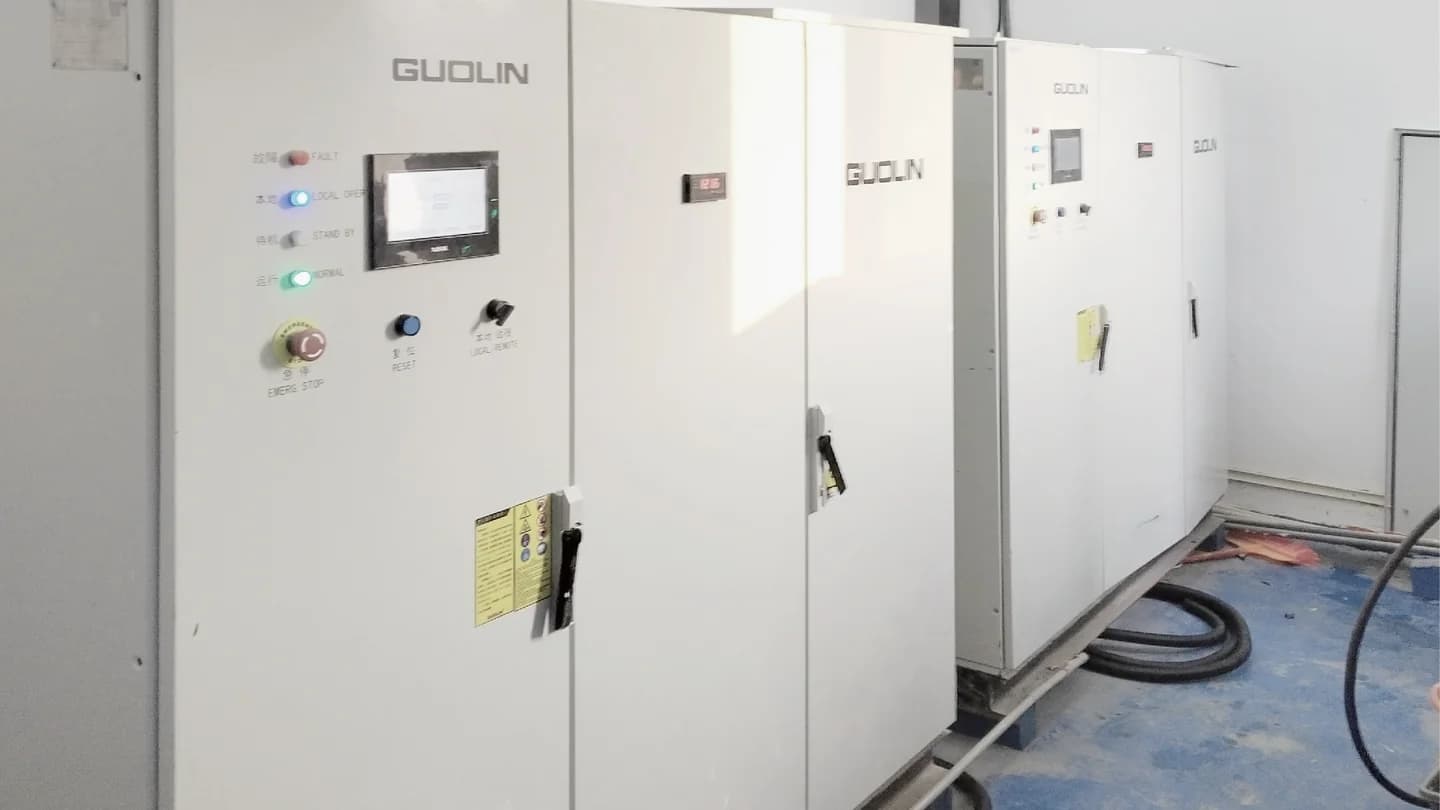
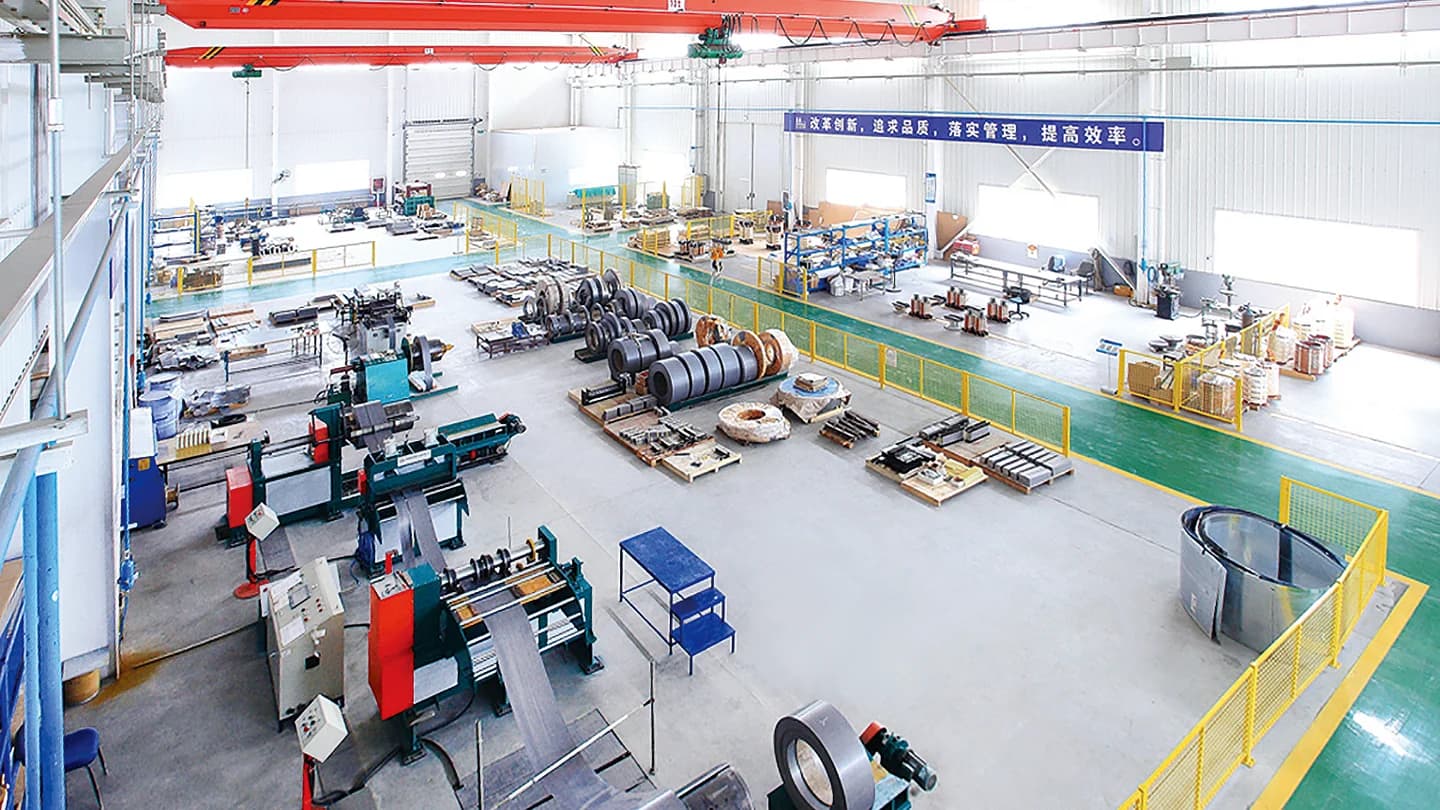
GUOLIN's industrial ozone generators and transfer equipment can be discussed as part of a project-specific complete system, not as proof that a particular dyehouse will achieve a stated result. The equipment-room photograph is not a textile customer case, an approved reuse layout or a before-and-after treatment demonstration.
If measurements are missing, identify them in the project enquiry. You do not need to choose a model first. The first useful decision is which stream and outcome to test—not how large a generator to buy.
Frequently asked questions
Can ozone remove color from dye wastewater without removing all COD?
Yes. Changing a colour-producing molecular structure is different from removing the full organic load. Measure colour, relevant organic parameters and final-water requirements separately.
Does ozone remove salt from textile wastewater?
Do not treat ozone as a desalination process. Salinity and the constituents affecting the intended reuse need their own assessment, water balance and any required separation or recovery step.
Can decolorized textile wastewater go straight back to dyeing?
Not on colour evidence alone. Confirm the particular water destination, recipe-sensitive chemistry, residuals and fabric-quality requirements through representative testing, including the effects of repeated reuse.
Should ozone be installed before or after biological treatment?
The position depends on the task. Upstream use may be investigated for changes in biological treatability; downstream use may target residual colour or organics. Compare the complete sequence and relevant risks on the actual wastewater before selecting the position.
Related articles
Application Guide
Can Ozone Reduce COD in Industrial Wastewater?
Find out when ozone can help reduce wastewater COD, why colour removal is not the same result, and what to verify before buying an ozone system.
Technology
Ozone Treatability Testing: Will It Work for Your Wastewater?
Find out what an ozone test should prove before you invest in an industrial wastewater system, from representative samples to pilot-scale verification.
Buying Guide
Ozone vs Hydrogen Peroxide for Wastewater Treatment: How to Choose
Compare ozone, peroxide dosing and combined AOPs for wastewater treatment. Learn what changes the choice, the full cost and the trial needed before buying.
Buying Guide
Industrial Ozone System Cost: What Changes the Price?
Understand why industrial ozone system quotes differ, what a complete price includes, and how to compare equipment, installation and operating costs.